If you’re researching log home restoration costs, you’re already doing the right thing. Pricing can vary a lot based on your home’s condition, access, and how much prep and repair work is needed. This guide breaks down the typical cost ranges and the biggest factors that change the final number.
If you want a realistic estimate for your home, start with an inspection. LOG HOME INSPECTION

Log Home Restoration Cost Per Square Foot (Typical Ranges)
Most log home restoration projects are priced by:
- total square footage of log wall surface
- complexity and condition
- height/access
Here are typical ranges (general guidance):
- Light Restoration / Maintenance Work: $X–$X per sq ft
- Full Restoration (Most Common): $X–$X per sq ft
- Severe Restoration (Rot + Heavy Prep + Access): $X–$X+ per sq ft
Important: Every company prices differently, and every home is different. These ranges give you a planning baseline — not a final quote.
If you also need staining, see: LOG HOME STAINING

What Affects Log Home Restoration Price?
These are the biggest things that push cost up or down:
1) Home Size + Wall Surface Area
Bigger homes = more labor, more materials, and longer project time.
2) Height / Access
If the home requires scaffolding, lift rental, steep terrain access, or multi-story setup, cost increases.
3) Condition of the Existing Finish
If stain is failing badly or peeling, removal and prep time increases. If the wood is mostly stable, maintenance staining can be cheaper.
4) Level of Cleaning and Prep Required
Prep is everything. A properly prepared surface makes the stain last longer and reduces the chance of failure.
Cleaning service page: LOG HOME CLEANING
5) Repair Work (Rot, Log Replacement, Epoxy)
Rot repair can be minor or extensive depending on damage. Severe rot needs more labor and can require log replacement.
Rot repair page: LOG ROT REPAIR
6) Chinking and Caulking Needs
If chinking is cracked or gaps are open, sealing work adds cost but also improves comfort and protection.
Chinking page: LOG HOME CHINKING
7) Product System Used (Stain + Sealants)
Higher-end stain systems cost more, but they often last longer and reduce long-term maintenance costs.

DIY vs Professional Log Home Restoration Cost
DIY restoration seems cheaper at first. However, it often becomes expensive when:
- prep is done wrong
- stain is applied too soon (moisture trapped)
- wrong products are used
- failures happen in 1–2 years and the job must be redone
DIY Costs Usually Include:
- cleaners, brushes, sprayers
- stain and sealants
- ladders/scaffolding rental
- safety gear
- time (weeks/months)
- risk of mistakes
Professional Cost Includes:
- full inspection and scope
- proper cleaning/prep
- repairs completed correctly
- stain system applied to manufacturer standards
- sealing/chinking handled properly
- reduced chance of early failure
If you want to understand what professionals do step-by-step, read: LOG HOME RESTORATION PROCESS
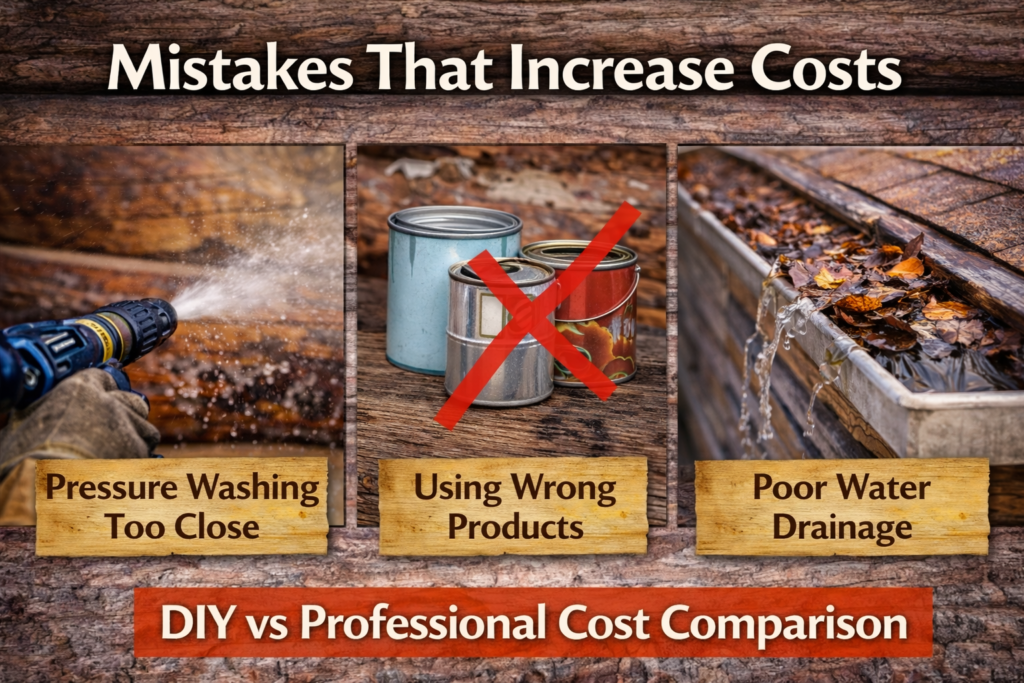
Mistakes That Increase Restoration Costs
These are the most common mistakes that make restoration more expensive later:
Waiting Too Long
Once stain fails completely, the wood absorbs more moisture and damage spreads faster.
Staining Over Failing Stain
This traps failure underneath and forces a bigger stripping job later.
Using the Wrong Products
Paint, cheap sealants, or non-log stains often lead to peeling and rot.
High-Pressure Washing Too Close
This can shred wood fibers, force water into the logs, and create deeper prep problems.
Ignoring Moisture Sources
Bad gutters, splashback, and poor drainage cause rot no matter how good the stain is.
FAQs: Log Home Restoration Cost
Q How much does log home restoration cost?
A Costs vary based on size, condition, access, and repair needs. The biggest drivers are prep, rot repair, and stain removal work.
Q Is log home restoration priced per square foot?
A Often yes, because wall surface area is the biggest workload factor. Some companies also price based on scope and repairs.
Q Is maintenance staining cheaper than restoration?
A Yes. Maintenance staining is usually cheaper because it requires less prep and fewer repairs. However, it only works when the existing finish is stable.
See: LOG HOME STAINING
Q What increases restoration cost the most?
A Rot repair, heavy stain removal, scaffolding/height, and major chinking replacement are usually the biggest cost drivers.
Q Can I get a rough estimate without an inspection?
A You can get a rough range, but inspection gives you the most accurate scope and prevents surprise costs.
Inspection page: LOG HOME INSPECTION
Get a Restoration Estimate
If you want accurate pricing for your log home, the fastest way is a professional inspection and scope review. We’ll identify what’s failing, what caused it, and what it will take to restore and protect your home.