Table of Contents
- Why Milwaukee Masonry Needs Professional Cleaning
- Commercial Masonry Cleaning for Wisconsin Facilities
- Pressure Washing Brick: Risks and Best Practices
- Efflorescence Removal from Brick and Stone
- What Masonry Cleaning Cost Factors to Expect
- Masonry Repair and Restoration After Cleaning
- Choosing the Right Masonry Contractor
- Conclusion
- Frequently Asked Questions
Last Updated: October 18, 2026
Why Milwaukee Masonry Needs Professional Cleaning
Exterior masonry cleaning services in Milwaukee address a specific problem: brick, stone, and concrete in this climate absorb moisture through freeze-thaw cycles that crack mortar and pit surfaces.
The region’s weather is the root cause. Repeated freezing and thawing pushes water into pores, then expands it, and the surface spalls. Dirt, algae, and efflorescence compound the damage by trapping moisture against the masonry. Cleaning removes those contaminants before they become structural.
Weather Damage Unique to the Region
Long winters and wet springs create a predictable pattern of deterioration. Masonry absorbs water during heavy rain and snowmelt, then freezes overnight. That expansion cycle widens hairline cracks in mortar joints.
Once water enters behind the brick face, freeze-thaw damage accelerates. Spalling, crumbling mortar, and white mineral deposits follow. Left alone, moisture intrusion reaches interior walls and framing.
A common mistake is treating these symptoms cosmetically. Painting over efflorescence or patching mortar without addressing the moisture source guarantees the problem returns next season.
When DIY Cleaning Goes Wrong
Homeowners often reach for a pressure washer first. That instinct backfires on older brick. High pressure drives water into the masonry and strips the hard outer layer, leaving a soft, porous surface that absorbs even more moisture.
Acid-based cleaners sold at hardware stores create a second problem. Applied incorrectly, they etch stone and discolour mortar. Many masonry surfaces in the area are decades old and far more fragile than new construction.
Blasting a pressure washer at full force on soft brick or historic stone can permanently scar the surface. Once the fired skin is gone, no cleaner restores it, and repointing becomes the only fix.
Commercial Masonry Cleaning for Wisconsin Facilities
Facility managers face a different set of demands. Commercial masonry cleaning must work around operations, meet safety requirements, and handle larger surface areas without disrupting tenants or production schedules.
Industrial and commercial buildings accumulate exhaust film, graffiti, and biological growth that residential cleaning methods cannot handle.
For parking garages and industrial sites, cleaning is often the first step in a maintenance contract. Dirt and grime hold moisture against concrete, and in a freeze-thaw climate that shortens the surface’s life.
On commercial properties, bundle cleaning with a routine inspection. Cleaning crews see cracks, joint failures, and early spalling up close, and catching them then costs far less than structural repair later.
Pressure Washing Brick: Risks and Best Practices
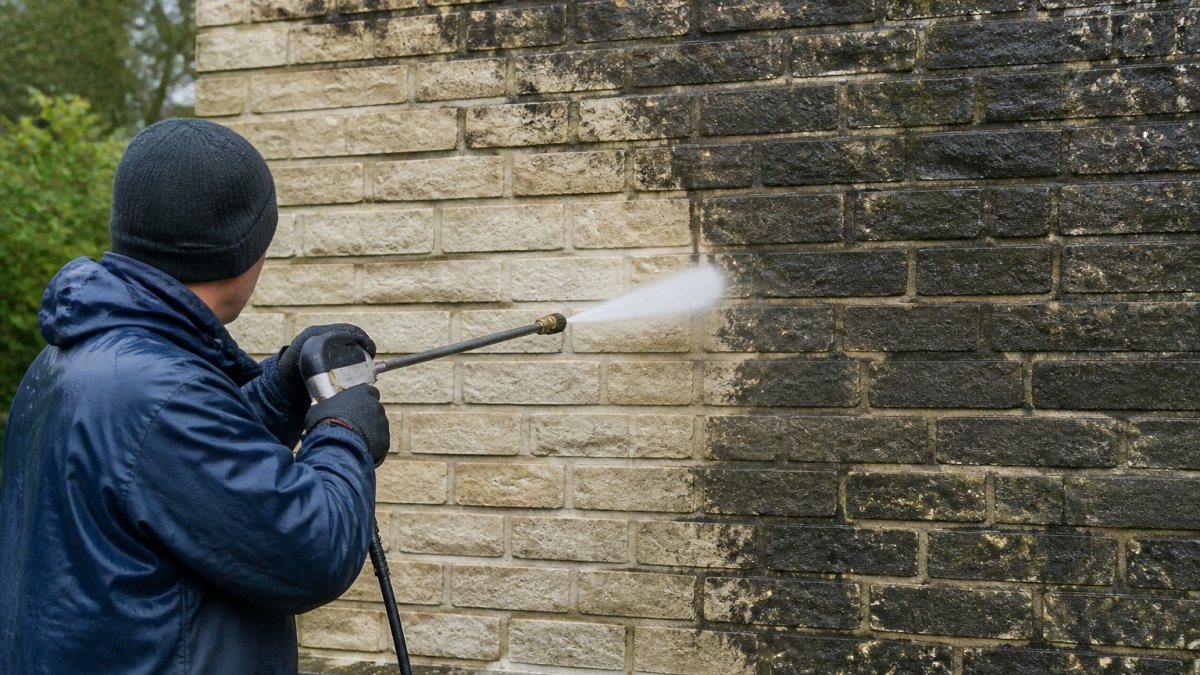
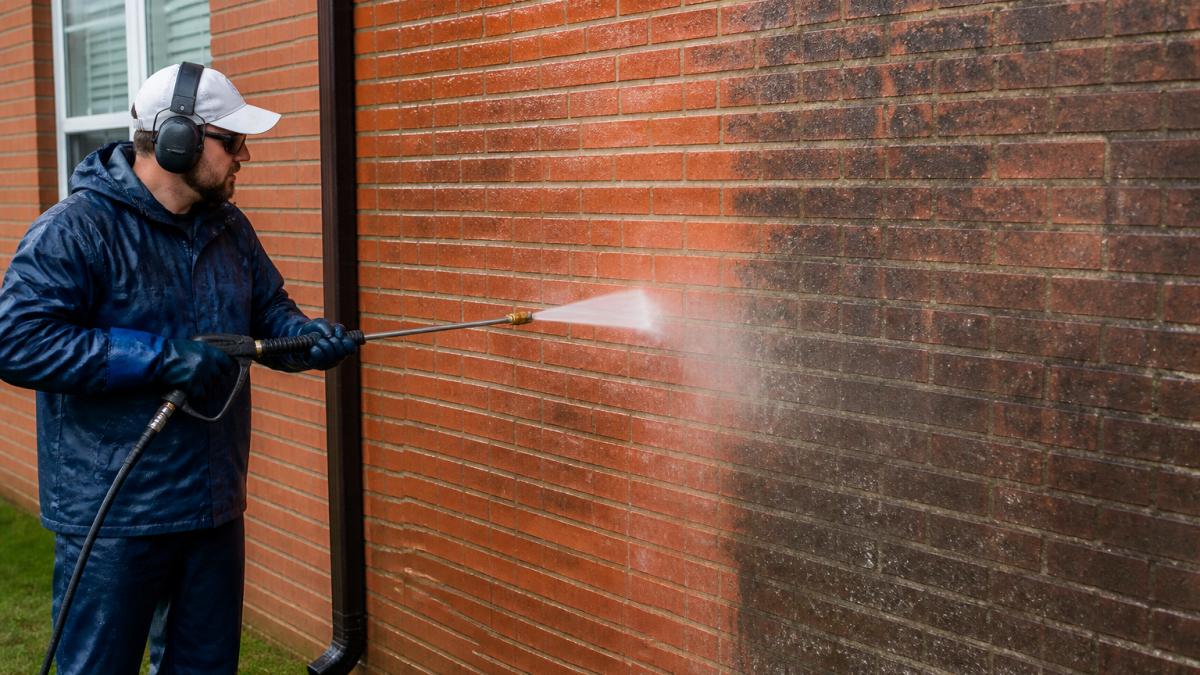
Pressure washing brick is safe only when the pressure, nozzle, detergent, and dwell time are matched to the masonry. The goal is to lift dirt and biological growth without driving water into the pore structure or eroding the fired surface skin.
Pressure, Nozzle, and Distance
Most practitioners find that brick should be cleaned at low pressure, typically under 1,000 PSI at the nozzle, with a 25- or 40-degree fan tip held at least 12 to 18 inches from the surface.
A practical field test: hold your bare hand in the spray at working distance. It should feel uncomfortable but not painful. If it stings, the pressure is too high for brick. Test on a hidden area, a side wall, a rear elevation, or behind shrubbery, before committing to the visible facade.
When Pressure Washing Is the Wrong Method
Pressure washing is unsuitable for several common conditions:
- Soft or historic brick, hand scrubbing with a soft-bristle brush and a pH-neutral detergent is safer.
- Crumbling or recessed mortar, water drives into failed joints and accelerates deterioration; repoint first.
- Efflorescence, wetting the wall dissolves salts back into the pores; brush dry first, then use a chemical cleaner.
- Heavy soot or oil staining, pressure alone smears the contaminant; a detergent with dwell time is required.
- Delicate stone, limestone, sandstone, and cast stone can erode under pressure; use chemical cleaning and low-volume rinsing.
Chemical Safety and Runoff
Many masonry cleaners are caustic (sodium hydroxide, potassium hydroxide) or acidic (muriatic acid, phosphoric acid). Eye protection, chemical-resistant gloves, and ventilation are non-negotiable. Acid cleaners must never contact galvanized metal, aluminum, or adjacent plantings without protection. Runoff must be managed so it does not reach storm drains or landscaping, many jurisdictions require containment and pH neutralization before discharge. The EPA Safer Choice program outlines what to look for in formulations, and the OSHA hazard communication standard covers labeling and safety data sheet requirements for the chemicals involved.
The Professional Sequence
A safe professional sequence is: dry-brush loose debris, pre-wet surrounding surfaces, apply a matched detergent at the correct dilution, allow dwell time, rinse at low pressure with a fan tip, and inspect before the surface dries. Skipping the pre-wet step lets cleaner absorb unevenly and leaves streaks. Skipping the inspection step lets small cracks and joint failures go unnoticed until the next freeze-thaw cycle.
Efflorescence Removal from Brick and Stone
Efflorescence is the white, chalky deposit that appears on masonry when water carries soluble salts to the surface and evaporates. It is a symptom, not the disease. Removing the visible salt without stopping the moisture source means it returns, often within a single season.
Efflorescence vs. Subflorescence
Efflorescence sits on the surface and brushes away. Subflorescence forms just beneath the surface and pushes outward, causing spalling, pitting, and crumbling. If the white deposit does not brush off easily, or if the surface feels gritty and flaky, the salts are crystallizing inside the masonry. That is a structural warning sign, not a cosmetic one, and it calls for a moisture diagnosis before any cleaning.
Step-by-Step Removal
- Diagnose first. Trace the moisture source: failed flashing, cracked mortar, missing cap, clogged weep holes, or a grade that slopes toward the wall. Cleaning without repair is a temporary fix.
- Brush dry. Use a stiff natural-bristle brush to remove the deposit before wetting the wall. Wetting first dissolves salts back into the pores.
- Apply a matched cleaner. For brick, a diluted acidic cleaner (muriatic or phosphoric) dissolves remaining salts. For limestone and cast stone, use a pH-neutral or mildly alkaline cleaner, acid etches calcium-based stone. For concrete, a commercial efflorescence remover followed by thorough rinsing works.
- Dwell, then rinse. Follow the manufacturer’s dwell time, then rinse thoroughly at low pressure. Residual cleaner left on the surface can cause new staining.
- Inspect and repair. Address the moisture source before sealing. Sealing over an active leak traps water and accelerates spalling.
Why It Keeps Coming Back
A common pattern is efflorescence that returns every spring. The cause is usually one of four things: a failed flashing detail at a roof line or window head, cracked or recessed mortar joints that admit water, a missing chimney cap or crown, or soil and mulch piled against the base of the wall. Each has a specific repair, and each repair is cheaper than repeated cleaning.
Photograph the efflorescence before cleaning and again six months later. If it returns in the same pattern, the moisture path is still open and the repair scope needs to expand.
When to Call a Professional
Call a qualified masonry cleaner when the deposit covers a large area, when it returns after cleaning, when the surface shows spalling or crumbling, or when the wall is more than one story high. A contractor should trace the moisture source before recommending sealing, if a provider quotes a wash without inspecting for water intrusion, keep looking.
What Masonry Cleaning Cost Factors to Expect
Masonry cleaning cost depends on surface area, material type, contamination level, and access difficulty. No single price fits every property, and any quote given without a site visit should be treated with caution.
The biggest cost drivers:
| Factor | Why It Matters |
|---|---|
| Surface area | Larger walls mean more time, water, and cleaner |
| Material type | Soft brick and historic stone need gentler, slower methods |
| Contamination | Heavy algae, graffiti, or efflorescence needs multiple passes |
| Access | Multi-story facades require lifts and extra labor |
| Repair needs | Tuckpointing or mortar repair adds scope and cost |
We recommend asking for a written, itemized estimate that separates cleaning from any repair work. Bundling the two hides what you are actually paying for. Also confirm whether the quote includes surface protection and sealing, since those are often priced separately. The FTC’s consumer guidance on home improvement contracts explains what a written estimate should contain.
Masonry Repair and Restoration After Cleaning
Cleaning often reveals damage that dirt was hiding. Once the grime is gone, failing mortar joints, cracks, and spalled brick become visible. That is the moment to plan masonry repair and restoration rather than seal over problems.
Tuckpointing is the most common follow-up. Workers grind out deteriorated mortar to a consistent depth and repack it with fresh material matched to the original.
Chimney repair follows the same logic. Chimneys take the worst of the weather and often show the first signs of mortar failure.
Choosing the Right Masonry Contractor
The right masonry contractor combines material knowledge, safety practices, and a track record you can verify. Cleaning is not a generic service, and a crew that handles wood decks well may not understand historic brick.
Since 2008, Midwest Maintenance LLC has handled both wood and masonry restoration across the greater Lakes area, from log home care to concrete cleaning and graffiti removal. We offer free consultations so you can get a clear scope before committing.
Questions to Ask Before Hiring
- Can you show experience with my specific material, whether brick, stone, or concrete?
- What pressure and cleaning solutions will you use, and why?
- Do you carry insurance, and can you provide proof?
- Will you inspect for moisture sources before recommending sealing?
- Is the estimate itemized and in writing?
- Do you service my town outside the city?
- What happens if the cleaning reveals damage you did not anticipate?
The best contractor answers the moisture question before selling you a cleaning. If a provider quotes a wash without inspecting for water intrusion, keep looking.
Conclusion
Milwaukee’s freeze-thaw cycles punish neglected masonry, and the damage compounds every season you wait. Cleaning removes the contaminants that hold moisture, but it only protects your property when paired with proper repair and sealing.
At Midwest Maintenance LLC, we bring masonry restoration and wood care together under one team, backed by free consultations and a service-first approach built over years of work in the region. Get started with Midwest Maintenance LLC and protect your masonry before the next freeze sets in.
Frequently Asked Questions
How do professionals clean exterior brick and masonry?
Professionals start by identifying the masonry type and the soil causing the problem, then choose a method that will not damage the surface. Soft washing with low pressure and specialized cleaning solutions is common for brick and stone, while pressure washing is used carefully on concrete and pavers. After cleaning, technicians check for efflorescence, mortar damage, or moisture issues and recommend repairs or sealing. A reputable masonry cleaning contractor will test a small area first and adjust pressure and chemicals to protect mortar joints and surface finishes.
Can pressure washing damage brick or mortar?
Yes, high-pressure washing can damage brick and mortar. Too much pressure can erode mortar joints, chip brick faces, and force water into the wall cavity, which leads to moisture intrusion and freeze-thaw damage. Brick and older masonry should be cleaned with low pressure and appropriate cleaning solutions. Concrete and pavers tolerate higher pressure, but the nozzle angle and distance still matter. Ask any provider how they control pressure and whether they use soft washing for delicate surfaces.
What causes white stains on exterior masonry?
White stains are usually efflorescence, a salt deposit that forms when water moves through masonry and evaporates, leaving minerals on the surface. It often signals moisture intrusion, poor drainage, or a lack of waterproofing. Cleaning efflorescence removal from brick requires more than scrubbing; the source of moisture must be addressed or the stains will return. A masonry contractor can identify whether the cause is a leaking gutter, failing flashing, or missing sealant, then recommend cleaning and sealing to prevent recurrence.
How much does professional masonry cleaning cost?
Masonry cleaning cost depends on the size of the area, the type of masonry, the level of soiling, and access. Small residential jobs like a chimney or stoop cost less than large commercial facades or parking garages. Efflorescence removal, mold treatment, or post-cleaning sealing add to the total. Because pricing varies by project, request a free estimate that itemizes cleaning, any repairs, and sealing. Compare quotes on scope and method, not just the bottom line.

Comments are closed