Log home chinking and caulking protect your home from drafts, water intrusion, pests, and energy loss. Over time, logs expand and contract, which causes joints to shift and cracks to widen. When chinking or caulking fails, gaps open up — and your home loses both comfort and protection.
Midwest Maintenance LLC provides professional log home chinking and caulking services that restore tight seals, improve appearance, and help protect your home for the long term.
Need help deciding whether your home needs spot repairs or a full reseal? Start with an inspection. LOG HOME INSPECTION
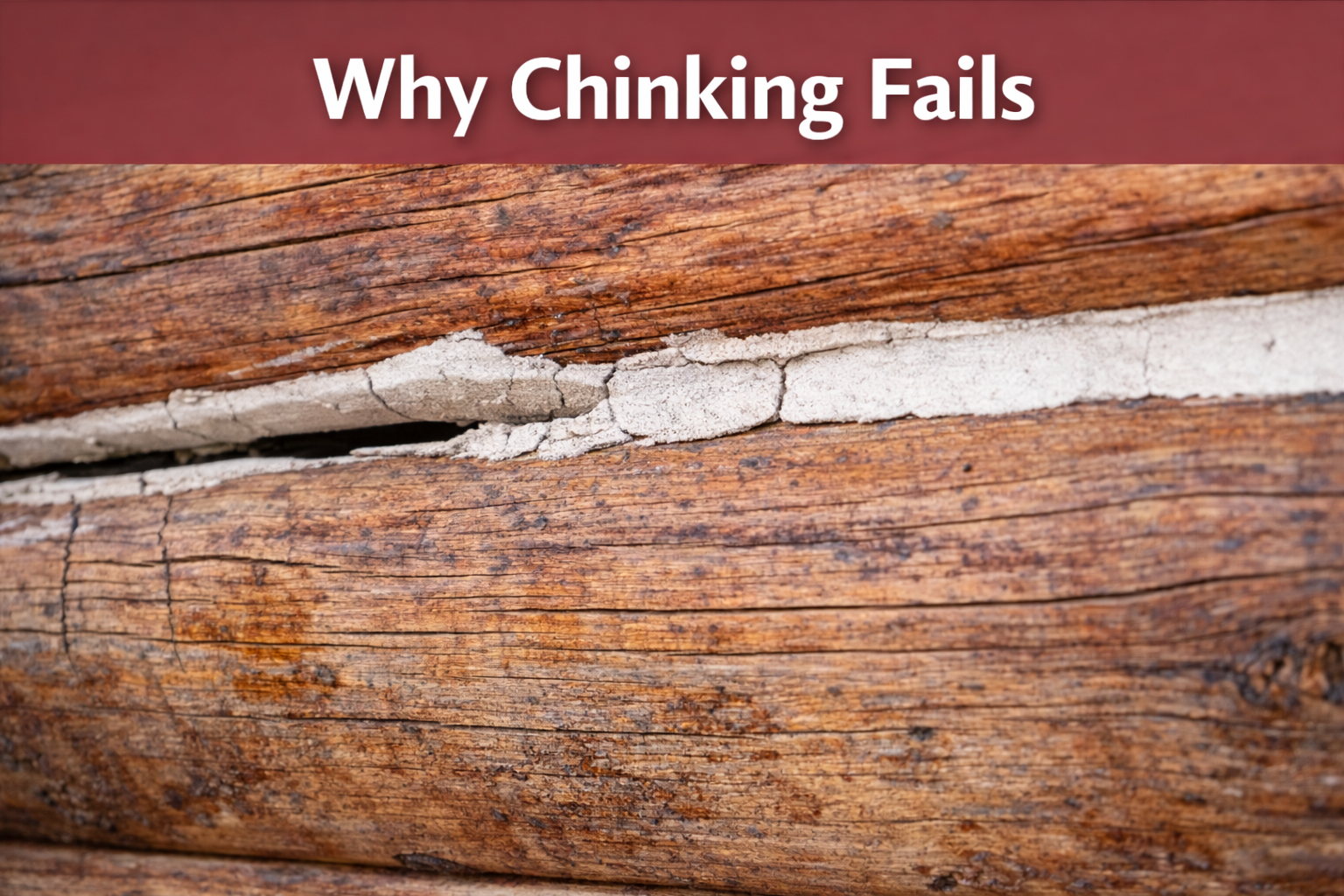
Why Chinking Fails
Chinking failures happen for a few common reasons. Some are natural (movement), while others come from incorrect installation or poor prep.
Log Movement (Expansion & Contraction)
Logs naturally move as humidity and temperature change. Over time, that movement creates stress on the chinking line, especially if:
- the joint was too thin
- the product wasn’t flexible enough
- the home experiences strong seasonal swings
Poor Surface Preparation
If the logs weren’t properly cleaned or dried, chinking may not bond correctly. Dirt, mildew, or failing stain can cause separation and premature failure.
For prep-related restoration work, see: LOG HOME RESTORATION PROCESS
Incorrect Application (Thickness, Backer Rod, and Product Choice)
Chinking must be installed with the correct:
- joint depth and width
- backer rod (for proper shape + movement)
- compatible product system
If the wrong system is used, chinking can crack, pull away, or split.

Energy Efficiency Benefits (Stop Drafts + Reduce Heat Loss)
Failed chinking often shows up as:
- cold drafts near walls
- higher heating costs in winter
- hotter rooms in summer
- inconsistent indoor temperatures
That’s because gaps between logs allow air to move freely. Sealing those joints helps:
- reduce drafts
- stabilize indoor comfort
- reduce HVAC workload
- improve overall energy performance
What homeowners notice after chinking repairs
After proper resealing, many homeowners report:
- fewer drafts
- less dust/pollen infiltration
- improved comfort near exterior walls
- better indoor temperature consistency
For long-term exterior protection, chinking performs best alongside staining and maintenance.LOG HOME STAINING
For ongoing upkeep planning, see: LOG HOME MAINTENANCE GUIDE
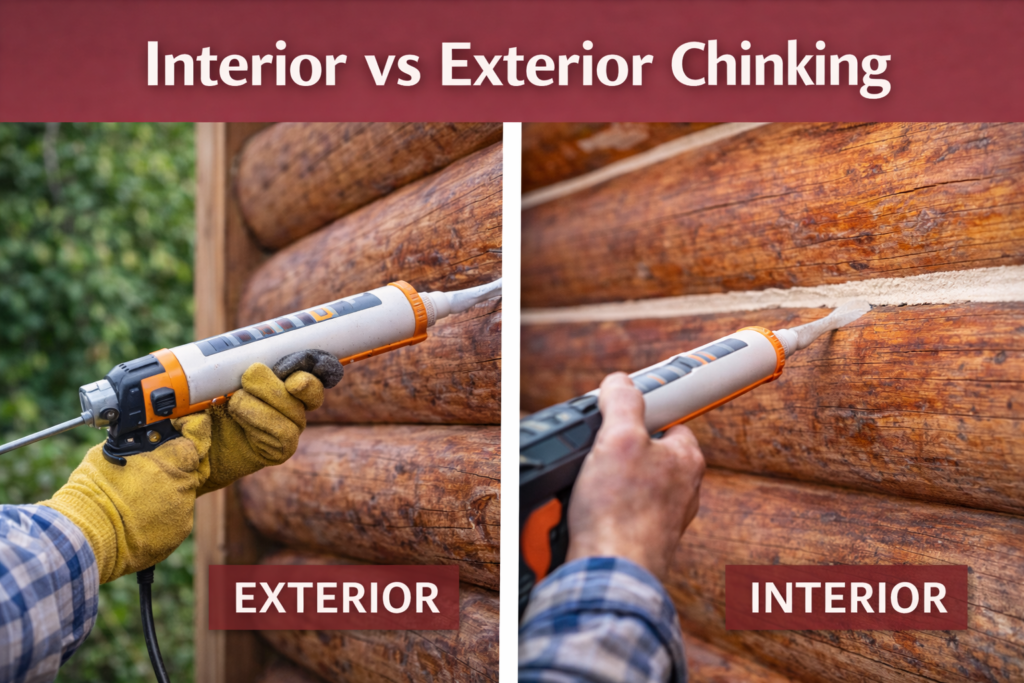
Interior vs Exterior Chinking (Do You Need Both?)
Many homeowners ask if chinking needs to be repaired on the inside too. The answer depends on how your home was built and where the gaps exist.
Exterior Chinking (Most Common)
Exterior chinking is your home’s primary barrier against:
- wind-driven rain
- snow and ice
- pests
- UV exposure
Exterior chinking failures often show up as visible gaps, cracking, or pull-away from the logs.
Interior Chinking (Comfort + Air Sealing)
Interior chinking helps with:
- drafts
- air leakage
- comfort near walls
- finishing appearance
Interior resealing often makes sense when:
- you feel air movement inside
- you see visible cracks between logs
- your home has interior chinking lines that have dried and separated
If you suspect air leaks or moisture issues, schedule an inspection. LOG HOME INSPECTION
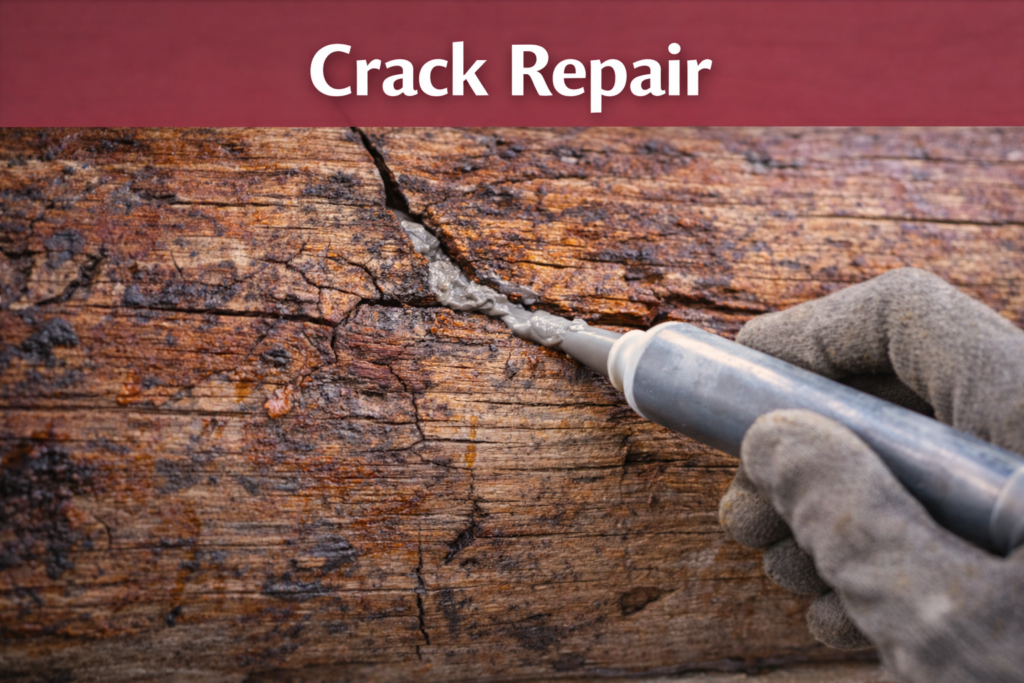
Crack Repair (Checks, Gaps, and Water Intrusion)
Cracks and “checking” are normal in log homes — but some cracks become problems when they:
- hold water
- open into deep gaps
- connect to corners or seams
- allow insects and moisture to get inside
When Crack Repair Is Recommended
Crack sealing is often needed when:
- cracks trap water for long periods
- you see soft wood forming near checks
- dark staining grows inside the crack
- drafts are noticeable in cold weather
- insects are entering through openings
Crack repair may include:
- cleaning and drying the crack
- applying flexible sealants
- using backer rod where needed
- sealing end grain and high-risk joints
If cracks are paired with rot, you may also need wood repair. LOG ROT REPAIR
Get a Log Home Chinking & Caulking Estimate
Whether you need targeted crack repair or a full exterior re-chink, we’ll recommend the right scope based on your home’s condition, movement areas, and moisture risk zones.
Schedule an estimate today: CONTACT / FREE ESTIMATE