A log home can last for generations — but only if you maintain it the right way. Most major log home problems (black staining, stain failure, rot, and failing chinking) start with small issues that go unnoticed: moisture, UV exposure, and neglected sealing.
This guide gives you a simple maintenance plan you can follow every year, plus a longer timeline so you know what to expect over the next 5–10 years.
If you think your log home already needs professional help, start here: LOG HOME RESTORATION
If you want a professional evaluation, start here: LOG HOME INSPECTION
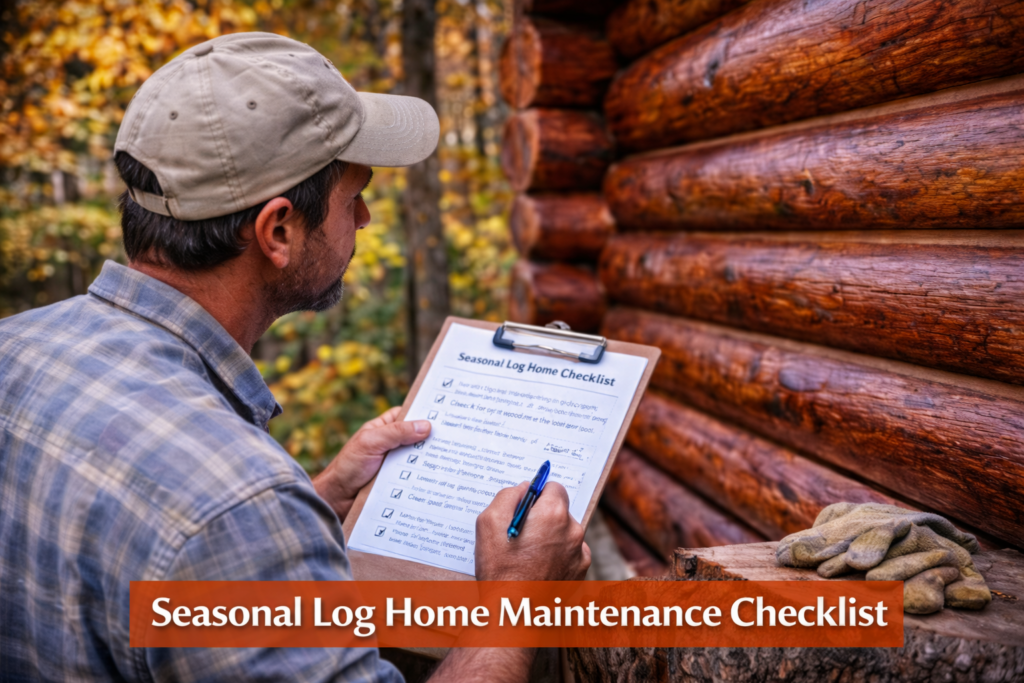
Seasonal Log Home Maintenance Checklist
Spring Checklist (After Snow and Ice)
Spring is the best time to catch damage from winter.
Check for:
- black staining or green growth on shaded walls
- water stains around windows and doors
- soft wood near the bottom logs
- peeling or faded stain
- gaps or cracking in chinking and caulk
- splashback issues from soil, gravel, and decks
If you notice soft wood or suspicious areas, don’t ignore it: LOG ROT REPAIR
Summer Checklist (UV + Heat Damage)
Summer sun breaks down stain faster than most people realize.
Check for:
- fading and graying on south and west walls
- dry, cracked logs (checking)
- shrinking caulk lines or open seams
- water no longer beading on the surface
If stain is fading fast, learn more about re-staining timelines here: LOG HOME STAINING
Fall Checklist (Prep for Winter)
Fall is your chance to seal things up before snow hits.
Focus on:
- sealing gaps in chinking or caulking
- cleaning off organic growth
- fixing water drainage issues
- checking gutters, downspouts, and rooflines
For sealing and joint protection: LOG HOME CHINKING
Winter Checklist (Quick Visual Checks)
You don’t do heavy maintenance in winter, but you should watch for:
- ice dams dumping water on logs
- snow piled against bottom courses
- interior drafts near exterior walls
- moisture buildup near windows
If you’re getting drafts, your chinking may be failing: LOG HOME CHINKING

Products to Avoid on Log Homes
Using the wrong products is one of the fastest ways to damage a log home. Avoid these unless you have a log-home professional guiding you.
Avoid:
- paint (traps moisture and causes peeling/rot risk)
- film-forming sealers not designed for logs
- deck stain used on log walls
- strong bleach mixes (can damage wood fibers and cause streaking)
- high-pressure washing too close (can shred wood and open grain)
- random caulk from the hardware store (often fails quickly)
If your log home already has failing coatings or heavy discoloration, restoration may be needed instead of quick fixes: LOG HOME RESTORATION
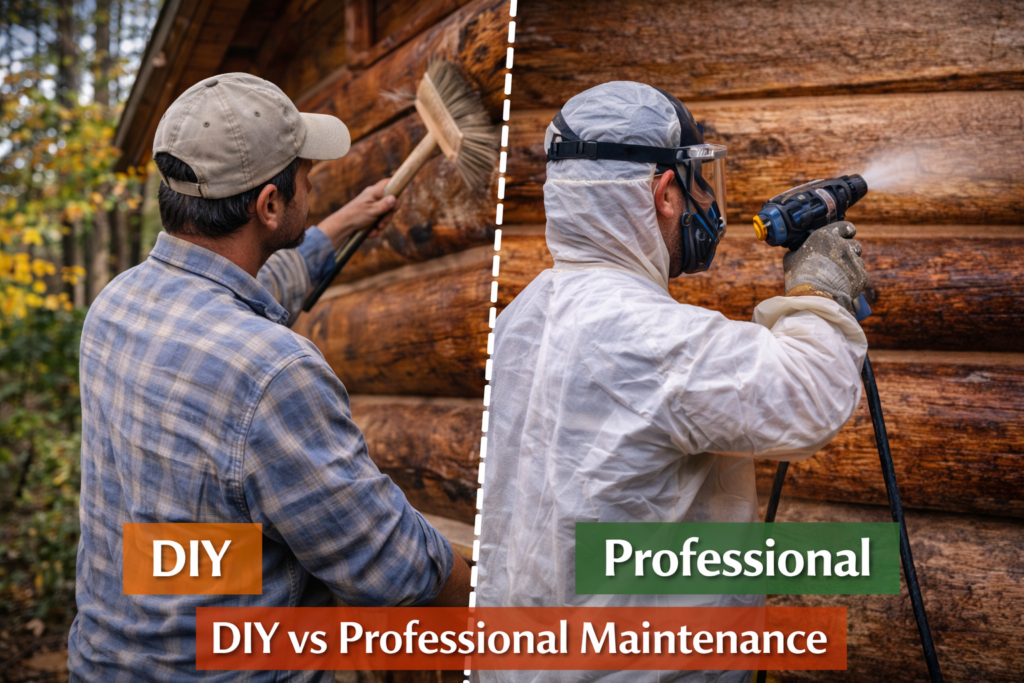
DIY vs Professional Maintenance (What You Can Do vs What You Shouldn’t)
Some maintenance is safe for homeowners. However, many repairs require the right tools, products, and experience — especially when you’re dealing with height, rot, or failing finishes.
DIY tasks:
- visual inspections each season
- cleaning cobwebs and surface dirt
- checking gutters and drainage
- monitoring stain fading and water beading
- watching for drafts and open gaps
Professional work:
- full restoration cleaning and prep
- stain stripping or removal
- rot repair and epoxy rebuilding
- chinking replacement
- full re-staining systems
- sealing checks and log ends correctly
If you want to know what the full professional process looks like, read this: LOG HOME RESTORATION PROCESS
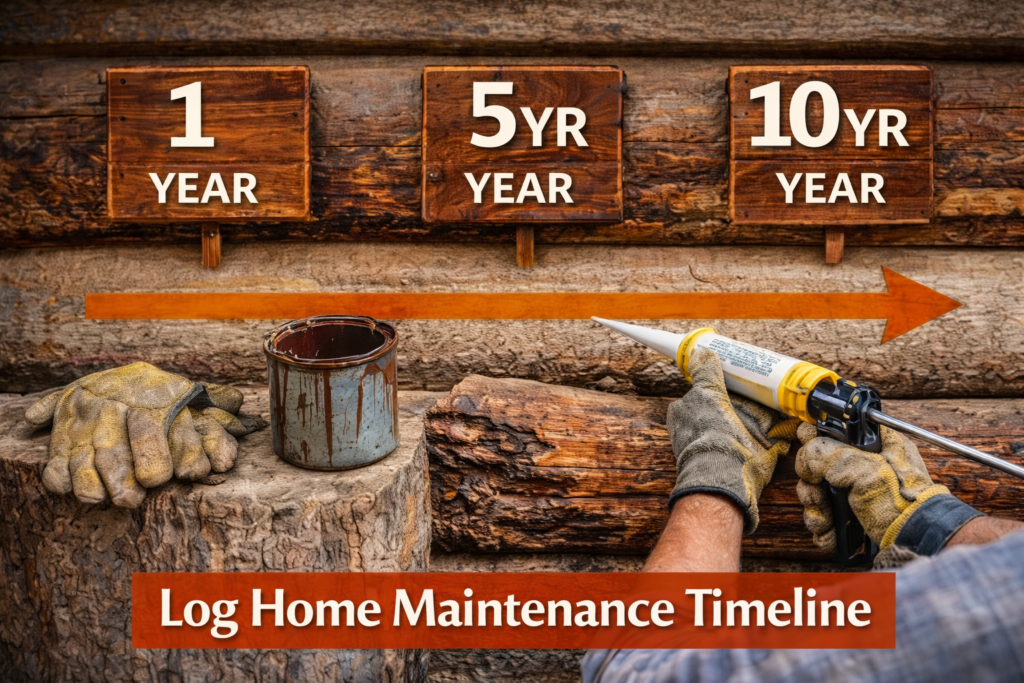
Log Home Maintenance Timeline (1 Year / 5 Years / 10 Years)
Here’s what “good maintenance” usually looks like over time.
1-Year Maintenance Plan (Every Year)
- inspect all sides of the home
- check stain condition and water beading
- look for black staining and organic growth
- check chinking and caulk for cracks
- confirm gutters and drainage are working
5-Year Maintenance Plan
Most log homes need:
- a maintenance stain coat on high-exposure sides
- chinking/caulk touch-ups
- targeted sealing in checks and log ends
- deeper cleaning if black staining is building up
Learn more about staining maintenance: LOG HOME STAINING
10-Year Maintenance Plan
Many log homes will need:
- a full re-stain on multiple sides
- larger chinking replacement areas
- repairs to log ends and bottom logs
- possible rot remediation depending on moisture conditions
If your home is nearing this stage, this page helps: LOG HOME RESTORATION
A Simple Maintenance Rule That Prevents Most Damage
If water is getting into the logs — you will eventually have rot.
The goal is always:
- keep water off the logs
- keep stain and sealants maintained
- catch problems early
If you want a professional evaluation and a simple plan, start here: LOG HOME INSPECTION
Need Help Maintaining Your Log Home?
If you want help with cleaning, staining, chinking, or rot repair, we can inspect your home and recommend the next step based on its condition.