Log home staining is one of the most important steps in protecting your log home from sun damage, moisture, and premature wood deterioration. The right stain system improves the appearance of the logs while creating a protective barrier that helps prevent fading, discoloration, drying, and long-term damage.
If you’re unsure whether your home needs a maintenance coat or a full re-stain, start with an inspection. [LOG HOME INSPECTION INTERNAL LINK]
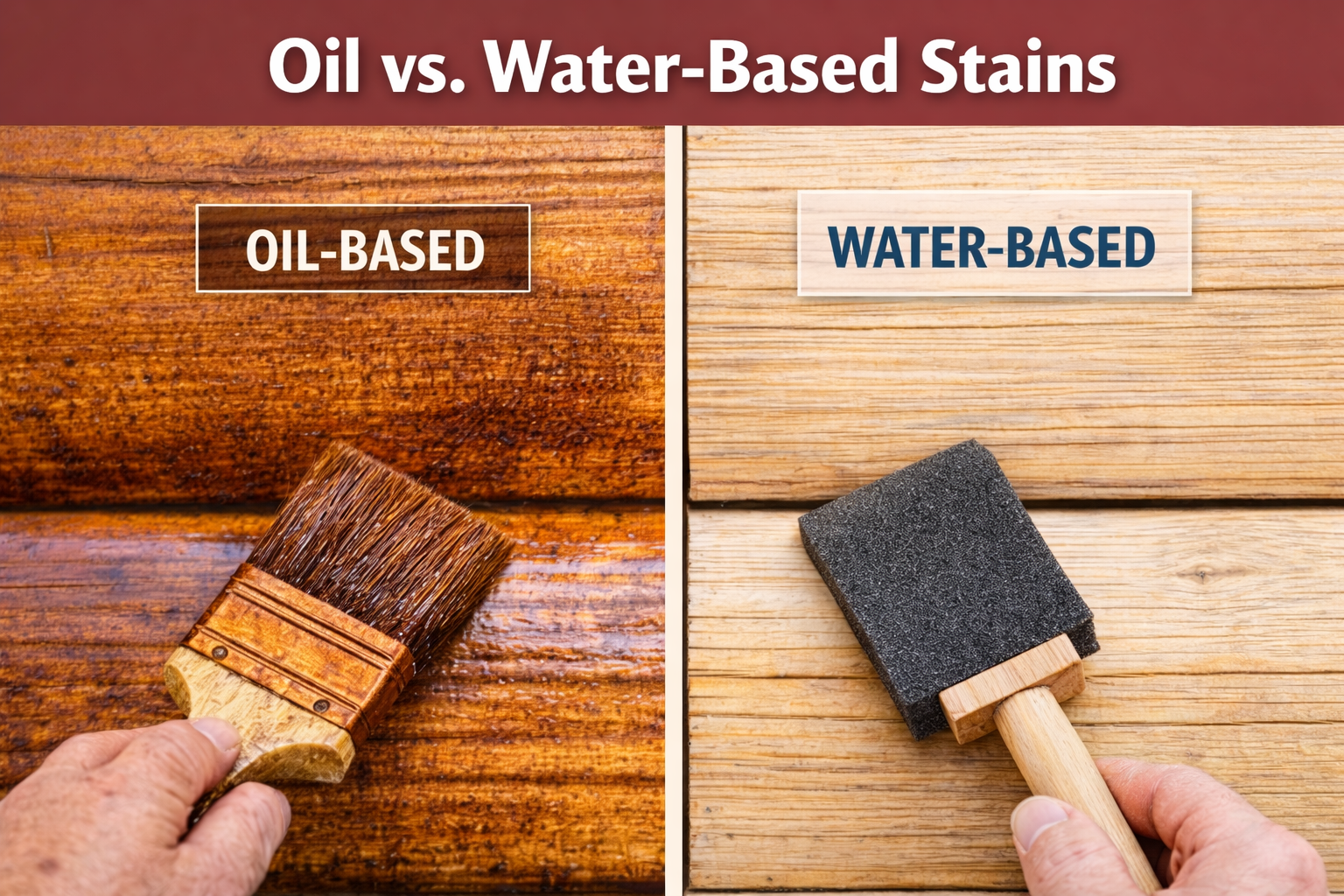
Oil vs. Water-Based Log Home Stains
Not all stains perform the same — especially on log homes. The two most common types are oil-based stains and water-based stains, and each has advantages depending on your log condition and the protection goals.
Oil-Based Stains (Penetrating Protection)
Oil-based stains typically soak deeper into the wood and are often used when:
- logs are dry and weathered
- deep penetration is needed
- longer maintenance cycles are expected
✅ Pros:
- deep penetration
- great for older logs
- can create rich, natural tones
- often very good at water resistance
⚠️ Considerations:
- dry times can be longer
- application conditions matter (temperature and humidity)
- prep must be done correctly to avoid blotching
Water-Based Stains (Breathable + Modern Performance)
Water-based stains have improved significantly over the years and are commonly used when:
- a quicker dry time is needed
- a more breathable system is preferred
- color consistency matters
✅ Pros:
- faster dry time
- lower odor
- more consistent color
- often better UV performance depending on the system
⚠️ Considerations:
- may not penetrate as deeply as oil-based on very dry logs
- prep quality matters even more for uniform appearance
Best practice: The “best” stain is the stain system that matches your log condition and climate — and it’s only as good as the prep work underneath it. LOG HOME RESTORATION PROCESS

UV Protection (Why Logs Fade and How Stain Prevents It)
The #1 reason log homes lose color is UV exposure. Sunlight breaks down the lignin in wood (the natural material that holds fibers together), which causes:
- fading
- graying
- surface breakdown
- faster moisture absorption
A professional stain system should include:
- UV inhibitors
- pigments designed to block sunlight
- a protective top layer (if applicable)
What UV protection looks like in real life
If your stain is failing mainly on the south and west sides, that’s classic UV breakdown. In many cases, those sides need maintenance sooner than shaded sides.
If you want long-term protection, you need:
- correct stain type (oil or water-based)
- proper number of coats
- correct drying time between coats
- ongoing maintenance schedule
Want the long-term plan? [LOG HOME MAINTENANCE GUIDE INTERNAL LINK]
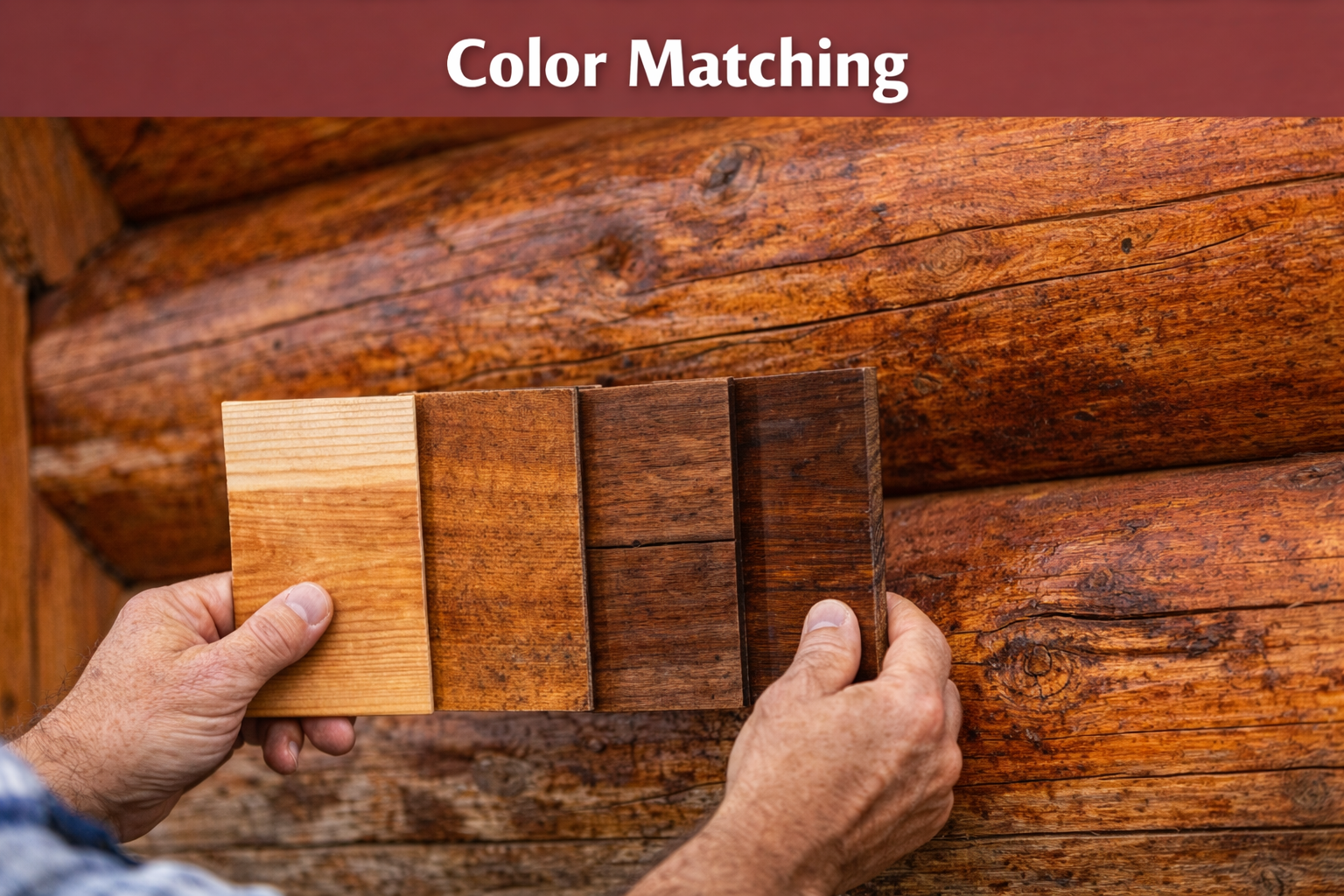
Color Matching (How We Match New Stain to Existing Logs)
Color matching is one of the most common concerns homeowners have — especially when:
- part of the home was repaired
- one wall is more weathered
- the home has uneven fading
- new logs were installed
How we get consistent color
A proper color match includes:
- test patches on different wall exposures
- consideration of sun-faded vs protected sides
- blending technique (feathering and gradual transitions)
- selecting stain pigments that match the existing tone
Important: Even the same stain color can look different depending on:
- wood species
- log age
- prior coatings
- moisture content
- prep method
That’s why stain testing is critical before committing to a full application.
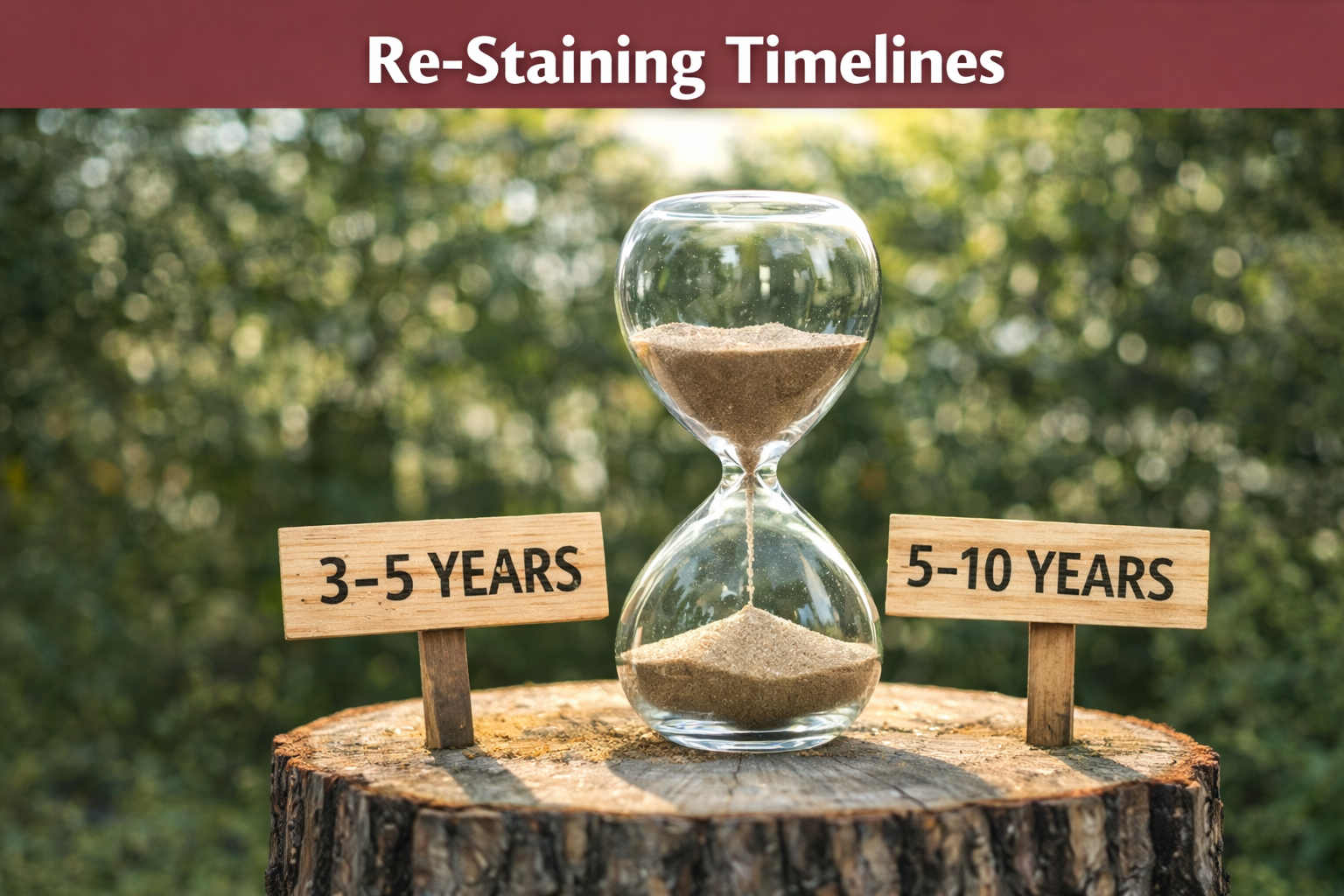
Re-Staining Timelines (How Often Should a Log Home Be Stained?)
Re-staining timelines depend on:
- sun exposure (south/west walls wear faster)
- stain type and system used
- how well the home was prepped originally
- maintenance washing schedule
- moisture issues (gutters, splashback, poor drainage)
Typical timelines (general guidance)
- Maintenance coat: often needed every 3–5 years
- Full re-stain: typically every 5–10 years, depending on exposure and stain system
A big mistake homeowners make is waiting until stain is completely failing — because once logs are exposed and absorbing moisture, restoration becomes more expensive.
For a deeper explanation of timelines and cost factors, see:
[LOG HOME STAINING COST GUIDE INTERNAL LINK]
[HOW OFTEN SHOULD A LOG HOME BE STAINED INTERNAL LINK]
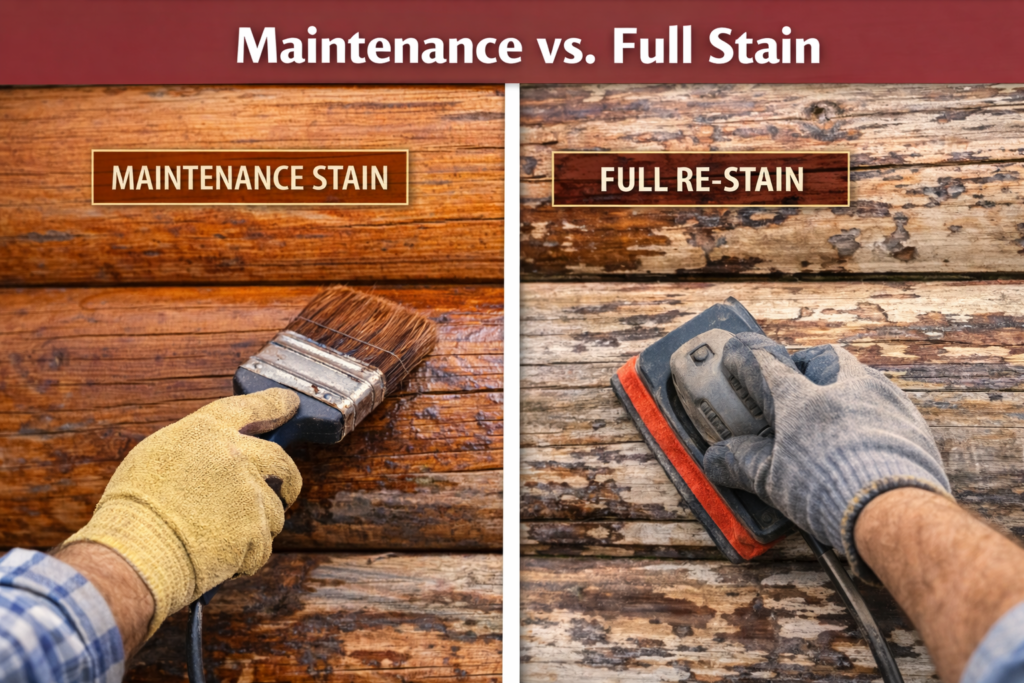
Maintenance Stains vs Full Stains (Which One Do You Need?)
This is one of the most important decisions in protecting your log home.
Maintenance Staining (Best for Preventing Failure)
Maintenance staining is usually recommended when:
- stain is still mostly intact
- color is fading but not peeling
- the surface is still sealed and stable
- you’re trying to extend the life of the stain system
✅ Benefits:
- lower cost than full re-stain
- keeps logs protected
- prevents the finish from failing completely
- reduces risk of rot and water intrusion
Full Staining / Full Re-Stain (Required When Stain Has Failed)
A full re-stain is necessary when:
- stain is flaking, peeling, or patchy
- logs are gray or bare
- moisture has been penetrating the wood
- black staining is widespread and deep
- prior coatings are uneven or failing
A full re-stain often includes prep steps like:
- deep cleaning
- stripping or removal of failed finish
- repairs to damaged logs
- sealing and stain application
If you’re seeing black staining, peeling, or deep discoloration, you may also need restoration-level prep before staining.
[LOG HOME RESTORATION INTERNAL LINK]
[WHY LOG HOMES TURN BLACK INTERNAL LINK]
Get a Log Home Staining Estimate
Whether you need a maintenance coat or a full re-stain, the best first step is a professional evaluation of your log surface, stain condition, and moisture risk areas.
📞 Call today or request a quote online:
- inspection + staining recommendation
- color matching guidance
- realistic timeline expectations
- clear scope and next steps
Request an estimate: [CONTACT / FREE ESTIMATE INTERNAL LINK]
Related Log Home Services
- [LOG HOME CLEANING INTERNAL LINK]
- [LOG HOME CHINKING INTERNAL LINK]
- [LOG HOME CAULKING INTERNAL LINK]
- [LOG ROT REPAIR INTERNAL LINK]
- [LOG HOME RESTORATION PROCESS INTERNAL LINK]
- [LOG HOME MAINTENANCE PLANS INTERNAL LINK]