Log home settling is a natural process that every log structure goes through as the wood dries, shifts, and adjusts. Because this movement is expected, understanding log home settling helps you stay ahead of cracks, gaps, and checking that may appear over time. When you identify changes early, you can protect your home more effectively and avoid expensive repairs.
Do Log Homes Settle Over Time?
Yes, log homes settle over time, and this process begins as soon as the logs start losing moisture. As they shrink and adjust, small movements occur throughout the structure. As a result, you may notice slight shifts near windows, doors, or interior trim.
Fortunately, settling is normal, and modern homes are built with systems that support natural log movement. However, inspecting these areas regularly is important, because early detection helps prevent drafts, gaps, or water intrusion that may develop as the home adjusts.
Is Cracking in Logs Normal?
Cracking is a completely normal part of log home settling. As logs dry, the outside dries faster than the inside, creating splits called checks. Although these cracks may look dramatic, they rarely affect the structural strength of the home.
However, some cracks face upward and can collect water. Over time, moisture inside a crack can lead to rot or mold. Because of this, it’s smart to seal upward-facing cracks with log caulking. Sealing improves protection, reduces air leaks, and helps keep your home safe year-round.
What Is Checking, and Is It a Problem?
Checking refers to the long, narrow cracks caused by natural wood movement. Most checking is harmless and simply shows the natural beauty of the logs. Still, checking becomes a concern when moisture begins to collect inside the split.
When checking becomes deep or wide, sealing it prevents water from soaking into the wood. This small step helps reduce the risk of rot, mold, and insect activity. Additionally, controlling checking improves energy efficiency, since it reduces unwanted airflow.
Do Log Homes Need Chinking?
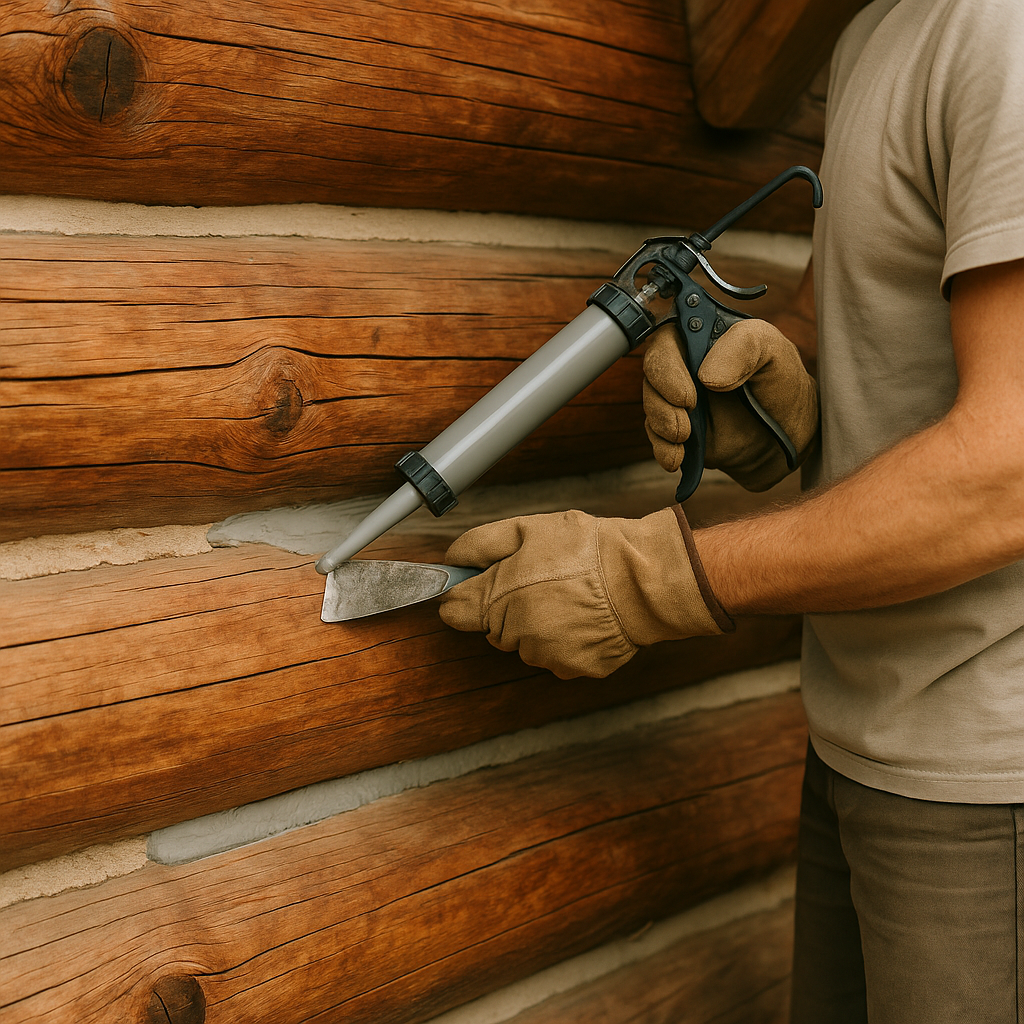
Many log homes benefit from chinking because it fills gaps created by log home settling. Chinking is the flexible material applied between logs to block air leaks, insects, and moisture. It expands and contracts with the logs, making it an essential protective layer.
Even milled log homes sometimes need targeted chinking or caulking. Because every log is unique, small gaps can still appear. As a result, adding or repairing chinking keeps your log home comfortable and protected throughout the year.
How Long Does Chinking Last?
High-quality chinking typically lasts 20 to 30 years, although climate and sun exposure can affect longevity. South-facing walls may need attention sooner because they receive the strongest UV exposure. Meanwhile, shaded areas often last longer.
Even though chinking is long-lasting, it’s important to check it annually. Small repairs—such as touching up cracks or edges—help maintain a strong seal. Because chinking is flexible, small adjustments prevent bigger issues later and keep the home well protected.
How Do You Seal Gaps Between Logs?
Sealing gaps is one of the most important steps in maintaining a tight, energy-efficient log home. For small gaps, a flexible log caulking works well because it stretches with the wood. For larger gaps, professional chinking is the best solution.
First, a foam backer rod is installed to support the chinking. Then, the chinking is applied and smoothed, creating a durable and protective barrier. This method prevents drafts, improves insulation, and blocks insects. Because gaps change with log home settling, inspecting them annually helps maintain long-term protection.

Comments are closed