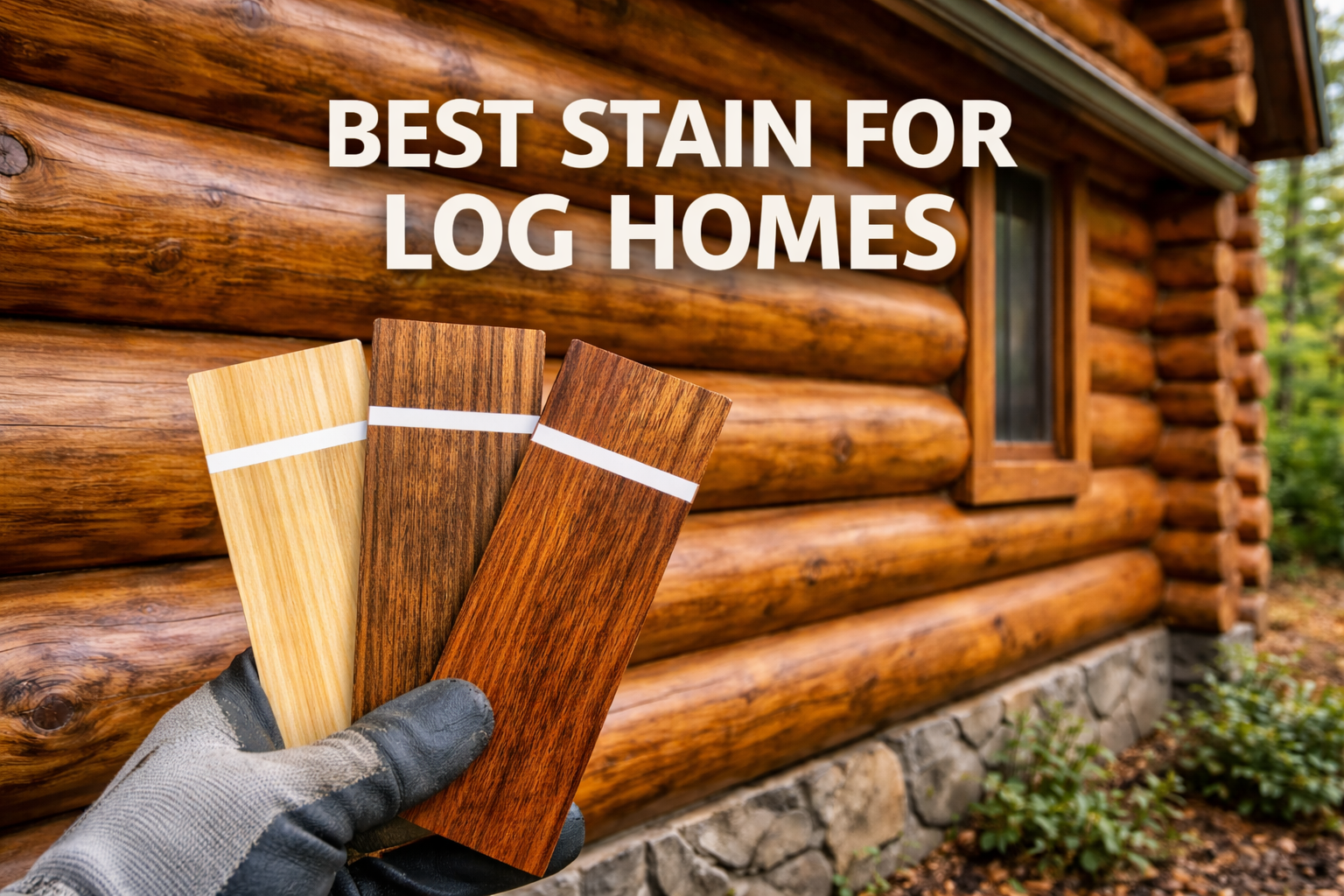
The best stain for log homes protects your logs from UV damage, moisture, mildew, and premature aging. However, not every “exterior stain” works for log homes. Log walls expand and contract, hold moisture longer, and require breathable protection that won’t peel or trap water.
In this guide, you’ll learn which stain types perform best, how to choose the right system for your climate, and what makes a stain last longer.
If your logs are already fading or turning dark, start here: LOG HOME STAINING
What Makes a Stain “Best” for Log Homes?
A good log home stain should do 4 things well:
- resist UV damage (sun fade protection)
- handle moisture without trapping it
- bond properly to log wood surfaces
- remain flexible as logs expand and contract
If the stain can’t do these things, it fails early — and restoration becomes more expensive.
If you want to understand the full process, see: LOG HOME RESTORATION PROCESS
Oil-Based vs Water-Based Stains (Which Is Better?)
Both oil-based and water-based stains can work on log homes. The best choice depends on log condition, climate, and the finish system used.
Oil-Based Stains
Oil-based stains typically penetrate deeper into the wood. They often work best for:
- older logs that are dry and weathered
- homes that need deeper penetration
- homeowners who want rich, natural tones
Pros:
- deep penetration
- strong water resistance
- often long-lasting when applied correctly
Cons:
- longer dry times
- application conditions matter more
Water-Based Stains
Modern water-based stains have improved a lot. Many provide excellent UV performance and more consistent color.
Best for:
- newer log surfaces
- faster dry time needs
- homes where consistent appearance matters
Pros:
- faster drying
- lower odor
- strong UV performance in many systems
- easier cleanup
Cons:
- may not penetrate as deeply in dry logs
- prep quality matters a lot
If your stain is failing, cleaning and prep come first: LOG HOME CLEANING
UV Protection (This Matters More Than Most People Think)
UV exposure breaks down wood fibers and stain pigments. That’s why south and west-facing walls fade first.
The best stains for log homes include:
- strong pigments
- UV inhibitors
- durable protection that holds color
If your home fades quickly, it may need more frequent maintenance staining.
Related blog: HOW OFTEN SHOULD A LOG HOME BE STAINED
Color Matching and Appearance Tips
Color affects more than looks. Darker stains often provide more UV protection because they include more pigment. Lighter stains can look great but may require more frequent maintenance.
Color matching tips:
- test small sample areas before committing
- check the color on multiple sides of the home
- remember: old logs and new logs absorb stain differently
If you plan repairs before staining, see: LOG ROT REPAIR
The #1 Factor That Determines How Long a Stain Lasts
It’s not the stain brand.
It’s the preparation.
Stain lasts longer when:
- organic growth is removed
- logs dry completely
- loose or failing stain is addressed
- sealing and joint protection is handled correctly
If prep is rushed, stain fails early.
Maintenance guide: LOG HOME MAINTENANCE GUIDE
Mistakes to Avoid When Choosing a Log Home Stain
Avoid:
- paint or film-forming coatings (trap moisture)
- cheap stains not designed for logs
- deck stains used on log walls
- skipping cleaning and drying
- staining over mildew or blackened wood
If your home is already in rough shape, you may need restoration first: LOG HOME RESTORATION
When to Hire a Professional
If your log home has:
- peeling stain
- black staining returning fast
- widespread fading
- chinking failure
- any softness or rot
…you should start with an inspection before staining.
Get Help Choosing the Right Log Home Stain
If you want long-lasting protection, the best approach is choosing the correct stain system, preparing the surface properly, and applying it at the right conditions.

Comments are closed