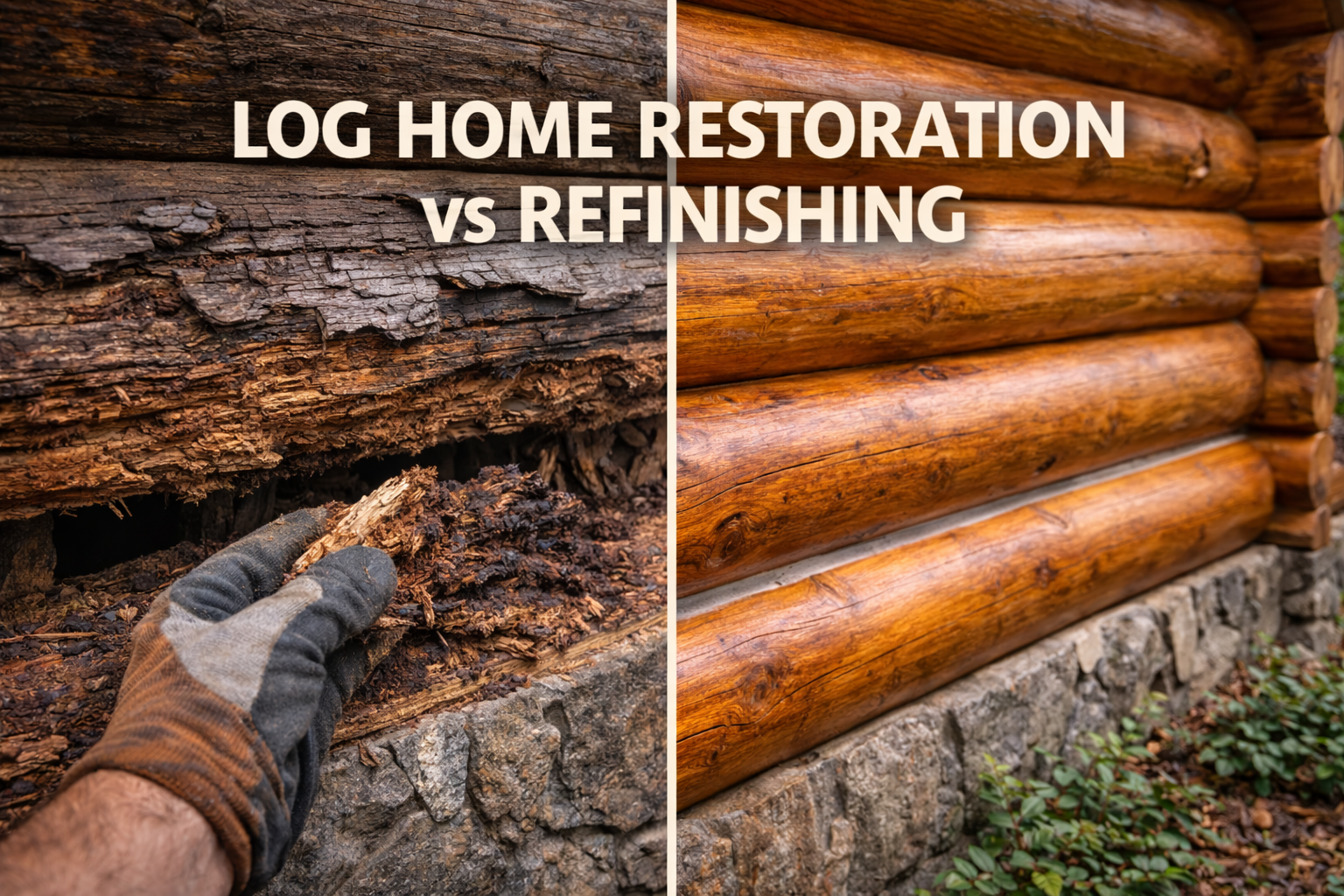
Homeowners often use the words “restoration” and “refinishing” like they mean the same thing — but they don’t. Refinishing usually focuses on improving appearance and renewing the stain. Restoration goes deeper and addresses damage, moisture problems, and repairs that protect the structure long-term.
This guide explains the difference in simple terms so you can choose the right option for your log home.
If you’re unsure what your home needs, start here: LOG HOME INSPECTION
What Is Log Home Refinishing?
Log home refinishing is primarily about renewing the exterior appearance and restoring surface protection. It’s often done when stain is fading, uneven, or worn out, but the logs are still structurally sound.
Refinishing usually includes:
- log home cleaning
- stain touch-ups or full re-staining
- sealing checks (cracks) where needed
- caulking touch-ups
Refinishing works best when:
- stain is fading but not peeling heavily
- the logs are not soft or rotting
- black staining is mostly surface-level
- chinking is still in good condition
Refinishing service: LOG HOME STAINING
Prep service: LOG HOME CLEANING
What Is Log Home Restoration?
Log home restoration is corrective and structural-focused. It’s needed when the home has damage, moisture problems, or failure that goes beyond surface cosmetics.
Restoration may include:
- rot repair or log replacement
- stripping or media blasting
- major chinking replacement
- sealing water entry points
- structural corrections around corners, windows, and bottom courses
- full stain system reapplication
Restoration is needed when:
- stain is peeling or fully failed
- logs are turning black repeatedly
- rot is present (especially bottom logs/log ends)
- chinking has failed or separated
- moisture problems are active
Restoration service: LOG HOME RESTORATION
Rot repair service: LOG ROT REPAIR
The Biggest Difference (Simple Explanation)
Refinishing = surface protection + appearance
Restoration = repairs + moisture correction + full protection
If the wood is still healthy, refinishing can be enough.
If the wood is damaged or the finish has failed badly, restoration is usually required.
For the full step-by-step breakdown, see: LOG HOME RESTORATION PROCESS
How to Tell Which One You Need
You likely need refinishing if:
- stain is faded but still bonded
- water still beads on the surface
- no soft spots in logs
- black staining is minor and removable
- chinking is mostly intact
You likely need restoration if:
- stain is peeling or flaking
- logs are gray and exposed
- black staining returns quickly
- chinking has major gaps
- logs are soft, spongy, or crumbling
- moisture is trapped and damage is spreading
If you’re not sure, don’t guess — inspection saves money: LOG HOME INSPECTION
Why Choosing the Wrong Option Gets Expensive
This is the biggest mistake homeowners make:
They pay for refinishing when the home actually needs restoration.
That leads to:
- stain failing again quickly
- rot continuing under the surface
- wasted money on coatings
- bigger repairs later
If you’re worried about cost, read: LOG HOME RESTORATION COST GUIDE
What Most Homeowners Do (Best Approach)
A common approach is:
- inspection
- cleaning and prep
- repair what’s needed
- reseal gaps
- stain and protect
- follow a maintenance plan
Maintenance guide: LOG HOME MAINTENANCE GUIDE
Get Help Choosing the Right Option
If you want a clear plan and you don’t want to waste money, start with an inspection. We’ll tell you whether refinishing is enough or if restoration is required.

Comments are closed