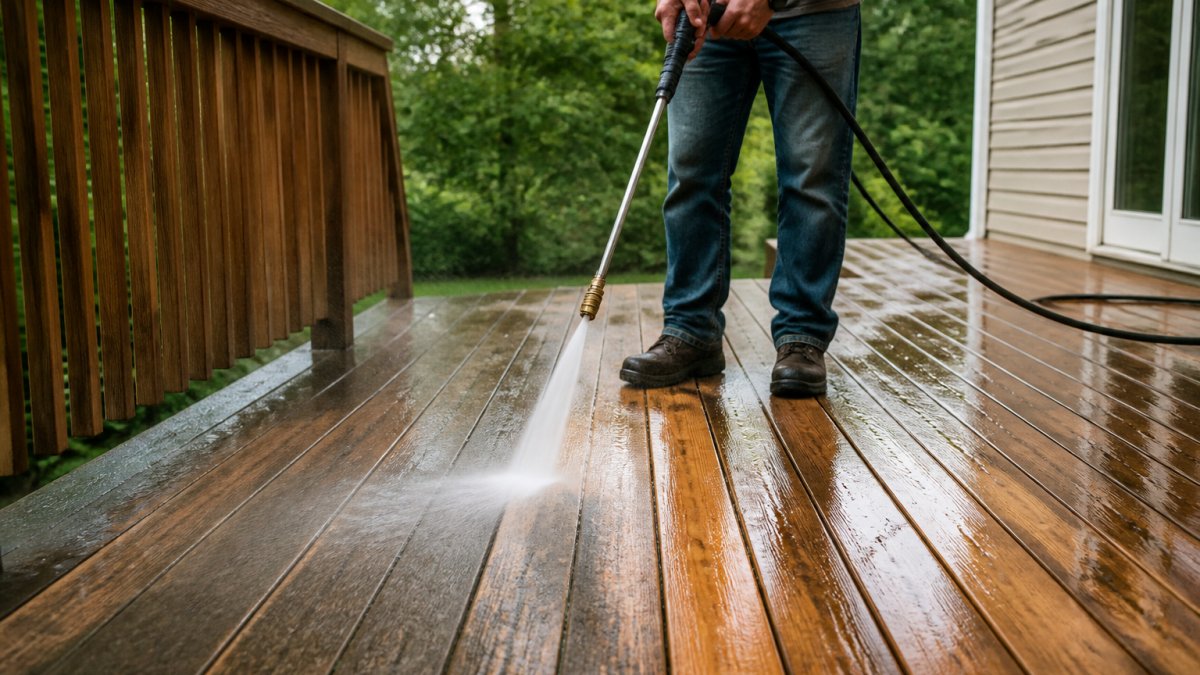
Table of Contents
- Is Deck Power Washing Worth It? The Straight Answer
- The Real Benefits of Cleaning a Wood Deck
- Pressure Washing Deck Cost: What You Actually Pay
- How to Pressure Wash a Wood Deck Without Damage
- Pressure Washing vs. Sanding a Deck: Which Restores the Surface?
- How Long to Wait to Stain a Deck After Pressure Washing
- When Not to Pressure Wash a Deck
- Frequently Asked Questions
Last Updated: October 17, 2026
Is Deck Power Washing Worth It? The Straight Answer
Yes, deck power washing is usually worth it, but only when the wood can handle it. A pressure washer strips dirt, mold, and gray wood fibers fast.
That is the honest trade-off. This guide from Midwest Maintenance LLC covers the real costs, the safe settings, and the cases where you should skip the washer entirely.
Below, we break down the numbers, the technique, and the decision framework so you can judge your own deck.
Deck power washing pays off when the wood is sound and you use low pressure. It costs you a deck when the wood is soft or the nozzle is wrong.
The Real Benefits of Cleaning a Wood Deck
The biggest win is removing organic buildup. Mold, mildew, moss, and algae feed on wood and hold moisture against the surface.
Dirt and grime also hide the wood grain. A clean deck shows its true color, which makes any later stain job look better.
Here is what a proper cleaning actually does:
- Removes mold, mildew, moss, and algae
- Lifts embedded dirt and grime from the grain
- Clears old paint or failing stain so new finish can bond
The catch? Cleaning only fixes appearance and surface buildup. It does not repair soft wood, and it will not fix structural damage.
Pressure Washing Deck Cost: What You Actually Pay
Cost is where most homeowners get stuck, so let us be direct. Pricing for deck cleaning depends on square footage, deck condition, railing count, and how much organic buildup sits on the boards.
Here is how the two paths compare in practice, with typical U.S. figures you can use to build your own estimate:
| Factor | DIY Pressure Washing | Professional Cleaning |
|---|---|---|
| Equipment | Electric washer rental around $60-$100 per day, or buy a 2,000-2,500 PSI electric unit for roughly $150-$350 | Provided by the crew |
| Consumables | Deck cleaner concentrate around $15-$40 per gallon; nozzle tips $10-$25 | Cleaner included |
| Time | A full weekend or more, plus drying days | Usually one visit |
| Labor | Your time, often 6-10 hours for a mid-size deck | Two-person crew, typically 2-4 hours |
| Risk of wood damage | High for first-timers | Low with trained hands |
| Chemical handling | You buy and mix | Handled and applied correctly |
| Cleanup and runoff | Your responsibility | Managed by the crew |
| Typical all-in cost | Roughly $100-$250 in rental and supplies for a 300-500 sq ft deck | Commonly $250-$600 for cleaning alone on the same size deck, more with heavy buildup or tall railings |
Those ranges are planning numbers, not quotes. Your actual cost moves with deck size, access, railing linear footage, and how much organic growth has to come off.
A common mistake is renting the most powerful gas-powered washer available. More pressure does not mean a better clean on wood.
Renting a high-PSI gas washer for a wood deck is the fastest way to gouge the surface. You cannot undo that damage with sanding alone, and you may need to replace boards.
Budget for the full job, not just the wash. Most decks need cleaning, drying time, and then staining or sealing. A quality deck stain runs roughly $30-$60 per gallon and covers 150-300 square feet per coat, so a 400-square-foot deck often needs two to three gallons. Skipping the finish step means you will be back out there next season, and repeated cleaning without resealing shortens the wood’s life.
The Worth-It Math
Run the numbers against replacement. A new wood deck commonly costs $15-$35 per square foot installed, so a 400-square-foot deck is a $6,000-$14,000 project. Cleaning and resealing the same deck every two to three years costs a fraction of that and is the single highest-return maintenance step you can take. Pressure washing is worth it when the wood is sound and the finish step follows.
DIY or Pro: A Simple Decision Rule
- DIY makes sense if the deck is one story, under about 400 square feet, sound, and you are comfortable with a low-pressure electric washer and a 40-degree tip.
- Hire a pro if the deck is second story, over 500 square feet, has heavy moss or failing stain, or shows any soft boards. The risk of a $200 rental turning into a $2,000 board replacement is real.
- Get a free assessment if you are unsure. A trained eye can tell you in minutes whether the deck needs cleaning, restoration, or replacement.
How to Pressure Wash a Wood Deck Without Damage
The safe method comes down to three things: low pressure, the right nozzle, and distance from the wood. Get those wrong and you will raise the grain, splinter the surface, or blast water into the seams.
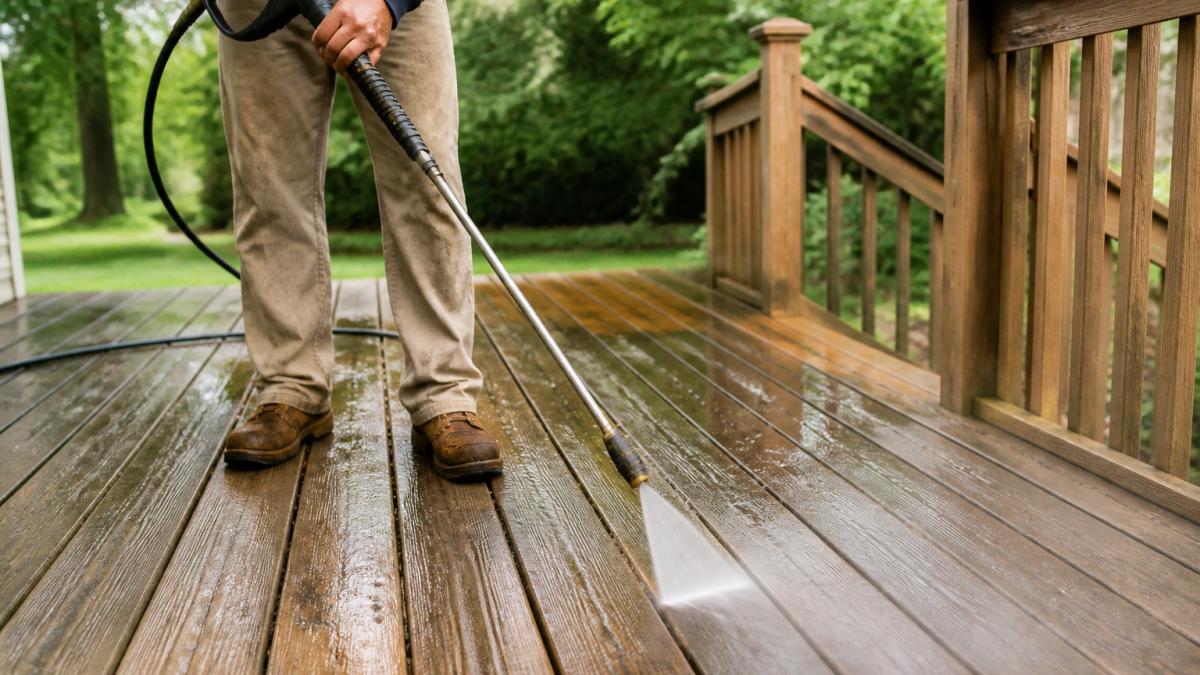
Follow these steps in order:
- Clear the deck of furniture, grills, and planters
- Sweep off loose debris and check for loose boards or nails
- Apply a deck-cleaning solution and let it dwell
- Rinse with low pressure, working with the grain
- Keep the nozzle moving at all times
- Let the wood dry fully before any staining
Settings, Nozzles, and Spray Distance That Protect the Wood
Use the widest spray pattern available, usually the 40-degree tip, and keep the wand moving.
Never use a pinpoint tip on wood. That narrow stream concentrates all the pressure into one spot and cuts into the grain. A fan tip spreads the force and cleans more evenly.
What most guides miss is the test area. Spray a small, out-of-sight section first and let it dry.
Prepping the Deck and Surrounding Area
Cover plants, siding, and electrical outlets before you start. Wet down nearby landscaping so any overspray or runoff does not burn leaves.
Check the deck for soft spots, popped nails, and loose railings first. Fix those before washing, not after.
Also plan where the runoff goes. Dirty water carrying cleaner and organic matter should not run straight into a storm drain or a garden bed.
Work in the shade or on an overcast day. Direct sun dries the cleaner too fast, so it stops working before you rinse.
Pressure Washing vs. Sanding a Deck: Which Restores the Surface?
Pressure washing cleans; sanding restores. That is the short version. A washer removes dirt and buildup, but it cannot flatten a rough, splintered surface or erase deep stains.
Sanding levels the wood, opens the grain, and removes the fuzzy layer that washing can leave behind.
Here is when each makes sense:
- Pressure wash only: the wood is sound and you just need it clean
- Wash, then sand: the surface is rough or you plan to stain
- Sand only: the deck is delicate or already clean
For a full restoration, the order is clean, dry, sand, then finish. Skipping the sand step often shows up as a blotchy stain job a few months later.
How Long to Wait to Stain a Deck After Pressure Washing
Wait until the wood is completely dry, which usually means 48 to 72 hours of dry weather. Damp wood traps moisture under the stain and causes peeling.
Test before you commit. Sprinkle a few drops of water on the boards. If they soak in quickly, the wood is ready.
Drying time depends on the weather, the wood species, and how much water soaked in. Humid stretches push it longer.
When Not to Pressure Wash a Deck
Some decks should never meet a pressure washer. Soft, aged, or damaged wood will not survive it, and no technique fixes that. The bigger miss in most guides is that the answer depends on the material, not just the condition. Here is how to judge your own deck before you rent anything.
Material-by-Material Guidance
- Pressure-treated wood (pine): The most forgiving common decking, but new boards are soft and fur easily. Wait at least a few months after installation, use low pressure and a 40-degree tip, and expect some raised grain. Old, gray pressure-treated boards clean up well but may need sanding afterward.
- Cedar: Soft and prone to fuzzing. Use the lowest pressure you can, keep the nozzle moving, and test a hidden board first. Cedar often cleans better with a chemical cleaner and a gentle rinse than with pressure alone.
- Hardwood (ipe, mahogany, cumaru): Dense and more pressure-tolerant, but expensive to replace. Stick to low pressure and never let the wand dwell in one spot. Hardwood can bleed tannins, so rinse thoroughly and plan for runoff.
Condition Red Flags
Skip pressure washing when you see:
- Soft or spongy boards underfoot
- Visible rot, especially near posts and railings
- Heavy splintering or raised grain
- Loose or popped fasteners
Gentler Alternatives
When pressure washing is off the table, you still have options:
- Chemical cleaning plus a garden hose: A deck cleaner applied with a pump sprayer, dwelled, and rinsed with a hose removes mold and mildew without blasting the wood.
- Soft washing: Low pressure with a cleaning solution, common for delicate surfaces, works well on composite and fragile wood.
- Hand scrubbing: A stiff brush and cleaner for small areas or spot treatment.
- Sanding or board replacement: For rot, splintering, or structural damage, cleaning is not the fix.
In those cases, a gentler method or a professional assessment is the safer call. A trained eye can tell you whether the deck needs cleaning, restoration, or replacement. That is the kind of question we answer in a free consultation.
Washing a deck with soft boards can force water into the wood and speed up rot. If the wood gives under your foot, stop and get it checked first.
When in doubt, test a hidden board with the gentlest method first. If the wood furs, splinters, or darkens, stop and switch to a chemical cleaner and a hose.
Frequently Asked Questions
Can you pressure wash a wood deck without damaging it?
Yes, if you control three things: pressure, distance, and nozzle. Keep the washer on its lowest setting, use a wide 40-degree fan tip, and hold the wand at least 12 inches from the boards. Move with the grain and never stop in one spot. Wood fibers bruise and splinter under too much force, so test a small hidden area first. If the surface fuzzes up or gouges, back off. Many homeowners skip this and end up worse than they started, which is why some choose professional deck cleaning instead.
How much does pressure washing deck cost for a typical wood deck?
Professional pressure washing deck cost depends on square footage, condition, and whether cleaning solutions or restoration are included. A simple wash on a small deck sits at the low end, while larger decks with heavy mold, mildew, or old stain removal cost more. Get a written quote that states what is included: rinsing, detergent, runoff control, and disposal. DIY equipment rental plus cleaner usually costs far less, but the trade-off is time, risk of surface damage, and no guarantee on results.
How long should a deck dry after pressure washing before staining?
Wood needs to dry to its normal moisture level before stain goes on, and that usually means 48 to 72 hours in warm, dry weather. Humid or cool conditions can stretch it to several days. Test before you stain: sprinkle a few drops of water on the boards. If they soak in quickly, the wood is ready. If water beads up or sits on the surface, wait longer. Staining damp wood traps moisture and causes peeling, so patience here protects the whole job.
Is it better to pressure wash or sand a deck?
They solve different problems. Pressure washing removes dirt, mold, mildew, moss, and algae from the surface and between boards. Sanding levels the wood, opens the grain, and removes old stain and fuzz left by washing. Most full restorations use both: wash first, let it dry, then sand and stain. If your deck is only dirty, washing alone may be enough. If the surface is rough, gray, or coated in failing stain, sanding after the wash gives a far better finish.
Deck power washing is worth it when the wood is sound and the pressure is low. It is a waste, or worse, when the boards are soft or the settings are wrong. That judgment call is where experience matters.
At Midwest Maintenance LLC, we have handled wood and masonry restoration since 2008. We offer free consultations, dedicated log home and deck care, and professional cleaning built to protect your investment. Call today to find out what your deck actually needs.

Comments are closed