Table of Contents
- When to Book Professional Ice Dam Removal Services
- Ice Dam Removal Cost: What Affects Your Estimate
- Ice Dam Removal Methods: Steam, Chipping, and What to Avoid
- How to Remove Ice Dams Safely: What Homeowners Should Know
- How to Vet an Ice Dam Removal Provider Before You Book
- Ice Dam Prevention: Long-Term Fixes That Stop Recurring Damage
- What to Expect on Service Day: Booking, Arrival, and Inspection
- Frequently Asked Questions
Last Updated: October 20, 2026
When to Book Professional Ice Dam Removal Services
Ice dams form when warm attic air melts snow on the upper roof, and the water refreezes at the cold eaves, creating a ridge of ice that traps meltwater against the shingles. That trapped water backs up under the shingles and into the decking, which is why a small ice ridge can turn into a ceiling stain within days. At Midwest Maintenance LLC, we have handled winter roof calls since 2008, and the pattern is always the same: homeowners who book professional ice dam removal services early often mitigate more extensive damage than those who wait for water to reach the drywall.
Book a crew the moment you see the warning signs below. Waiting for a “warm spell” is the most common mistake we see, because a thaw often arrives after the damage is already done.
Signs You Have an Ice Dam and Roof Leak
The clearest sign is a thick ridge of ice along the roof edge with icicles hanging from the gutter line. Inside the house, watch for:
- Brown or yellow stains spreading across ceiling drywall
- Water tracking down exterior walls or bubbling paint
- Damp, musty smells in upstairs rooms or the attic
- Sagging gutters weighed down by ice
- Visible ice buildup behind the fascia board
Any one of these means water intrusion has likely started. Call for service rather than climbing a ladder yourself; a frozen roof is not a DIY surface.
Ice Dam Removal Cost: What Affects Your Estimate
Ice dam removal cost depends on the size of the dam, roof pitch and access, how many layers of ice have built up, and whether the work is an emergency after-hours call. Local labor rates vary by market, and steep or multi-story roofs take longer to work safely.
Most providers price by the linear foot of ice along the eaves, not by the hour, because the work is measured in roof edge rather than clock time. A common pattern in northern markets is a base service call plus a per-linear-foot rate, with surcharges for emergency dispatch, steep or multi-story roofs, and heavy snow that must be cleared before steam can reach the ice. Because those variables swing widely, a phone quote on an ice dam is a guess; a written estimate after a roof assessment is the only number worth comparing.
Expect the estimate to account for:
- Linear feet of ice along the eaves
- Roof height, pitch, and accessibility
- Number of ice layers and overall ice thickness
- Whether snow must be cleared first
- Emergency or same-day scheduling
- Travel distance outside the provider’s core service area
When you compare estimates, ask each provider to break the price into those line items. A low headline number that excludes snow clearing or emergency dispatch is not a lower price; it is an incomplete one. Also confirm whether the estimate is free, whether it is binding, and whether any change order requires your approval before work continues.
Never agree to a price before the provider has assessed the roof. A phone quote on an ice dam is a guess, and it usually grows once the crew is on site.
Ice Dam Removal Methods: Steam, Chipping, and What to Avoid
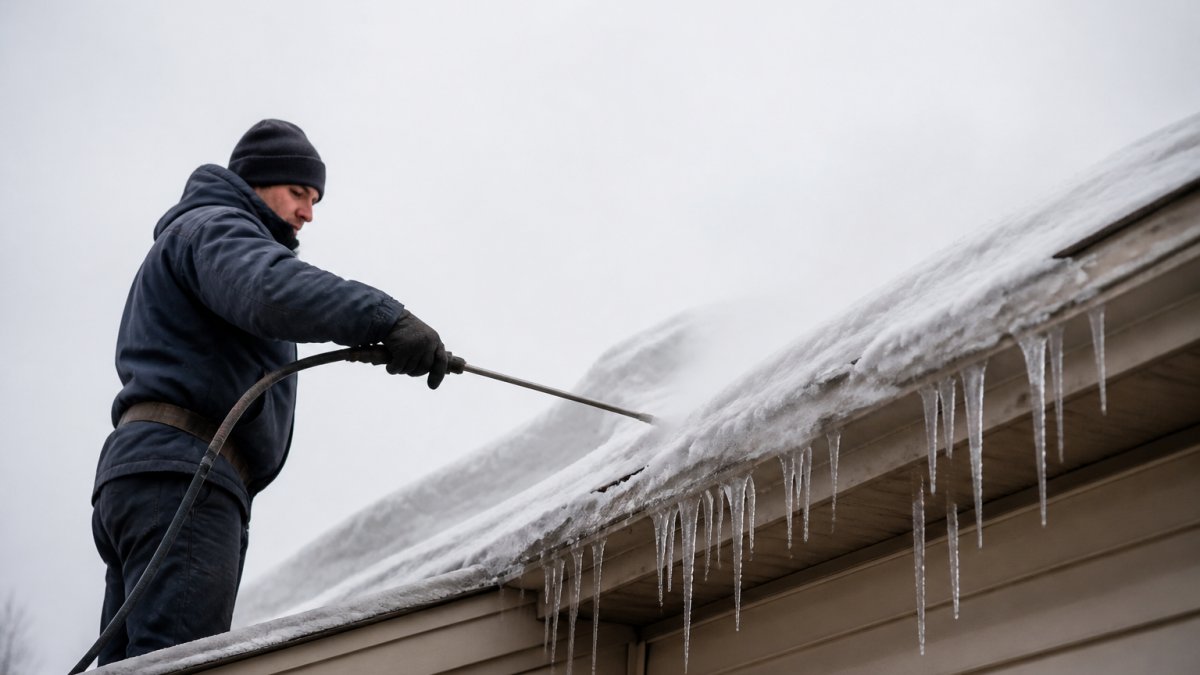
Steam removal is the safest method for shingles. A technician directs low-pressure steam at the ice in controlled passes, melting channels that let trapped water drain without scraping the roof surface.
Other approaches carry real risk:
- Chipping with an axe or hammer: cracks shingles and voids manufacturer warranties. Avoid.
- Rock salt or calcium chloride in socks: corrodes gutters and kills landscaping below. Avoid.
- Pressure washing: drives water under shingles and can cause the exact leak you are trying to stop. Avoid.
We use steam equipment because it protects the shingle layer.
How to Remove Ice Dams Safely: What Homeowners Should Know
Safe removal means staying off the roof. Falls from icy roofs are a leading winter injury risk, and a homeowner with a snow rake can easily pull down more than intended. Professional removal keeps the work on the roof and the risk with trained, insured technicians.
A few safety boundaries worth knowing:
- Never stand on a frozen roof or reach over the gutter line
- Do not pour hot water on the ice; it refreezes and adds weight
- Keep snow rakes off electrical lines and roof vents
- Leave the ladder work to the crew
If you must clear snow between visits, use a roof rake from the ground and stop well short of the edge.
How to Vet an Ice Dam Removal Provider Before You Book
Most homeowners compare ice dam providers on price alone, which is the wrong first filter. The better approach is a side-by-side comparison of five things: service area, winter response time, removal method, credentials, and estimate policy. Build a simple comparison sheet with one column per provider and fill it in before you call, so the conversation stays on the facts that affect your roof.
Use these five comparison rows:
- Service area and travel policy. Confirm the provider actually services your address and ask whether travel outside a core area adds a fee.
- Winter response time. Ask for a realistic window during storm demand, not a best-case number. Same-day and after-hours availability should be stated explicitly.
- Removal method. Steam is the shingle-safe standard; mechanical chipping and pressure washing are red flags. Get the method in writing.
- Credentials. Confirm licensed contractor status where your state requires it, current general liability insurance, and workers’ compensation coverage for the crew on your roof.
- Estimate and documentation policy. Ask whether the estimate is free and written, and whether the provider photographs the roof before and after removal.
Then run this checklist when you call:
- Confirm licensed contractor status and current insurance
- Ask whether technicians are bonded and background-checked
- Request the removal method in writing (steam preferred)
- Confirm emergency and same-day service availability
- Ask for the service area and any travel fee
- Read recent customer reviews and ratings
- Get the free estimate and scope in writing
- Ask who handles post-removal inspection
- Confirm the provider carries workers’ compensation for roof crews
- Ask how they protect landscaping and siding below the work area
Two questions separate specialists from generalists. First, ask what roof type and pitch they have worked on most this winter; a crew that routinely handles steep, multi-story, or older wood roofs will describe the access and fall-protection plan without prompting. Second, ask what they do when steam reveals a soft spot or a damaged shingle. A specialist documents it and refers you to a roofer; a generalist may keep working and leave you to discover the damage later.
A provider who cannot tell you their removal method in one sentence is not a specialist. Steam crews say “steam” immediately.
Ice Dam Prevention: Long-Term Fixes That Stop Recurring Damage
Ice dam prevention starts in the attic, not on the roof. Warm air leaking into the attic melts snow from below, and that meltwater is what refreezes at the eaves. Fix the heat loss and the dams stop forming.
Long-term fixes worth scheduling:
- Air-seal gaps around light fixtures, hatches, and plumbing penetrations
- Add insulation to bring the attic floor up to current recommendations
- Improve attic ventilation so the roof deck stays cold
- Clear gutters before winter so meltwater has somewhere to go
For log homes and older wood structures, we also check for moisture damage around the eaves while we are on site, since repeated freeze-thaw cycles stress wood and chinking over time.
What to Expect on Service Day: Booking, Arrival, and Inspection
Booking takes a phone call. We confirm your address, roof type, and the visible symptoms, then schedule a window.
On service day, expect:
- Arrival and roof assessment. The crew walks the perimeter and checks the attic if accessible.
- Steam removal. Ice is cleared in channels so meltwater drains.
- Snow clearing at the eaves. This prevents immediate refreezing.
- Post-removal inspection. We photograph the roof and note any damaged shingles or interior water stains for your insurance records.
- Documentation handoff. You receive the photos and notes.
That inspection step matters. Insurers often ask for evidence of the damage and the date it was addressed, and photos taken on service day make a claim far easier to support. If you are comparing providers, ask whether they document; many do not.
The best time to book is before the leak starts. Early-season scheduling avoids emergency rates and protects the roof from repeated freeze-thaw damage.
Frequently Asked Questions
How much does it cost to have someone remove ice dams?
Ice dam removal cost depends on dam size, roof access, how much ice has built up, and whether emergency service is needed. Providers typically give a free estimate before starting work, and pricing is often quoted per project rather than per hour. Request a written estimate that covers labor, equipment, and any follow-up roof assessment so you can compare quotes fairly and avoid surprise charges after the job.
When should I call a professional to remove an ice dam?
Call a professional as soon as you notice water stains on ceilings, sagging gutters, or thick ice along the roof edge. Waiting lets water intrusion spread into insulation and drywall, which drives up repair costs. Most providers offer same-day or 24/7 response during heavy freeze-thaw cycles. If you see active leaking, treat it as an emergency and book service immediately rather than attempting a DIY fix.
How do professionals remove ice dams without damaging a roof?
Licensed contractors use low-pressure steam equipment to melt channels through the ice without striking the shingles. Steam removal protects shingle granules and flashing that hammers and chipping tools can crack. Insured technicians also assess roof access and use fall-protection gear. Ask any provider whether they use steam, carry insurance, and inspect for damage after removal before you book.
What should I ask before booking an ice dam removal service?
Ask whether the provider is licensed, bonded, and insured, what removal method they use, and whether they offer a free estimate. Confirm response time, service area, and what the quote includes. Request customer reviews and proof of accreditation. A reputable contractor will explain the process, document post-removal conditions, and discuss ice dam prevention options so the problem does not return next winter.
Ice dams rarely fix themselves, and every warm afternoon that follows a cold snap pushes more water under your shingles. Midwest Maintenance LLC has served homeowners and property managers since 2008 with steam-based ice dam removal, free consultations, and documented post-removal inspections. Our team also handles log home and wood care, so we can address the moisture damage ice dams leave behind. Call today to schedule your assessment and protect your roof before the next freeze.

Comments are closed