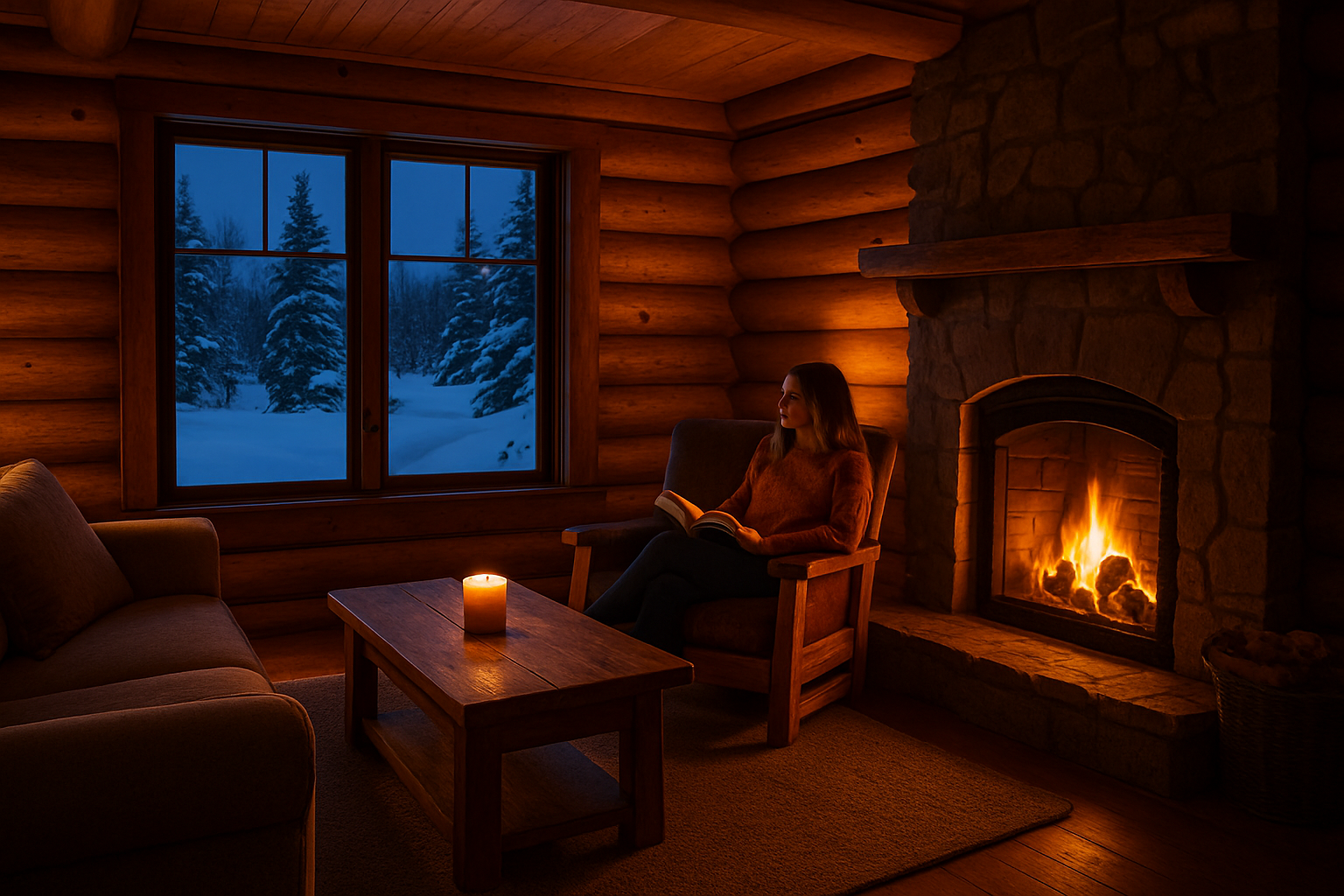
Log home energy efficiency is a topic many homeowners are curious about, especially if they live in areas with cold winters or hot summers. Modern log homes, however, are far more efficient than most people expect. Wood naturally stores heat and releases it slowly, which helps keep indoor temperatures stable throughout the year. When logs are sealed well and paired with the right insulation and heating system, a log home can stay comfortable in every season.
Are Log Homes Energy Efficient?
Yes, log homes can be very energy efficient. Logs have thermal mass, which means they absorb heat and release it gradually. Because of this, indoor temperatures often stay more stable than in traditional framed homes.
Energy efficiency does depend on good maintenance. Gaps between logs, aging caulking, or worn chinking can create drafts. When these areas are sealed well, the home performs significantly better. Many modern stains and sealants also help protect the logs and improve overall comfort. As a result, a properly maintained log home can offer excellent energy performance.
Are Log Homes Cold in Winter or Hot in Summer?
A common myth is that log homes feel cold in winter or overly warm in summer. In reality, the opposite is true. Logs regulate temperature naturally because of their density and heat absorption. This helps reduce temperature swings and creates a more stable indoor environment.
In winter, the logs hold heat from your heating system and release it slowly. This makes the home feel warm even during very cold nights. During summer, logs absorb heat from the sun but release it slowly, which helps reduce overheating. Comfort issues usually appear only when drafts or insulation problems exist. When gaps are sealed and heating or cooling systems are efficient, log homes stay comfortable all year long.
Do Log Homes Need Special Insulation?
Most full-log homes do not require special insulation in the walls because the logs themselves provide both insulation and thermal mass. However, additional insulation is important in certain parts of the home.
Key areas that benefit from insulation include:
• Roof and ceiling – Heat rises, so strong insulation is essential.
• Basement or crawl space – Prevents heat loss from below.
• Around windows and doors – Proper sealing reduces drafts.
• Log joints – Caulking or chinking acts as insulation and blocks air leaks.
Hybrid log homes, which use log siding over frame walls, may require standard insulation inside the wall cavity. Even with full-log homes, improving insulation in critical areas produces better comfort and lower energy costs.
What’s the Best Heating System for a Log Home?
Log homes work well with several heating systems. The best choice depends on climate, home size, and personal preference. Some systems pair especially well with the natural thermal mass of logs.
Popular heating options include:
• Radiant floor heating – Provides steady warmth and works extremely well with log homes.
• High-efficiency furnaces or heat pumps – Great for maintaining even temperatures.
• Wood stoves or pellet stoves – Offer powerful heat and match the style of log homes.
• Mini-split systems – Ideal for zoned heating and cooling with high efficiency.
Radiant floor heating is a favorite because it warms the home evenly and reduces energy waste. Logs absorb the heat and release it slowly, creating a comfortable indoor environment. No matter which system you choose, sealing gaps and maintaining chinking is essential for maximum efficiency.
WordPress Tags (Comma-Separated)
log home energy efficiency, energy efficient log homes, log home comfort, log home heating, log home insulation, heating systems for log homes, thermal mass logs, efficient log home design, radiant floor heating log home, log home HVAC, insulated log home, log home warmth

Comments are closed