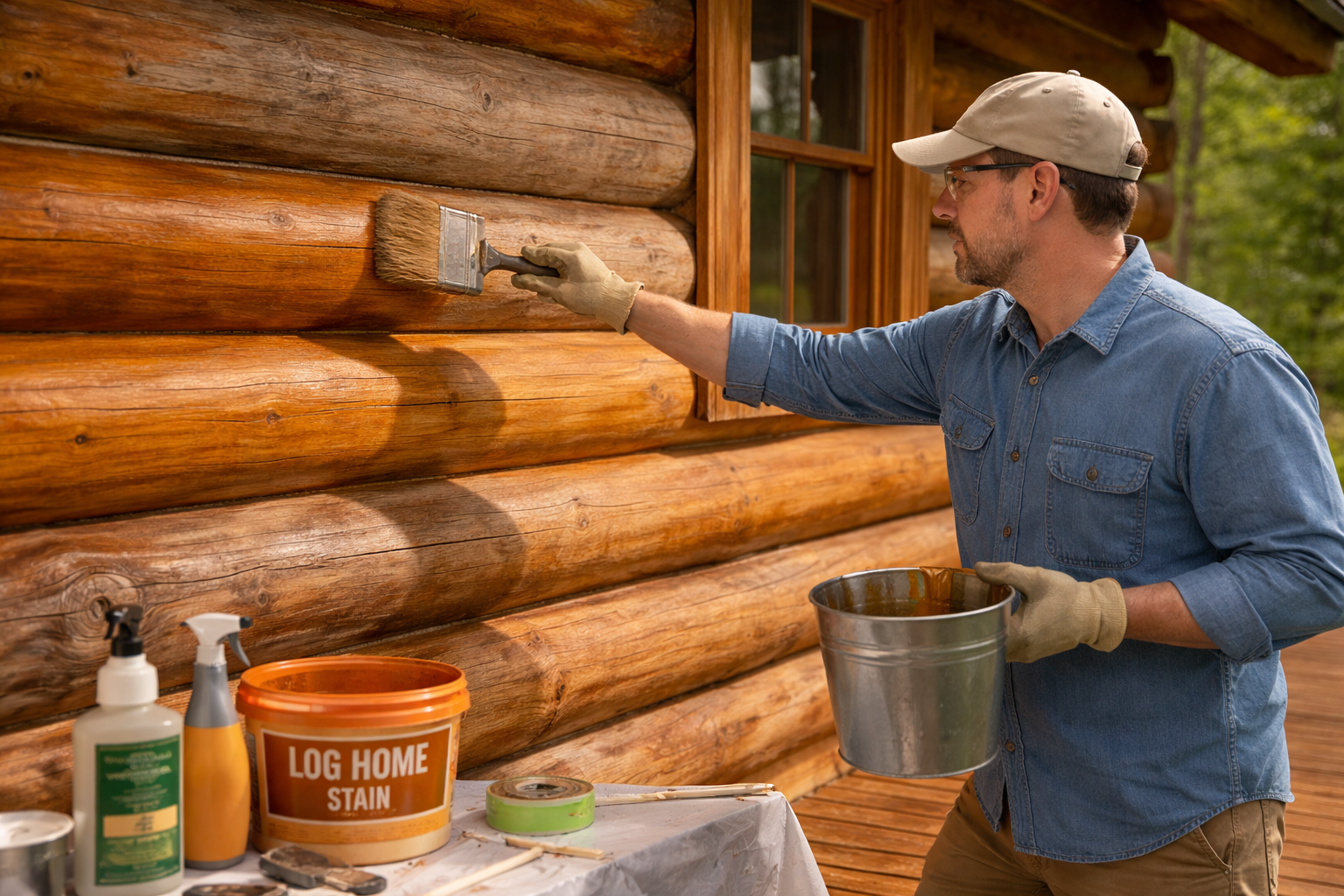
Essential Guide to Log Home Staining, Painting & Restoration
Log home staining is one of the most important parts of protecting and preserving a log home. Over time, sun, moisture, and weather slowly break down the finish on logs. When this happens, the wood begins to fade, dry out, and absorb water. Understanding how painting, staining, and restoration work helps you choose the right approach and avoid costly mistakes.
Can You Paint a Log Home or Is Log Home Staining Better?
Yes, you can paint a log home. However, painting is usually not recommended unless the logs are already in poor condition. Paint forms a solid film that seals the wood completely. While this may look nice at first, it often traps moisture inside the logs.
Because logs need to breathe, trapped moisture can cause rot, peeling paint, and hidden damage. Once paint fails, it is very difficult and expensive to remove. For this reason, most professionals recommend staining instead of painting. Stain protects the wood while still allowing moisture to escape, which helps logs last much longer.
Painting is sometimes used only as a last resort on heavily damaged or previously painted log homes.
How Do You Remove Old Stain Before Log Home Staining?
Old stain must be removed before proper restoration can begin. The method used depends on the condition of the logs and the type of stain currently on the home.
Common stain removal methods include:
• Media blasting (corn cob, walnut shell, or sand)
• Chemical strippers designed for log homes
• Low-pressure washing combined with specialty cleaners
Media blasting is the most effective method for full restoration. It removes old stain evenly and opens the wood pores so new stain can penetrate properly. Chemical stripping may work for lighter jobs but often requires additional rinsing and prep work.
Removing old stain correctly is critical. If stain residue remains, new stain may fail early or peel unevenly.
What’s the Best Way to Restore Faded Logs?
Restoring faded logs starts with proper cleaning and preparation. Sun exposure breaks down stain and dries out the wood surface. As a result, logs turn gray or dull over time.
The best restoration process usually includes:
• Deep cleaning to remove dirt, mildew, and oxidation
• Stain removal if the existing finish is failing
• Brightening the wood to restore natural color
• Applying a high-quality log home stain
• Sealing cracks, checks, and joints
Restoration should always address the cause of fading. If sun exposure is intense, using a stain with strong UV protection is essential. Proper restoration not only improves appearance but also protects the logs from future damage.
How Long Does Log Home Stain Last in Full Sun?
Sun exposure plays a major role in stain longevity. South- and west-facing walls receive the most UV exposure, which causes stain to break down faster.
On average:
• Full sun exposure: 2–4 years
• Partial sun or shade: 4–6 years
• Well-protected areas: 5–7 years
High-quality stains with UV blockers last longer, especially when applied over properly prepared wood. Regular inspections help identify fading early, allowing for touch-ups instead of full re-staining.
Ignoring sun-damaged stain can lead to dry logs, checking, and moisture absorption.
Should You Use Oil-Based or Water-Based Stain?
Both oil-based and water-based stains are used on log homes, but each has advantages and drawbacks.
Oil-based stains:
• Deep penetration
• Rich, natural appearance
• Longer initial lifespan
• Can darken over time
• Harder to maintain later
Water-based stains:
• Easier maintenance
• Better color consistency
• Strong UV resistance
• More environmentally friendly
• Easier future re-coating
Many modern professionals prefer high-quality water-based stains because they are easier to maintain and perform well long-term. However, the best choice often depends on what is already on the home. Mixing stain types without proper removal can cause failure.
Matching the new stain to the existing system is critical unless a full restoration is performed.
Why Proper Staining and Restoration Matters
Log home staining protects against moisture, UV rays, insects, and rot. When stain fails, the wood begins absorbing water, which leads to long-term damage. Restoration done at the right time prevents expensive repairs and extends the life of the home.
A well-stained log home not only looks better but also performs better. It stays stronger, more energy efficient, and easier to maintain for years to come.

Comments are closed