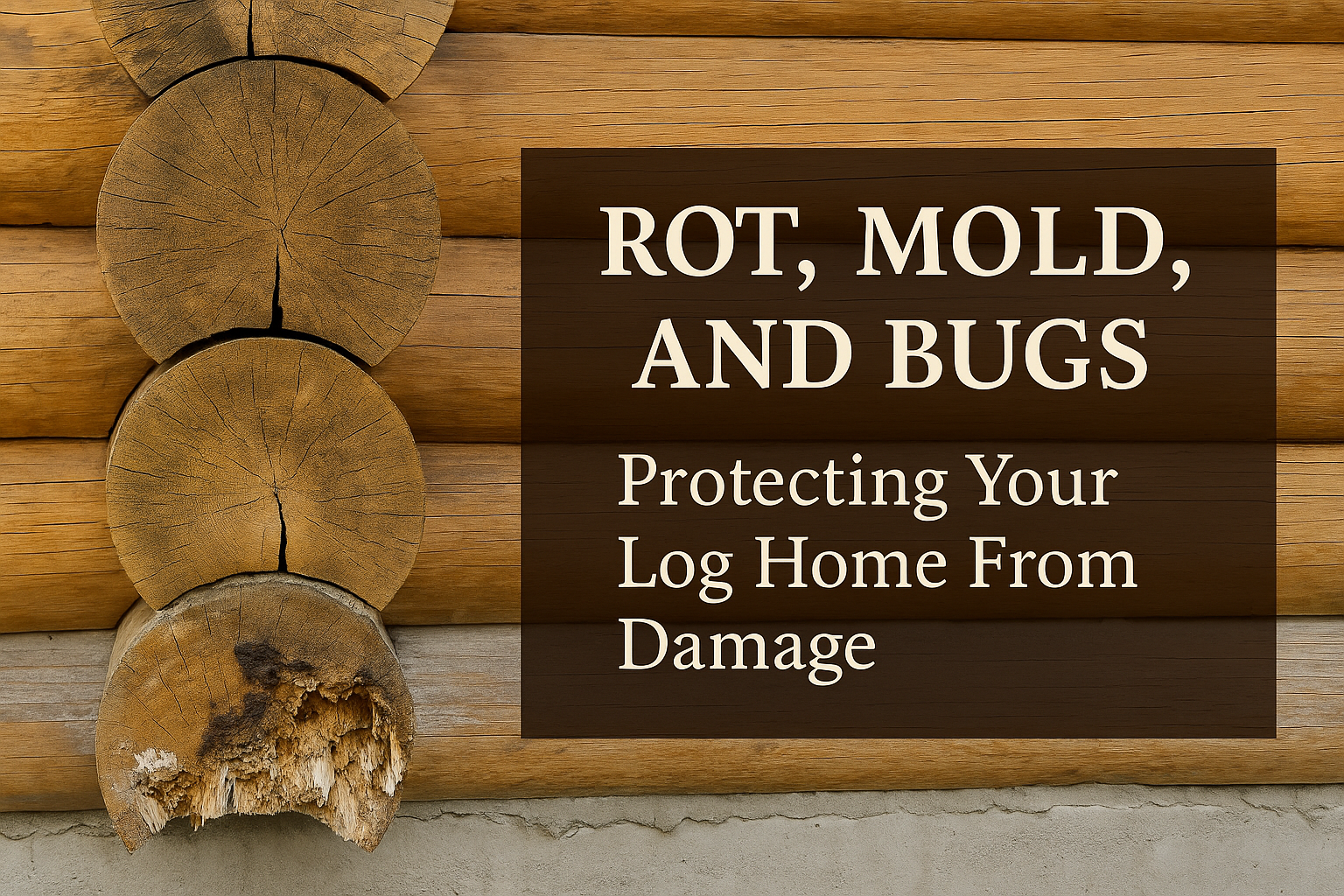
Learn how to prevent rot, mold, termites, and carpenter ants in log homes. See the signs of damage, how to treat mold, and whether rotted logs can be repaired.
Do Log Homes Attract Termites or Carpenter Ants?
Log homes do not automatically attract termites or carpenter ants, but they can become appealing to insects if moisture is present. Insects look for damp, softened wood because it is easier to tunnel through. A well-maintained log home with proper stain, sealant, and moisture control is no more likely to attract insects than a traditional home.
Termites are most commonly attracted to wood that is in direct contact with soil or has consistent moisture exposure. Carpenter ants don’t actually eat wood, but they create nests in softened or decayed areas. You can reduce the risk by keeping your home sealed, stained, and dry. Regular inspections help ensure insects never have a chance to settle in. Professional pest control can also apply preventive treatments that make your logs less appealing to wood-damaging insects.
How Do You Prevent Rot in a Log Home?
Rot prevention starts with one primary goal: keep moisture out of the wood. Rot occurs when fungi develop inside wood that stays damp for too long. The best way to prevent rot is through consistent maintenance and proper building practices.
Key rot-prevention steps include:
• Keep your stain and sealant fresh.
A strong finish prevents water from soaking into the wood.
• Maintain proper drainage around the home.
Downspouts should release water away from the foundation, and gutters should be kept clean.
• Ensure adequate roof overhangs.
Overhangs protect logs from constant rain exposure.
• Seal upward-facing cracks.
Cracks that collect water must be caulked.
• Keep landscaping trimmed away from the logs.
Plants hold moisture that can transfer to the wood.
• Inspect your logs twice a year.
Look for early signs of moisture damage, discoloration, or soft spots.
With consistent attention, rot is almost always preventable. Neglect, however, allows moisture to spread and create bigger problems over time.
What Are the Signs of Rot in Logs?
Rot often begins subtly, so it’s important to recognize the early warning signs before the damage spreads. Early detection can save thousands of dollars in repairs.
Common signs of rot include:
• Soft, spongy, or crumbly wood
Healthy wood should be firm. If the wood gives under gentle pressure, it may be rotting.
• Dark or discolored patches
Brown, black, or darkened areas may indicate moisture absorption.
• Fungal growth or mushroom-like spots
Any organic growth on logs is a sign of moisture problems.
• Hollow sounds when tapped
A light knock should sound solid. Hollow sounds can mean internal decay.
• Musty smells inside the home
Long-term moisture intrusion is often noticeable by odor.
• Crumbling edges or wood fibers
If wood brushes off easily, the structure may be compromised.
If you observe these signs, contacting a log home professional is important. Rot usually spreads deeper into the wood than what appears on the surface.
How Do You Treat Mold or Mildew on Log Homes?
Mold and mildew develop on logs when moisture and organic material accumulate on the exterior surface. Fortunately, early-stage mold is treatable and manageable with proper cleaning.
To remove mold or mildew:
• Use a log-safe cleaner made specifically for wood homes.
Mild log detergents or percarbonate-based cleaners are effective.
• Apply the cleaner with a pump sprayer or soft brush.
Allow it to sit for the recommended time.
• Soft wash or low-pressure rinse the surface.
Avoid harsh high-pressure washing, which can damage wood fibers.
• Never use straight bleach.
Bleach may kill surface mold but weakens fibers and damages stain.
• After cleaning, let the wood dry completely.
Moisture must evaporate so it doesn’t get trapped inside.
• Reseal or restain areas where the finish has failed.
If mold grows repeatedly, your stain has likely broken down.
If mold is widespread, or if it continues returning quickly, it may signal deeper moisture issues or poor ventilation. In these situations, a professional inspection is recommended.
Can You Repair Rotted Logs, or Do They Need to Be Replaced?
Whether a rotted log can be repaired depends on how deep and extensive the damage is. Many homeowners are relieved to learn that small to moderate rot can often be repaired without replacing the entire log.
There are generally three levels of repair:
• Minor Rot (surface-level):
Can often be treated by removing loose material, applying wood preservatives, and filling with epoxy or wood hardener.
• Moderate Rot (a section of a log):
Professionals can perform a “log splice” or “Dutchman repair,” which removes the damaged section and replaces it with new matching wood.
• Severe Rot (deep or structural):
Replacement is typically required. This involves removing the compromised log and installing a new one, ensuring the structure remains strong and safe.
Replacing an entire log is more expensive, but it prevents rot from spreading to surrounding wood. The key is early detection—repairing rot early costs far less than replacement.

Comments are closed