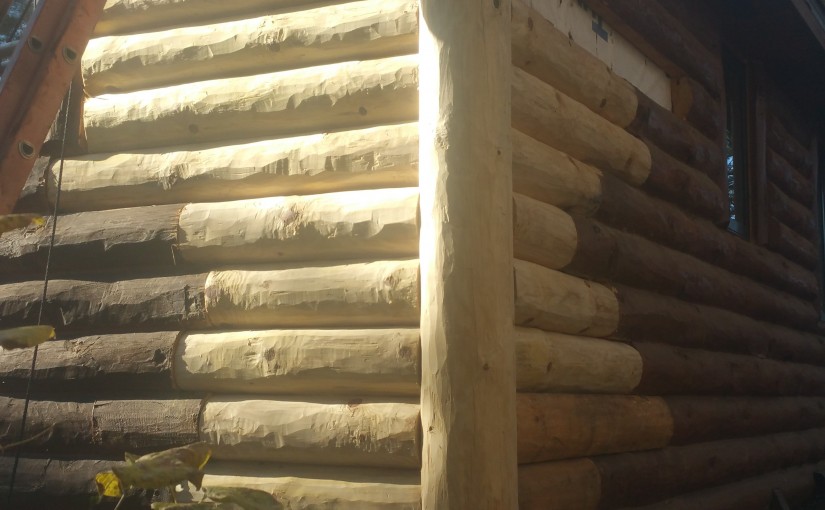
Peeling, flaking, or failing stain on a log home can be frustrating, especially when the finish was supposed to protect the wood for years. If you’ve noticed areas where the stain is lifting, wearing unevenly, or exposing bare wood, it’s worth understanding what’s causing the problem before applying another coat.
Exterior log homes in Wisconsin face constant exposure to sunlight, rain, humidity, and seasonal temperature changes. Over time, these conditions can affect the protective finish. However, weather isn’t always the only reason stain fails. Poor surface preparation, moisture problems, incompatible coatings, and deteriorating wood can also contribute.
At Midwest Maintenance LLC, we believe the right restoration approach starts with understanding the condition of the wood and the reason the existing finish is failing. The goal isn’t simply to cover peeling stain. It’s to address the underlying problem and help protect the wood for the long term.
6 Common Reasons Log Home Stain Peels
Not every failing finish has the same cause. Before deciding whether your log home needs cleaning, preparation, restaining, or repairs, consider what may be happening beneath the surface.
1. Improper Surface Preparation
One common reason for premature finish failure is inadequate surface preparation.
Before a new stain is applied, the wood needs to be properly prepared for the chosen product. Dirt, organic growth, failing previous coatings, and other contaminants can interfere with the finish.
If the existing surface wasn’t cleaned or prepared correctly, the new coating may not perform as intended.
Depending on the condition of the logs and the type of finish, proper preparation may involve cleaning, removing failing material, and allowing the wood to dry before staining.
The important lesson: Applying another coat over a poorly prepared surface doesn’t correct the original problem.
2. Moisture Problems
Moisture can contribute to finish deterioration and wood damage, particularly when water repeatedly reaches the same areas.
Common sources include:
- Leaking or overflowing gutters
- Downspouts directing water toward the home
- Failed caulking or chinking
- Water entering around windows and doors
- Poor drainage around the foundation
- Rainwater splashing onto lower logs
- Exposed log ends that receive repeated moisture
When moisture conditions are unfavorable, a stain may deteriorate prematurely or fail to perform as expected.
However, peeling stain alone doesn’t prove that moisture is the cause. The finish type, preparation, application conditions, and condition of the wood all need to be considered.
Before restaining, identify and address any water-management problems that may be contributing to the damage.
3. UV Exposure and Weathering
Sunlight gradually affects exterior wood finishes. Ultraviolet radiation can contribute to fading and deterioration, while rain and repeated wet-and-dry cycles add further stress.
South- and west-facing walls may experience more intense afternoon sunlight than shaded areas. As a result, the finish may wear unevenly across the same home.
Signs of weather-related finish deterioration can include:
- Fading or uneven color
- Gray or weathered wood
- Reduced water resistance
- Areas where the finish has worn away
- Differences between sheltered and exposed walls
Fading doesn’t automatically mean a stain is peeling or that complete restoration is necessary. It does, however, provide a reason to assess the finish and determine whether maintenance is appropriate.
4. Applying an Incompatible Product
Not all exterior wood stains and coatings are interchangeable.
Different products have different formulations, preparation requirements, and application methods. Applying a new coating over an existing finish without confirming compatibility can contribute to adhesion problems or an unsatisfactory result.
Before selecting a replacement product, determine what is currently on the wood, if possible, and review the new product’s requirements.
Consider:
- Whether the existing finish is penetrating or film-forming
- Whether the old coating is still sound
- Whether the new product is compatible with the existing finish
- Whether the surface requires stripping or additional preparation
- Whether the wood meets the product’s moisture requirements
When the existing finish is unknown or visibly failing, testing a small area and following the manufacturer’s preparation instructions can help avoid unnecessary problems.
5. Staining Under Unsuitable Conditions
Even a suitable product can perform poorly when applied under the wrong conditions.
Temperature, humidity, rain, direct sunlight, and wood moisture can affect application and drying. The specific requirements vary by product.
For example, applying stain shortly before rain may interfere with proper drying or curing. Applying it to wood that is too wet can also compromise the intended result.
This is especially important in Wisconsin, where weather conditions can change significantly between late summer, fall, and winter.
Before scheduling a staining project, check the manufacturer’s instructions for:
- Permitted application temperatures
- Maximum wood moisture content
- Rain-free periods
- Drying and curing requirements
- Recommended application methods
The right timing depends on the product and actual conditions—not simply the calendar.
6. Underlying Wood Damage
Sometimes, the finish is only part of the problem.
If the wood has deteriorated, remains persistently damp, or has been exposed to repeated water intrusion, applying another coat may not address the underlying condition.
Look for additional warning signs, such as:
- Soft or crumbling wood
- Deep deterioration
- Persistent dark discoloration accompanied by other damage
- Failed chinking or caulking
- Water staining around joints
- Areas that remain damp long after surrounding wood has dried
Discoloration alone doesn’t confirm rot. The condition of the wood must be evaluated.
If deterioration is present, repairs may be necessary before the surface can be properly refinished.
Can You Stain Over Peeling Log Home Stain?
In most cases, you should address the failing finish before applying a new coat.
Staining directly over peeling or loose material can leave the new finish dependent on an unstable surface. Even if the new coating initially looks better, the underlying failure may continue.
The appropriate preparation depends on the type and condition of the existing finish.
When cleaning and preparation may be enough
If the existing finish is generally sound but has accumulated dirt or light surface contamination, appropriate cleaning and preparation may be sufficient before maintenance staining.
When removing the old finish may be necessary
If the coating is extensively peeling, flaking, or failing, more substantial preparation may be required. Depending on the product and wood condition, this could involve stripping or other methods of removing failing material.
When repairs should come first
If the inspection reveals rot, damaged logs, failed joints, or persistent moisture problems, those conditions should be evaluated before refinishing.
The correct approach isn’t always the most extensive one. It is the approach that matches the actual condition of the wood.
How to Determine Whether Your Log Home Needs Restaining or Restoration
A log home with fading stain may need a different solution from one with widespread peeling and deteriorated wood.
Here’s a practical way to think about the differences.
Maintenance staining
Maintenance staining may be appropriate when the wood is in good condition, the existing finish is suitable for the intended maintenance treatment, and the surface can be properly prepared.
Finish restoration
A more extensive finish restoration may be appropriate when the existing coating is failing across multiple areas or requires significant preparation before a new finish can be applied.
Wood repair and restoration
When the logs themselves are damaged, the project may require repairs in addition to cleaning and staining.
This can include addressing deteriorated wood, failed chinking or caulking, and moisture-related problems.
Before recommending a treatment, we want to understand why the finish failed and whether the wood underneath is still in suitable condition.
The Professional Log Home Restoration Process
A proper restoration process should address the condition of the wood, the existing finish, and the factors contributing to deterioration.
At Midwest Maintenance LLC, the general framework is:
Inspect → Clean → Dry → Repair → Stain/Seal → Protect → Maintain
1. Inspect the wood and existing finish
Begin by examining the logs, existing coating, joints, and areas exposed to repeated moisture.
The inspection helps determine whether the problem is primarily cosmetic, related to finish failure, or associated with damaged wood.
2. Clean and prepare the surface
Remove dirt, organic growth, and failing material using methods appropriate for the wood and coating.
Excessive pressure can damage wood fibers, so cleaning techniques should be selected carefully.
3. Allow the wood to dry
The surface needs to meet the selected product’s moisture requirements before staining.
Drying time varies with weather, exposure, wood condition, and the preparation method used.
4. Complete necessary repairs
Address damaged wood and failed joints as needed. Also investigate sources of water intrusion rather than simply covering the affected areas.
5. Apply the appropriate finish
Once the surface is properly prepared and conditions are suitable, select and apply a compatible finish according to the manufacturer’s instructions.
6. Establish an ongoing maintenance plan
Regular inspections help homeowners monitor the finish and identify changes before they become more extensive problems.
A successful restoration should improve the appearance of the wood while addressing the conditions that caused the deterioration.
How Wisconsin Weather Affects Log Home Staining
Wisconsin’s seasonal weather makes proper timing and preparation particularly important for exterior wood projects.
Summer: Sunlight and repeated wet-and-dry cycles
Strong sunlight can contribute to fading and finish deterioration. Rain and humidity can also affect how quickly the wood dries.
During summer, inspect exposed walls for uneven fading, peeling, and signs of water exposure.
Fall: Inspect and plan before winter
Fall is a useful time to assess the condition of your log home and determine what maintenance is needed.
However, don’t assume every staining project can be completed simply because the weather is still relatively mild. Temperatures, overnight conditions, humidity, and wood moisture all matter.
If conditions no longer meet the product’s requirements, postponing the work may be more appropriate than rushing the application.
Winter: Monitor rather than rush exterior work
Cold temperatures and unsuitable weather can limit exterior staining options.
During winter, monitor visible areas for moisture problems, snow accumulation against the structure, and signs of damage. Plan more extensive restoration when conditions are appropriate.
Spring: Reassess after winter
Once conditions permit a thorough inspection, check for changes in the finish, water staining, deteriorated joints, and other signs of damage.
The best maintenance schedule depends on the condition of the property and the product used—not a fixed annual timetable.
Common Mistakes When Fixing Peeling Log Home Stain
Homeowners can avoid unnecessary work by recognizing a few common mistakes.
Applying another coat without identifying the cause. A new finish may not solve moisture intrusion, poor preparation, or incompatible coatings.
Using excessive pressure to remove stain. Aggressive cleaning can damage the wood surface and create additional preparation work.
Ignoring gutters and drainage. Repeated water exposure can undermine the results of an otherwise well-executed restoration.
Choosing a product based only on color. Compatibility, surface preparation, moisture requirements, and protection needs are just as important as appearance.
Assuming all dark areas indicate rot. Discoloration can have several causes. Evaluate the wood rather than relying on color alone.
Waiting until widespread damage appears. Regular inspections can help identify areas that need attention while the problem is still manageable.
Log Home Stain Inspection Checklist
Use this checklist when evaluating your home’s exterior.
- Is the stain peeling, flaking, or wearing away?
- Are some walls fading faster than others?
- Is bare or weathered wood visible?
- Are there areas where water repeatedly contacts the logs?
- Are gutters and downspouts directing water away from the structure?
- Are there cracks or checks that appear to hold moisture?
- Is the chinking or caulking separating?
- Are any areas soft, crumbling, or visibly deteriorated?
- Is there persistent organic growth or unusual discoloration?
- Do you know which finish was previously applied?
If several items raise concerns, a closer evaluation can help determine the appropriate next step.
When Should You Contact a Log Home Restoration Professional?
Professional help may be appropriate when the finish is failing across large areas, the existing coating is difficult to identify, the wood requires extensive preparation, or there are signs of rot and moisture intrusion.
A restoration professional can evaluate the condition of the wood and help determine whether cleaning, stripping, repairs, restaining, or a combination of treatments is appropriate.
Homeowners can still perform routine visual inspections and monitor gutters, drainage, and finish condition themselves. The key is recognizing when a problem requires more than a simple maintenance coat.
Protect Your Log Home by Addressing the Cause of Finish Failure
Peeling stain doesn’t automatically mean your log home needs complete restoration. It does mean the finish deserves attention and the cause of the failure should be understood before another coating is applied.
The right solution starts with evaluating the existing finish, checking the condition of the wood, addressing moisture sources, and preparing the surface properly.
At Midwest Maintenance LLC, our approach is straightforward: Clean. Restore. Preserve. We focus on understanding the condition of exterior wood and determining what work is appropriate for the property.
If your log home is showing signs of peeling stain, weathering, or wood deterioration, contact Midwest Maintenance LLC to discuss an inspection or restoration estimate. We serve homeowners in Glendale, Milwaukee, Greater Milwaukee, and surrounding Southeast Wisconsin communities.
Addressing finish problems early can help you make informed maintenance decisions and protect your investment for the seasons ahead.

Comments are closed