For Wisconsin log homeowners, late summer is a good time to take a close look at the exterior of the home before fall arrives. Months of sun, rain, humidity, and temperature changes can reveal problems that may not have been obvious earlier in the year.
A faded stain isn’t always just a cosmetic issue. A small crack isn’t automatically a sign of serious damage either. The important thing is understanding what is happening to the wood, why it is happening, and whether moisture is getting an opportunity to cause further deterioration.
At Midwest Maintenance LLC, we look beyond the surface. Our approach to log home maintenance is built around understanding the condition of the wood and addressing problems before they become more extensive.
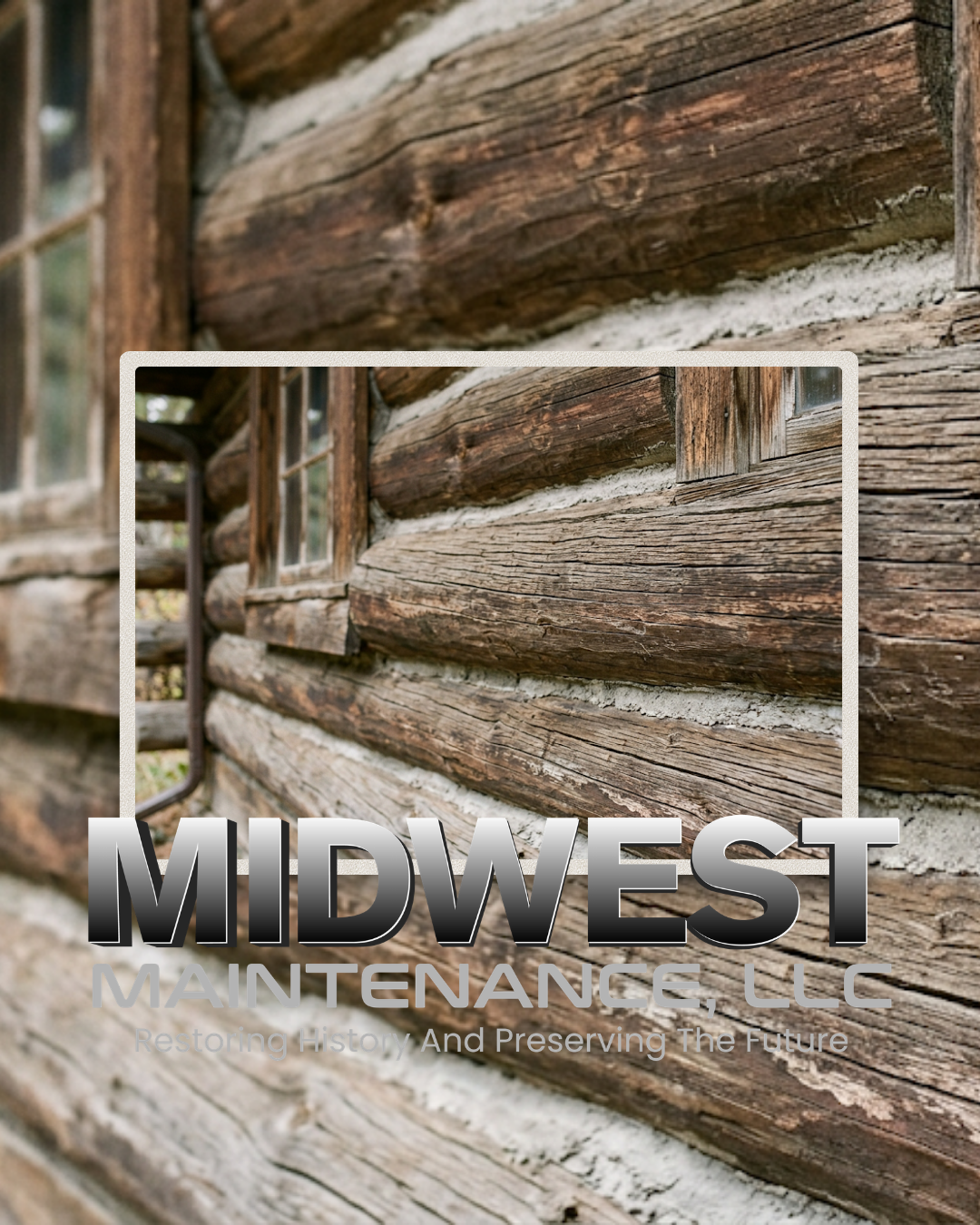
Why Late Summer Is a Good Time to Inspect Your Log Home
August sits at an important point in the Wisconsin maintenance calendar.
Summer weather has already put exterior wood through months of UV exposure, rain, humidity, and wet-and-dry cycles. At the same time, there is still an opportunity to identify problems and plan appropriate maintenance before colder weather arrives.
You don’t necessarily need to start a major restoration project simply because fall is approaching. Instead, use this time to determine what condition your home is actually in.
Look closely at the areas that are most exposed to weather and moisture, including:
- South- and west-facing walls
- Log ends
- Areas underneath rooflines
- Around windows and doors
- Lower logs near the ground
- Areas below gutters and downspouts
- Deck connections
- Areas where water tends to splash onto the logs
- Joints, cracks, chinking, and caulking
9 Things to Check Before Fall
1. Look at the Condition of Your Stain or Finish
One of the first things homeowners should examine is the existing finish.
Is the stain still providing protection, or is it beginning to fade, peel, crack, or wear away?
A properly maintained finish helps protect exterior wood from environmental exposure. When the finish begins failing, the underlying wood can become increasingly exposed to moisture and UV damage.
Don’t assume that another coat of stain is automatically the answer.
Before staining, we want to know why the existing finish failed in the first place. Poor preparation, moisture exposure, weathering, incompatible coatings, and other conditions can contribute to premature finish failure.
The surface may need to be properly cleaned and prepared before a new finish is applied.
2. Check for Cracks and Checks
Small cracks, commonly called checks, are not unusual in log homes. As wood gains and loses moisture, it naturally moves.
The concern is not simply that a crack exists. The important questions are:
- How large or deep is it?
- Is it exposed to repeated moisture?
- Is it holding water?
- Is it located where water can enter?
- Does the surrounding wood appear deteriorated?
Checks can provide an opportunity for moisture to reach areas of the wood that are more difficult to dry.
That doesn’t mean every check requires repair. It means homeowners should understand which cracks are normal weathering and which ones deserve closer attention.
3. Look for Signs of Rot or Soft Wood
Rot is one of the conditions homeowners should take seriously.
Pay particular attention to areas where wood stays damp or receives repeated water exposure.
Look for:
- Soft or spongy wood
- Darkened or deteriorated areas
- Crumbling wood
- Changes in texture
- Areas that appear significantly different from surrounding logs
- Persistent moisture around log ends or lower courses
Discoloration alone does not automatically mean the wood is rotten. However, visible deterioration combined with moisture exposure deserves further investigation.
The earlier a wood problem is identified, the more options there may be for addressing it.
4. Inspect Chinking and Caulking
Chinking and caulking play an important role in protecting the joints and transitions around a log home.
Take a look for:
- Separation
- Cracking
- Gaps
- Shrinking
- Areas that have pulled away from the surrounding surface
- Places where water may be able to enter
Failed joints can create pathways for moisture.
If the material is deteriorating, simply staining over it won’t solve the underlying problem. The failed material may need to be removed and properly replaced or repaired.
5. Check Around Gutters and Downspouts
Sometimes the source of a wood problem isn’t the wood itself.
Water management matters.
Inspect your gutters and downspouts and make sure water is being directed away from the structure rather than repeatedly dumping onto or near the logs.
Pay attention to:
- Overflowing gutters
- Leaking joints
- Downspouts terminating too close to the house
- Water staining below gutters
- Soil or landscaping that directs water toward the home
- Areas where rainwater splashes onto lower logs
A restoration project can improve the appearance and protection of the wood, but if the same moisture source remains, the problem can return.
6. Look for Black, Green, or Other Organic Growth
Exterior wood can develop discoloration from algae, mildew, mold, dirt, and other organic growth.
This is particularly common in areas that receive less sunlight or stay damp longer.
Look around:
- Shaded walls
- North-facing areas
- Areas beneath trees
- Around decks
- Lower sections of the structure
- Areas where vegetation is close to the home
Cleaning may improve the appearance, but the goal should be more than simply making the surface look cleaner.
The cleaning method needs to be appropriate for the wood and its existing condition. Excessive pressure or improper cleaning techniques can damage the wood fibers and create additional problems.
7. Inspect Log Ends and Other Vulnerable Areas
Log ends can deserve special attention because of their exposure and the way they interact with moisture.
Look for:
- Splitting
- Excessive checking
- Discoloration
- Soft areas
- Deterioration
- Finish failure
Also inspect areas where different materials meet, such as around windows, doors, roofs, decks, and other exterior transitions.
These locations can experience more complicated water exposure than a typical section of wall.
8. Check Whether Water Is Beading on the Surface
A simple visual check can tell you something about the condition of the finish.
After appropriate wet weather—or by carefully applying a small amount of water to an inconspicuous area—observe how the surface reacts.
If water beads on the surface, the finish may still be providing some level of water resistance.
If water quickly soaks into weathered wood, it may indicate that the surface has lost some of its protective properties.
This is not a complete inspection, but it can be a useful indicator that the exterior deserves a closer look.
9. Look at the Overall Condition of the Home
Finally, step back and look at the entire structure.
Does the home look relatively consistent, or are there areas that are noticeably different?
Look for:
- Uneven fading
- Peeling finish
- Gray or weathered wood
- Water staining
- Organic growth
- Cracks and checks
- Deteriorated joints
- Areas that remain damp
- Visible wood damage
Sometimes the most useful inspection starts by simply asking, “Why does this area look different from the rest of the house?”
That question can help identify areas that need further investigation.
Why Wisconsin Weather Matters for Exterior Wood
Wisconsin exterior wood has to deal with a wide range of conditions throughout the year.
Summer brings UV exposure, rain, humidity, and repeated wet-and-dry cycles. Fall introduces cooler temperatures and increasing moisture. Winter brings freezing conditions, snow, and ice. As temperatures move above and below freezing, moisture within vulnerable areas can contribute to repeated movement and stress.
That’s why log home maintenance in Wisconsin should be approached as an ongoing process rather than a one-time project.
The goal isn’t to make a log home completely unaffected by weather. That’s impossible.
The goal is to keep the wood properly maintained, manage moisture, address deterioration, and maintain the protective finish before small problems have the opportunity to become larger ones.
What Should You Do Before Winter?
Not every log home needs the same work.
Depending on the condition of the structure, the appropriate next step could be as simple as monitoring an area or as involved as a full restoration project.
A useful restoration process is:
Inspect → Clean → Dry → Repair → Stain/Seal → Protect → Maintain
Each step matters.
Inspect
Determine the condition of the wood, finish, joints, and moisture-prone areas.
Clean
Remove dirt, organic growth, failing coatings, and other contaminants using an appropriate method for the surface.
Dry
The wood needs to be allowed to dry properly before certain restoration and finishing work can be performed.
Repair
Address appropriate problems such as damaged wood, rot, checks, failed chinking, or caulking.
Stain or Seal
Apply the appropriate protective finish after proper preparation and when conditions are suitable.
Protect
Address sources of unnecessary moisture, including drainage and water-management issues.
Maintain
Continue monitoring the structure instead of waiting until the next major problem appears.
The important part is that restoration should address the cause of deterioration—not simply cover up the symptoms.
DIY vs. Professional Log Home Maintenance
There are several things homeowners can reasonably monitor themselves.
Homeowners can often:
- Inspect visible areas of the exterior
- Check gutters and downspouts
- Look for obvious cracks and checks
- Monitor fading or peeling stain
- Look for visible moisture problems
- Watch for organic growth
- Check whether water appears to bead on the finish
- Monitor areas around windows, doors, decks, and rooflines
More involved work may be better suited to an experienced restoration professional.
Professional restoration may be appropriate for:
- Full exterior restoration cleaning
- Stain removal or stripping
- Major staining projects
- Log rot repair
- Extensive wood repair
- Chinking or caulking replacement
- Difficult-to-access areas
- Significant moisture-related deterioration
- Cedar roof or other high-access wood work
The goal isn’t to turn every maintenance issue into a professional project. It’s to recognize when the condition of the wood requires experience, specialized equipment, or a more comprehensive restoration process.
Common Wood Maintenance Mistakes Wisconsin Homeowners Make
Waiting until the damage is obvious
Wood deterioration can develop before it becomes visually dramatic.
Regular inspections can help homeowners identify changes earlier.
Staining over a poorly prepared surface
A new coat of stain doesn’t fix a surface that hasn’t been properly cleaned and prepared.
If an existing coating is failing, determine why before applying another one.
Ignoring the moisture source
If water is continually reaching the same section of wood, treating the surface without addressing the source may only provide a temporary solution.
Using excessive pressure when cleaning wood
Wood isn’t masonry. Cleaning techniques need to account for the condition and characteristics of the material.
Too much pressure can damage the surface rather than restore it.
Ignoring cracks, chinking, or caulking
Small openings can become moisture pathways. They don’t all require immediate repair, but they should not automatically be ignored.
Assuming discoloration means rot
Black or discolored wood isn’t necessarily rotten.
The condition of the actual wood needs to be evaluated rather than assuming the worst based solely on appearance.
A Simple Late-Summer Inspection
Before fall, walk around your property and ask:
- Is the existing finish still protecting the wood?
- Are there areas where the stain is peeling or fading?
- Are there cracks or checks that appear to be holding moisture?
- Is any wood soft, deteriorated, or unusually dark?
- Is chinking or caulking separating?
- Are gutters and downspouts directing water properly?
- Is water repeatedly splashing onto the lower logs?
- Are there areas with persistent mold, mildew, algae, or other organic growth?
- Do any sections of the home look significantly different from the rest?
- Is there anything you would rather address now than discover after winter?
If several of these questions raise concerns, it may be worth having the exterior evaluated before the weather changes.
What Can Wait Until Spring?
Not every exterior maintenance project has to be completed immediately.
Some work may be better planned for another season depending on the weather, wood moisture conditions, project scope, and the type of restoration required.
However, there is a difference between planning a project and ignoring a known problem.
If you already know that a section of wood is deteriorating, water is entering through a failed joint, or the protective finish has significantly failed, it’s worth having the condition evaluated rather than simply hoping it makes it through another Wisconsin winter.
The Goal Is More Than Making the Wood Look New
A successful restoration project isn’t simply about changing the color of the wood or making an old log home look newer.
The bigger goal is to understand the condition of the structure and protect the wood for the long term.
At Midwest Maintenance LLC, we approach exterior wood with that mindset.
Clean. Restore. Preserve.
Before we recommend staining or another treatment, we want to understand what is happening beneath the surface and why the existing finish or wood is showing signs of deterioration.
That may mean cleaning. It may mean repairs. It may mean addressing moisture. It may mean staining. And sometimes, it may mean determining that a particular area needs more extensive restoration.
The right solution depends on the condition of the property.
Preparing Your Log Home for the Next Wisconsin Season
Late summer is a useful time to inspect your log home because you’re able to see how the exterior has handled months of weather exposure while there is still time to plan for fall maintenance.
You don’t have to wait until you see major rot or widespread finish failure to start paying attention.
Inspect the wood. Look for moisture. Check the finish. Examine vulnerable areas. Address problems based on their actual condition.
That’s the foundation of good log home maintenance in Wisconsin.
If you’re in Glendale, Milwaukee, Greater Milwaukee, or surrounding Southeast Wisconsin and you’re concerned about the condition of your log home or exterior wood, Midwest Maintenance LLC can help evaluate the situation and determine what type of maintenance or restoration may be appropriate.
Recommended CTA: Contact Midwest Maintenance LLC to discuss your property, request an inspection or consultation, and determine the next step for protecting your exterior wood before the next Wisconsin winter.

Comments are closed