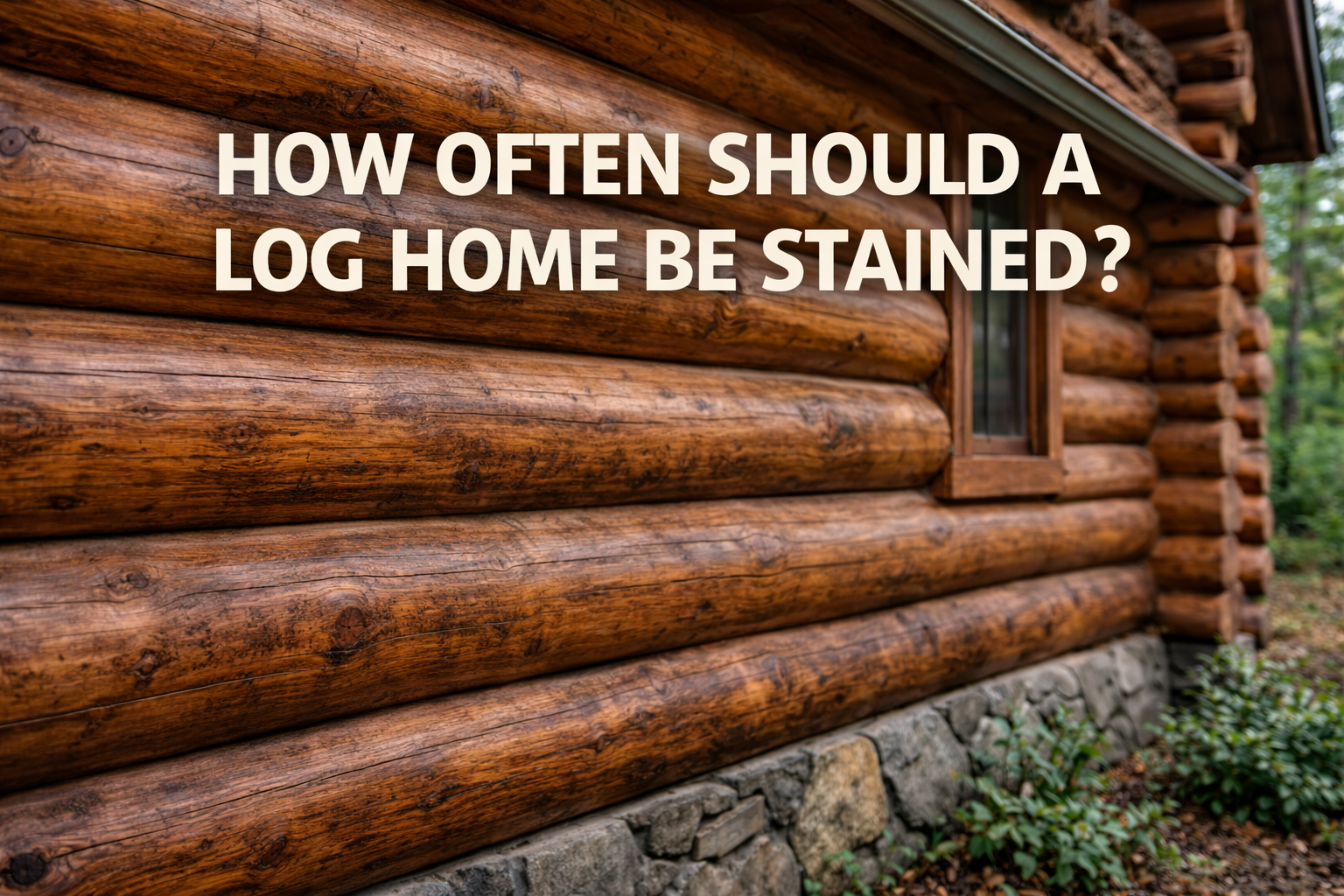
Most log homes need staining every few years, but the exact timeline depends on sun exposure, climate, stain type, and how well the home was prepared and maintained. The best time to re-stain is before the finish fails completely, because once logs absorb moisture, repairs become more expensive.
This guide explains realistic staining timelines, the warning signs to watch for, and how to make your stain last longer.
If you’re unsure whether your home needs a maintenance coat or full re-stain, start here: LOG HOME INSPECTION
Typical Log Home Staining Timelines
These are common ranges for most log homes:
- Maintenance coat: every 3–5 years
- Full re-stain: every 5–10 years
However, some homes need attention sooner. For example, south and west-facing walls often need a maintenance coat earlier due to UV exposure.
If your stain is already peeling or patchy, you may be moving into restoration territory: LOG HOME RESTORATION
What Affects How Long Log Home Stain Lasts?
1) Sun Exposure (Biggest Factor)
Walls that get direct sunlight degrade faster. UV exposure breaks down stain pigments, dries out the wood surface, and speeds up fading.
2) Climate (Moisture + Freeze/Thaw)
High humidity, heavy rain, snow buildup, and freeze/thaw cycles shorten stain lifespan. If logs stay wet longer, black staining and mildew also become more likely.
If black staining is showing up, read this: WHY LOG HOMES TURN BLACK
3) Stain Type (Oil vs Water-Based)
Oil-based and water-based stains can both perform well. The difference is how they penetrate, dry, and handle exposure.
If you want guidance on which is best, see: LOG HOME STAINING
4) Preparation Quality (The Hidden Factor)
If the surface wasn’t cleaned and dried properly before staining, stain can fail early. Poor prep leads to peeling, blotching, and uneven results.
Cleaning and prep: LOG HOME CLEANING
5) Maintenance Habits
Homes that get annual inspections and cleaning tend to have stain systems that last longer and fail more evenly.
Maintenance guide: LOG HOME MAINTENANCE GUIDE
Signs It’s Time to Re-Stain a Log Home
Watch for these signs:
- stain looks faded or dull
- color is uneven across walls
- logs are starting to gray
- water no longer beads on the surface
- black staining is spreading
- peeling or flaking stain
- cracking is increasing (dry logs)
If stain is still intact but fading, a maintenance coat often works. If the stain is peeling or bare wood is exposed, you may need a full re-stain.
Maintenance Staining vs Full Re-Staining (Simple Rule)
Maintenance Coat
You likely need maintenance staining when:
- stain is faded but still bonded
- water still beads somewhat
- no major peeling or bare wood
- you want to extend protection
Full Re-Stain
You likely need a full re-stain when:
- stain is peeling or patchy
- logs are gray or exposed
- black staining returns quickly
- prior stain layers are failing
If rot is present, handle that first: LOG ROT REPAIR
How to Make Log Home Stain Last Longer
To extend stain lifespan:
- clean the home at least once per year
- trim vegetation and increase airflow
- fix gutters and runoff problems
- re-stain high exposure sides sooner
- seal cracks and gaps to stop water entry
- inspect chinking and caulking regularly
Sealing gaps helps reduce moisture problems: LOG HOME CHINKING
When to Get a Professional Inspection
If your home shows any of the following, it’s worth getting a professional inspection:
- peeling stain
- black staining plus softness
- visible rot or water damage
- large gaps in chinking
- stain failure across multiple sides
Inspection page: LOG HOME INSPECTION
Get Help With Log Home Staining
If you’re not sure whether your home needs maintenance staining or a full re-stain, we can inspect your home and recommend a clear plan for long-term protection.

Comments are closed