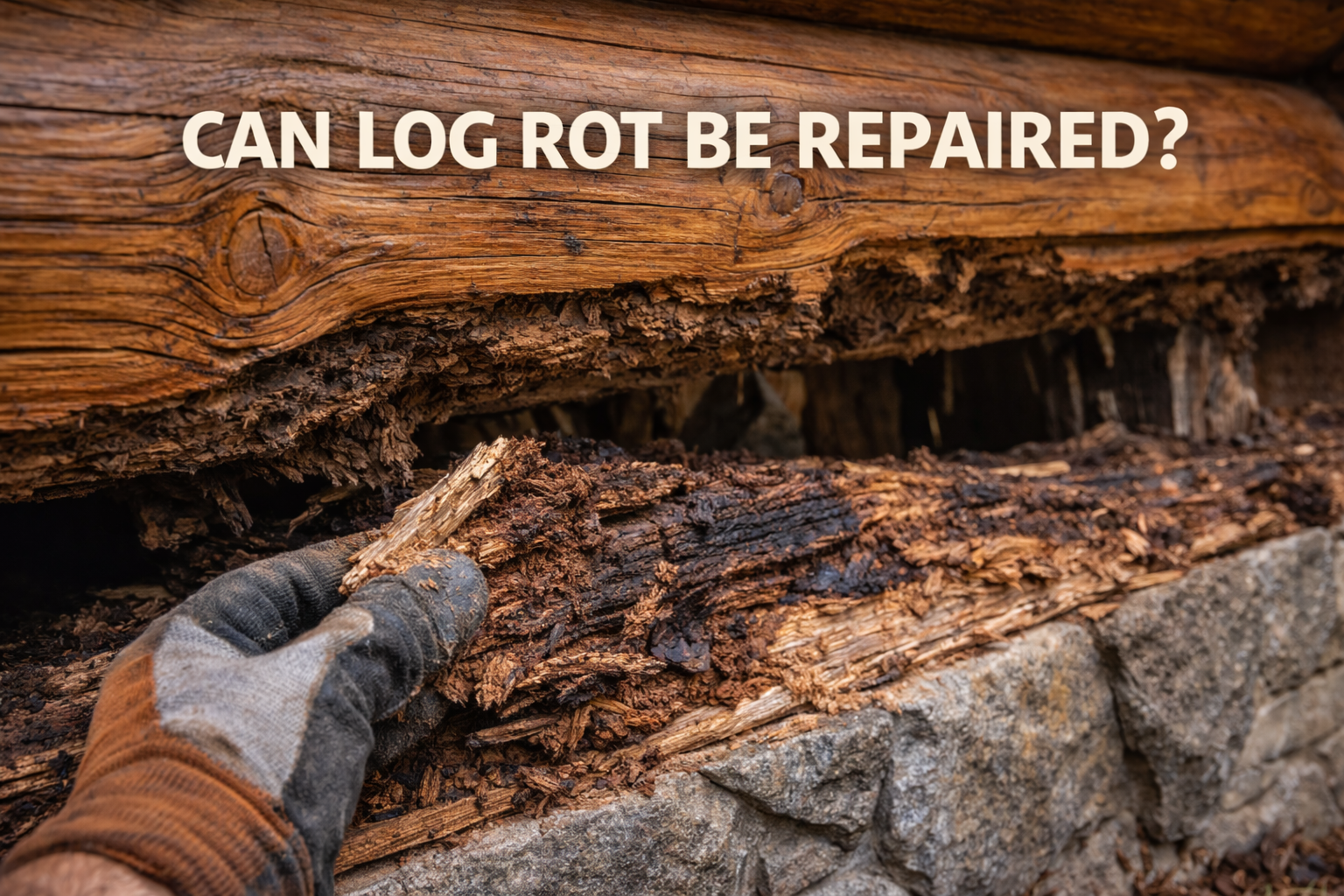
Can log rot be repaired? Yes — log rot can often be repaired, especially when it’s caught early. Most rot starts in high-moisture areas like log ends, bottom courses, and around windows or decks. If you identify the damage early and fix the moisture source, repairs can restore strength and prevent the rot from spreading.
However, severe rot can become structural. In that case, repairs may require log replacement or reinforcement.
If you suspect rot, the safest first step is a professional evaluation: LOG HOME INSPECTION
What Causes Log Rot?
Log rot happens when wood stays wet for long periods. Common causes include:
- snow piling against bottom logs
- missing gutters or poor drainage
- splashback from soil or gravel
- failed stain allowing water absorption
- cracks and checks that trap moisture
- leaks around doors, windows, and corners
If the stain is failing, rot risk increases fast: LOG HOME STAINING
Dry Rot vs Wet Rot (Simple Explanation)
Wet Rot
Wet rot is most common in log homes. It happens when wood stays damp and breaks down over time. It often feels soft and looks dark or spongy.
Dry Rot
Dry rot is less common but can be more serious because it can spread and weaken the wood internally. It often starts with moisture and repeated wet/dry cycles.
In both cases, the moisture source must be fixed or the rot will return.
When Log Rot Can Be Repaired
Rot repairs work best when:
- the damage is localized
- the log is still structurally sound
- the rot has not spread deep into the log
- the moisture source can be corrected
Most repairs include removing all rotted wood, treating the area, and rebuilding the damaged section using epoxy or replacement wood.
If rot is small, repairs can be fast and cost-effective. If it’s widespread, replacement becomes more likely.
Epoxy Repair (When It Works)
Epoxy repair is common for:
- small rot areas on log faces
- corners with localized decay
- log ends that have surface damage
- cosmetic damage that still needs strength
A proper epoxy repair includes:
- removing all rotten wood
- drying the area completely
- treating with wood preservatives
- rebuilding with structural epoxy
- sanding and blending
- sealing and staining
This repair can look very natural when done correctly and helps protect the logs moving forward.
For the full restoration sequence, see: LOG HOME RESTORATION PROCESS
When Log Replacement Is Needed
Log replacement is usually needed when:
- rot is deep and widespread
- the log is load-bearing
- the decay affects long sections
- epoxy would only “cover” the problem
- the wood is no longer structurally stable
Replacement options may include:
- partial log replacement (“dutchman” repair)
- full log replacement
- reinforcement plus repair
This is common in bottom courses where moisture exposure is constant.
Structural Concerns (When Rot Becomes Serious)
Rot becomes structural when it affects logs that support weight or stability.
Signs of structural rot:
- sagging or shifting sections
- soft wood that collapses under pressure
- long rot sections along bottom logs
- corner movement or separation
- doors and windows no longer square
If you suspect structural rot, don’t wait. An inspection can prevent major damage: LOG HOME INSPECTION
How to Prevent Log Rot From Coming Back
To prevent repeat rot:
- fix gutters and drainage
- keep bottom logs dry and clear of snow
- re-stain before protection fails
- seal checks and gaps
- maintain chinking and caulking
- clean the home yearly
Maintenance guide: LOG HOME MAINTENANCE GUIDE
Sealing gaps: LOG HOME CHINKING
Get Help With Log Rot Repair
If you’re seeing soft wood, dark staining, or moisture damage, we can inspect your home and recommend the best repair plan before the rot spreads.

Comments are closed