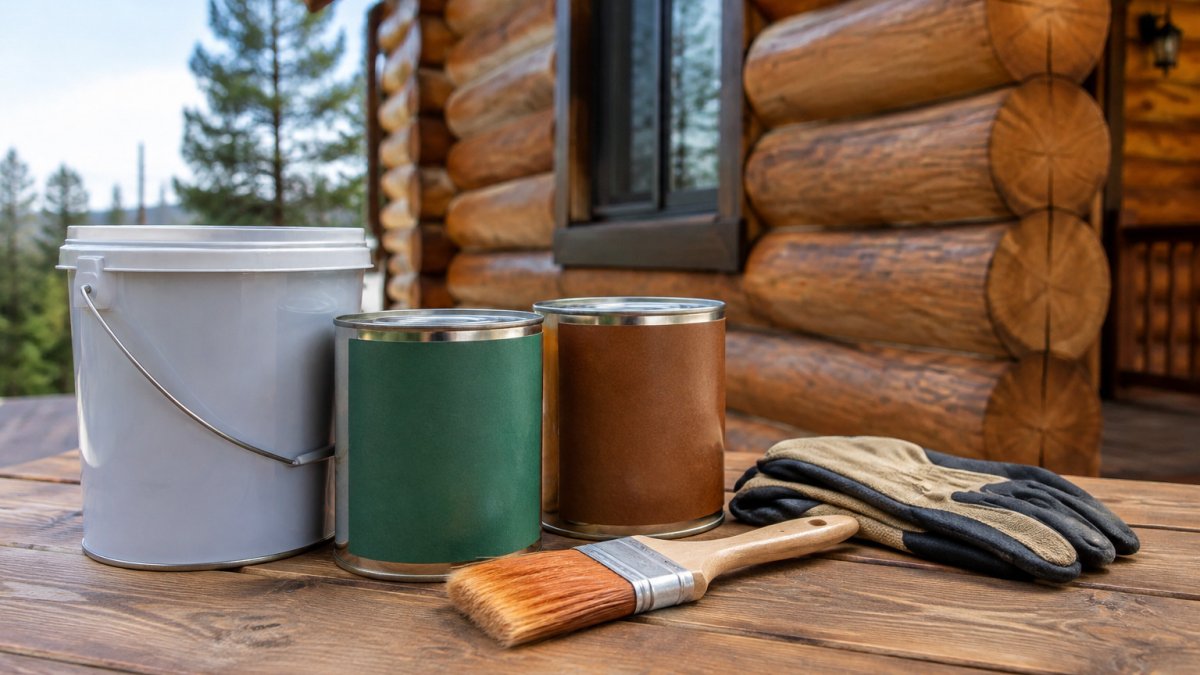
Last Updated: November 5, 2026
Quick Summary
The best ProWood Care alternatives depend on the job: borate treatments address rot and insects from inside the wood, oil-based products like Outlast Q8 Log Oil protect exterior surfaces, pigmented Sashco stains add color and UV defense, and refinishing media strip old failed coatings. Borates and surface coatings are complementary, not substitutes.
- Borate treatments need bare, absorbent wood to penetrate, so sealed logs usually require stripping first.
- Oil-based finishes need dry wood and the right temperature range to cure properly.
- A pigmented stain only performs as well as the surface preparation beneath it.
- Match products to wood species, moisture content, finish history and climate exposure before choosing.
- Midwest Maintenance LLC has specialized in wood and masonry restoration since 2008 and offers free consultations.
Table of Contents
- How ProWood Care Alternatives Compare at a Glance
- What to Check Before Switching from ProWood Care
- Borate Wood Treatment for Rot and Wood-Boring Insects
- Outlast Q8 Log Oil for Exterior Log Protection
- Sashco Log Stain and Pigmented Finish Options
- Log Home Refinishing Options Beyond a Single Product
- Matching a Treatment to Your Logs, Climate, and Finish History
- Getting a Free Consultation on Your Log Home Treatment Plan
- Frequently Asked Questions
How ProWood Care Alternatives Compare at a Glance
If you are searching for ProWood Care alternatives, you already know the product has a track record, and you are wondering whether something else fits your logs, your climate, or your budget better. Since 2008, Midwest Maintenance LLC has worked on log homes, and the finish matters less than whether it matches the wood underneath it.
Here is the short version. Borate treatments address rot and insects from the inside. Oil-based products protect exterior surfaces. Pigmented stains add color and UV defense. Refinishing media strip away old failed coatings before any new product goes on.
Below, we break down each option, what it does, and where it falls short.
| Option | Primary Job | Best For | Watch Out For |
|---|---|---|---|
| Borate treatment | Kills rot fungi, repels wood-boring insects | Logs with decay or insect history | Needs bare, absorbent wood |
| Outlast Q8 Log Oil | Exterior water and UV protection | Maintenance coats on sound logs | Not a repair product |
| Sashco stains | Color plus UV protection | Logs needing pigmented finish | Surface prep must be complete |
| Refinishing media | Removes old failed finish | Full restorations | Strips everything, including good wood |
What to Check Before Switching from ProWood Care
Switching products is not a decision to make on price alone. Before you move away from ProWood Care, inspect what is actually on your logs now and why it failed.
Start with adhesion. If the old finish is peeling in sheets, the problem is usually moisture trapped underneath, not the product itself. A new coating over that failure will peel too. Check for soft spots at corners and log ends, and look at how water runs off your roof overhangs. Poor water management causes more finish failures than any brand choice.
Watch out: applying a new treatment over a failed coating without stripping it first wastes both products and money. If you are unsure what is happening under the surface, a log home inspection identifies stain failure, moisture issues, chinking problems, and rot before you commit to a new system.
Borate Wood Treatment for Rot and Wood-Boring Insects
Borate wood treatment is a preservative that soaks into wood and makes it hostile to rot fungi, termites, carpenter ants, and other wood-boring insects. It works from the inside, which is why it belongs in any log maintenance plan where decay is a concern. Unlike a surface coating, a borate does not sit on top of the log, it diffuses into the wood cell walls and remains there as a stomach poison to insects and a growth inhibitor to fungi.
Borate concentrates are mixed with water and applied to bare wood. The catch is that borates need bare, absorbent wood to penetrate. If your logs are sealed with an old finish, the treatment cannot get in. That usually means stripping first.
How borates compare to ProWood Care’s role. ProWood Care is a surface treatment, it protects the exterior face of the log. A borate is an internal preservative. They are not substitutes; they are complementary. If your logs have active rot or insect pressure, a borate addresses the problem from the inside while a surface coating handles water and UV. Choosing a borate as a “ProWood Care alternative” only makes sense if the underlying issue is decay or insects rather than surface weathering.
Application conditions. Apply to wood that is dry enough to absorb the solution; standing water or a saturated surface blocks uptake. Follow the dilution and application instructions on the specific product label.
Always follow the product label for safety and handling, including protective equipment and disposal instructions.
Borate treatment handles early decay and insect pressure. It does not rebuild missing wood. When rot has gone structural, treatment alone will not save the log, and you need to understand how professional log rot repair works before deciding between treatment and replacement.
Watch out: applying a borate over a sealed or painted log wastes the product, the solution beads on the surface and never reaches the wood. Strip or mechanically open the surface first, and confirm the wood is absorbent before mixing a batch.
Outlast Q8 Log Oil for Exterior Log Protection
Penetrating oil treatments soak into the outer wood fibers rather than sitting on top, which helps them move with the wood as logs expand and contract through the seasons.
Application conditions. Oil-based finishes need dry wood and the right temperature range to cure properly. Follow the product label for temperature, moisture and weather requirements.
Compatibility. Compatibility with existing finishes is the deciding factor. If the existing finish is unknown, test a small area first and confirm the product absorbs rather than beads.
Oil-based products suit owners who want a natural look and a recoat they can manage on a schedule. They work best on sound logs with no active decay.
Watch out: applying an oil-based product over a damp log or in cool, humid weather traps moisture and produces a soft, tacky film that never cures hard, check moisture with a meter and read the label’s temperature range before you open the can.
Sashco Log Stain and Pigmented Finish Options
Pigmented exterior stains add color and UV protection at the same time, and block the sunlight that breaks down lignin in wood.
The trade-off is prep. A pigmented stain only performs as well as the surface under it. Old finish, dirt, and mill glaze all prevent adhesion. If you are weighing products before you commit, our guide to the best stain for log homes walks through the broader field of finishes so you can compare systems rather than single products.
Surface preparation and moisture content are key factors in whether a stain lasts.
Log Home Refinishing Options Beyond a Single Product
Sometimes the right answer is not a different product but a different process. If your logs carry multiple layers of failing finish, no coating will fix that.
Refinishing media do the stripping work, and different media vary in aggression level.
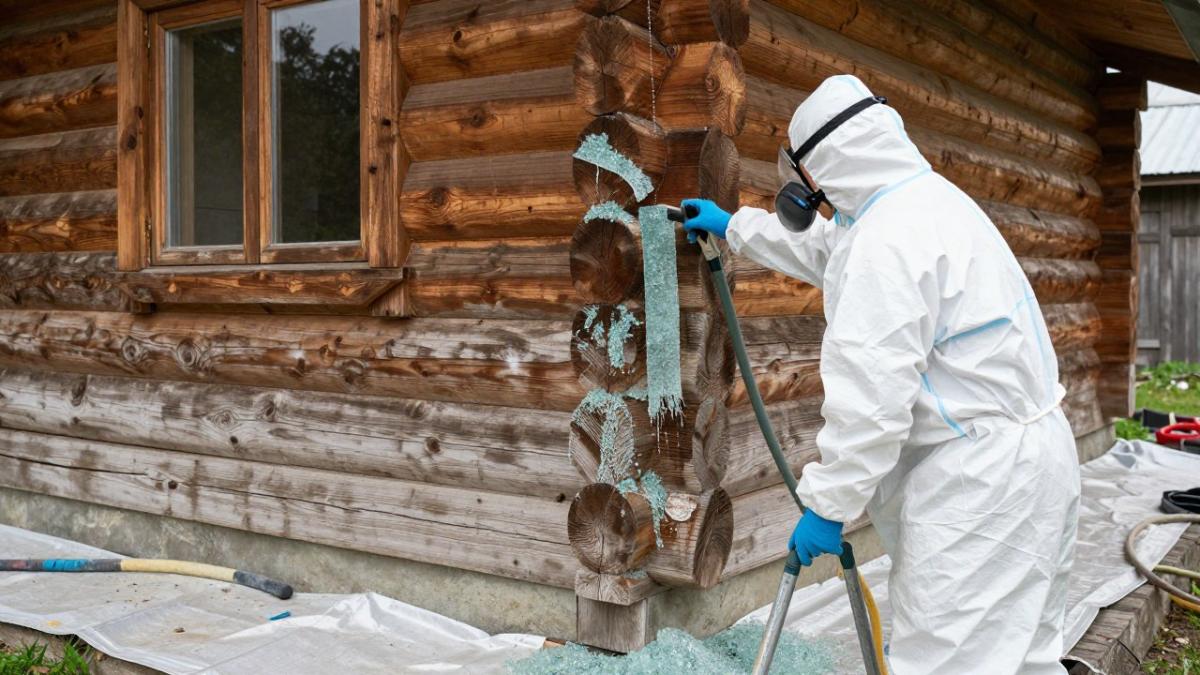
Before you commit to a full strip, understand the difference between log home restoration versus refinishing. They are not the same job, and they do not carry the same cost.
Matching a Treatment to Your Logs, Climate, and Finish History
Product choice should follow four questions, in this order.
- Wood species: cedar, cypress, fir, pine, and spruce absorb finishes at different rates. Dense species take longer to penetrate.
- Moisture content: wet logs should never be sealed. Kiln-dried and air-dried logs behave differently, and a moisture meter tells you which you have.
- Finish history: what is on the logs now, and how many coats deep? Compatibility with existing finishes decides whether you can recoat or must strip.
- Climate exposure: heavy snow, freeze-thaw cycles, and sun exposure all shorten recoat intervals. Roof overhangs and water management change the picture again.
A common mistake is choosing a product before answering these questions. The product is the last decision, not the first.
Getting a Free Consultation on Your Log Home Treatment Plan
The fastest way to get this right is to have someone look at your logs before you buy anything. Midwest Maintenance LLC offers free consultations and has specialized in wood and masonry restoration and maintenance since 2008, including log home restoration, chinking, deck cleaning, and ice dam removal.
Best for: owners who want a treatment plan matched to their logs and climate.
Skip if: you are only touching up a small, sound area and already know your finish history.
A recurring log home maintenance program keeps treatment on schedule instead of reacting after damage shows up.
Frequently Asked Questions
What is the best wood treatment for log cabins?
There is no single best product, because the right choice depends on what you are solving for. A borate wood treatment addresses rot and wood-boring insects from the inside. A penetrating oil protects exterior logs from moisture and weather exposure. A pigmented stain adds UV defense and color. Many log homes need more than one, applied in the correct order, which is why a site assessment comes first.
How do borate wood treatments protect log homes?
Borate wood treatment soaks into the wood and creates an environment that wood-boring insects and decay fungi cannot survive in. It works on bare or unfinished wood, so it is typically applied before a topcoat goes on. On older log homes with soft spots or past insect activity, borate is often the first step before patching and refinishing. It does not replace a surface finish, since it does not block water or UV on its own.
Can you apply a new log home treatment over an existing finish?
Sometimes, but compatibility decides it. An oil-based product may not bond to a previously film-forming stain, and a new coating over a failing finish will peel with it. Test a small area first, and check what was last applied and when. If the existing finish is chalky, flaking, or unknown, stripping back to bare wood is often the safer path. A professional assessment can identify the current coating before you buy anything.
What stops log cabins from rotting?
Rot needs moisture, so the work is water management first and chemistry second. Keep roof overhangs and gutters moving water away, seal checks and joints so water cannot sit in the wood, and treat bare wood with a borate product before finishing. A breathable exterior finish that lets the log dry from the inside out matters too. Logs that stay wet under a trapped coating decay faster than untreated ones that can dry.
Your logs have a history, and the next product you put on them should account for it. Get started with Midwest Maintenance LLC and put your treatment plan on a schedule that protects the wood for years, not seasons.


Comments are closed