Last Updated: November 4, 2026
Quick Summary
To remove graffiti from concrete walls, test a concrete-safe graffiti removal product on a hidden patch, then apply it, let it dwell for the label’s recommended time, scrub with a stiff nylon brush, and rinse thoroughly with water. Repeat on stubborn patches rather than scrubbing harder, and use a pressure washer only at 1,500 to 2,500 PSI with a 25- or 40-degree tip.
- Test a small inconspicuous area and wait the full dwell time before treating the whole wall.
- Work bottom to top when applying remover to avoid streaks, then rinse top to bottom.
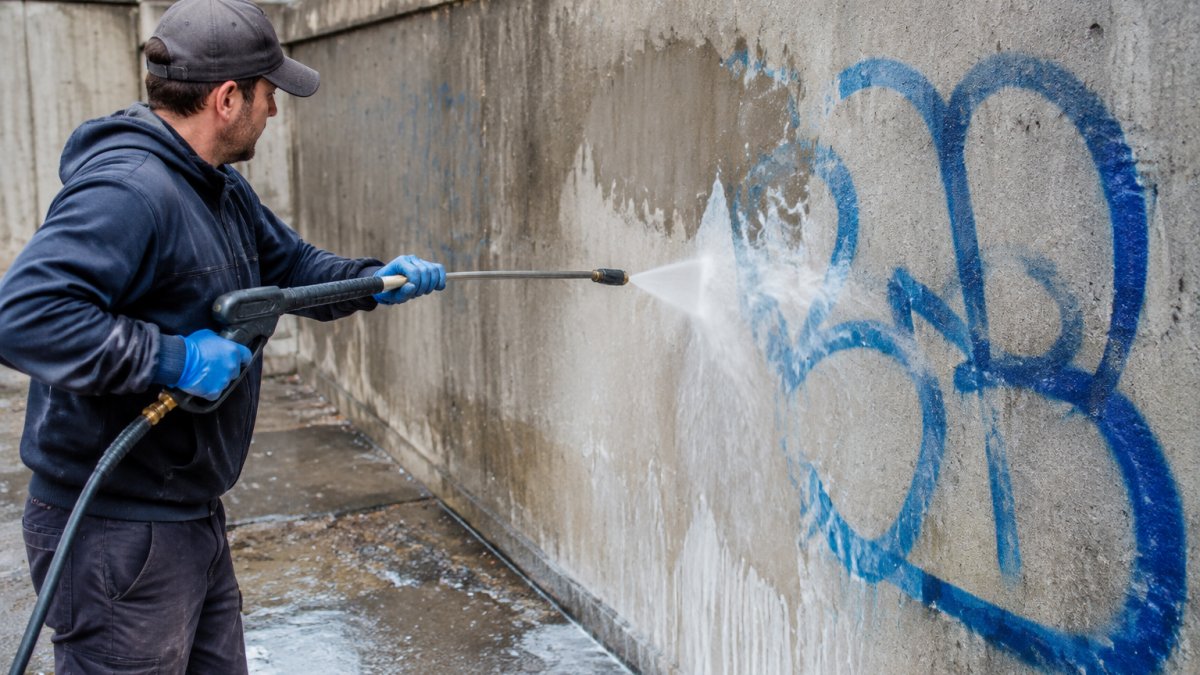
- Hold the pressure washer wand 12 to 18 inches away and keep it moving in overlapping passes.
- Wear nitrile gloves, safety glasses, and a respirator, and block storm drains before you start.
- An anti-graffiti coating makes future graffiti removal a rinse-and-wipe job instead of a scrub session.
Table of Contents
- Assess the Concrete Surface and Graffiti Type First
- Pick the Best Graffiti Remover for Concrete
- How to Remove Graffiti From Concrete Walls DIY: Step by Step
- Pressure Washer Settings and Damage Prevention
- Removing Shadows, Paint Ghosting, and Stubborn Residue
- How to Remove Graffiti From a Brick Wall Without Damaging Masonry
- Safety Gear, Runoff, and Environmental Precautions
- Prevention: Anti-Graffiti Coatings That Save Repeat Cleanup
- Frequently Asked Questions
Assess the Concrete Surface and Graffiti Type First
Removing graffiti successfully starts before you touch a cleaner. You need to know two things: what kind of concrete you have, and what kind of paint is on it. Get these wrong and you’ll either waste time or damage the surface.
This first step is where most DIY jobs go sideways.
Graffiti removal is the process of lifting paint, marker, or ink off a hard surface without harming what’s underneath. On concrete, that means matching your method to the surface and the medium.
Ask yourself:
- Is the concrete smooth, rough, sealed, or porous?
- Is the graffiti spray paint, marker, or something thicker?
- How long has it been sitting there?
Fresh spray paint on sealed concrete comes off fast. Old paint soaked into bare concrete takes real work.
Smooth, Rough, Sealed, or Porous: Why It Changes the Method
Surface texture decides everything. A smooth surface lets paint sit on top, so a light cleaner and a rag often do the job. A porous surface drinks the paint in, and you’ll need dwell time and scrubbing.
Sealed concrete behaves like a shield. The paint can’t sink in, which is good news for cleanup. But harsh chemicals can eat the sealer, so go gentle.
Bare concrete and precast concrete fall somewhere in between. They’re absorbent but tough. Rough broom-finish surfaces trap paint in the grooves, so a stiff brush matters more than strength of chemical.
Test a hidden patch first. Always.
Pick the Best Graffiti Remover for Concrete
The best graffiti remover for concrete depends on the paint and the surface, not on the loudest label. You want a concrete-safe cleaner that lifts paint without etching the slab.
Here’s how the main options stack up:
| Remover Type | Best For | Watch Out For |
|---|---|---|
| Soap and water | Fresh, mild graffiti on smooth surfaces | Won’t touch cured spray paint |
| Gel graffiti remover | Vertical walls, control on porous concrete | Needs dwell time to work |
| Multi-surface remover | Mixed surfaces, unknown paint | Test first on sealed concrete |
| Citrus or solvent cleaner | Oily spray paint, marker | Can soften some sealers |
| Acid cleaner | Tough residue only | Risky on concrete, use with care |
Gel formulas cling to a concrete wall instead of running off. That’s a big deal on vertical surfaces where liquids drip away before they work.
For most homeowners, a gel or multi-surface remover covers the widest range of jobs.
Goo Gone Graffiti Remover: What It Handles Well
If you want to browse ready-to-use options, you can shop graffiti removal products before you start.
How to Remove Graffiti From Concrete Walls DIY: Step by Step
Here’s the full process. Set aside an afternoon, wear your safety gear, and work in shade if you can. Heat makes chemicals flash off faster.
Total time: 1 to 3 hours depending on size and paint age.
Difficulty: Beginner to moderate.
What you’ll need:
- Concrete-safe graffiti remover
- Stiff nylon brush and a scrub pad
- Bucket, hose, or pressure washer
- Nitrile gloves and safety glasses
- Drop cloths and a spray bottle of water
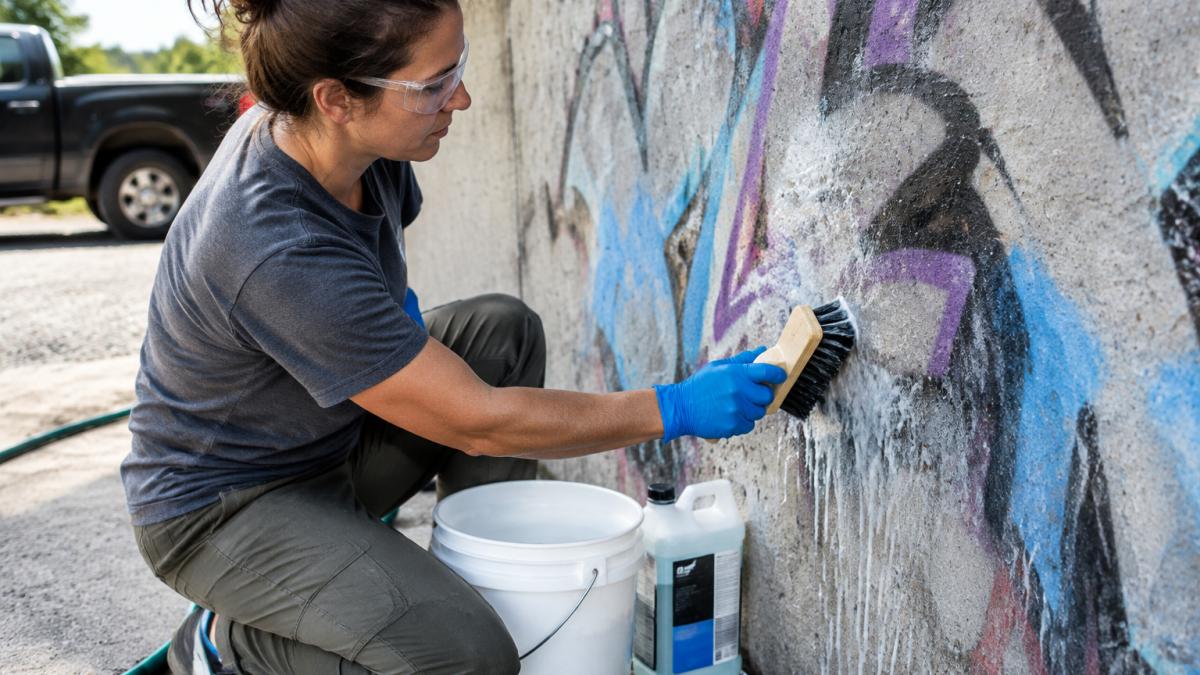
Step 1: Test a Small, Inconspicuous Area
Spray a small test area in a corner or behind a bush. Wait the full dwell time on the label. Check that the cleaner lifts paint without dulling or etching the concrete.
If the test patch looks good, proceed. If the surface fades or softens, switch to a gentler product.
Step 2: Apply, Dwell, Scrub, and Rinse
- Wet the wall lightly to cool it and slow evaporation.
- Apply remover with a brush or sprayer, working bottom to top to avoid streaks.
- Let it dwell for the label’s recommended time. Don’t let it dry out.
- Scrub with a stiff nylon brush in small circles.
- Rinse thoroughly with water, working top to bottom.
- Repeat on stubborn patches rather than scrubbing harder.
For heavy jobs, a pressure washer speeds up the rinse. We’ll cover settings next.
If a wall won’t come clean after two rounds, it may be time to book graffiti removal and let a pro finish it.
Pressure Washer Settings and Damage Prevention
A pressure washer is a fast rinse tool, not a paint stripper. Too much water pressure on concrete etches the surface and drives paint deeper into pores.
Pressure (PSI). For rinsing graffiti remover off cured concrete, most practitioners stay in the 1,500 to 2,500 PSI range. Start at the low end.
Nozzle. Use a 25-degree or 40-degree fan tip for rinse work. A 0-degree pinpoint tip concentrates the stream into a cutting tool and will carve lines into concrete.
Distance and angle. Hold the wand 12 to 18 inches from the wall and keep it moving in overlapping passes. Angle the fan slightly downward so water pushes residue off rather than driving it in.
Technique. Work top to bottom so dirty runoff doesn’t streak clean areas. Rinse in passes, let the remover do the lifting, and come back for a second pass rather than blasting harder.
Hot water. Hot water helps break down paint residue. Many machines offer a hot water mode, and it’s worth using on oily or thick paint. Keep the same pressure and distance rules; heat does not license a narrower tip.
Watch out: holding a narrow tip close to bare concrete can carve lines you can’t undo. That damage is permanent, and no amount of re-cleaning will blend it out.
Removing Shadows, Paint Ghosting, and Stubborn Residue
Sometimes the paint is gone but a faint outline stays. That’s shadowing or paint ghosting, and it’s common on porous concrete where pigment soaked in.
Fixes to try, in order:
- A second round of gel remover with longer dwell time
- A stiff brush with hot water and a little detergent
- A concrete-safe degreaser for oily residue
Avoid acid cleaners on concrete unless you know what you’re doing. They can etch the slab and leave a worse stain than the ghost.
For deep-set residue that won’t lift, a pro pass with the right equipment often finishes the job. Our guide on exterior masonry cleaning services shows how the pros handle stubborn staining.
How to Remove Graffiti From a Brick Wall Without Damaging Masonry
Brick is softer than concrete, so the method changes. You can’t scrub hard or blast it with high pressure without chewing up the face of the brick.
How to remove graffiti from a brick wall safely:
- Use a gel remover made for masonry
- Keep pressure low and use a soft nylon brush
- Test on a hidden brick first
- Never sandblast or use a wire brush on brick
Brick and mortar absorb paint fast. Expect to repeat treatment rather than scrub hard. The same delicate approach applies to painted masonry, which is why our paint removal from brick chimney guide is worth a read if you’re dealing with cured coatings.
Safety Gear, Runoff, and Environmental Precautions
Chemical cleaners need respect. Protect yourself and keep runoff out of storm drains. This is the section most guides skip, so treat it as part of the job, not an afterthought.
Personal protective equipment. Wear nitrile gloves (not latex, which many solvents pass through), safety glasses or goggles, long sleeves, and closed shoes. Add a respirator with the cartridge the product label specifies when working in still air or on large vertical surfaces where vapors collect.
Ventilation. Work outdoors or with cross-ventilation. Never clean in a closed garage or stairwell. Solvent vapors are heavier than air and pool at floor level.
Runoff containment. Rinse water carries paint pigment, remover, and dissolved sealer. Contain it with drop cloths, plastic sheeting, or temporary berms, and block nearby storm drains with drain covers before you start.
Disposal. Let captured wash water settle, then dispose of it according to the product label and your local solid-waste or household-hazardous-waste rules. Many municipalities classify paint-laden wash water as household hazardous waste; never pour it into a storm drain, gutter, or waterway. Check your local rules on disposal before you start.
Watch out: mixing cleaners, especially anything with bleach, can create dangerous fumes (the CDC). Use one product at a time, rinse tools between products, and never combine an acid cleaner with a bleach-based one.
Prevention: Anti-Graffiti Coatings That Save Repeat Cleanup
The cheapest cleanup is the one you never do. An anti-graffiti coating creates a sacrificial layer so paint sits on top instead of soaking in.
Two main types:
- Sacrificial coatings: peel off with the paint, then get reapplied
- Permanent coatings: let you wash graffiti off with a light cleaner
On high-risk walls, a coating pays for itself fast. It also makes future graffiti removal a rinse-and-wipe job instead of a scrub session.
If you’re weighing DIY against hiring, our article on whether professional masonry graffiti removal is worth it breaks down the trade-offs honestly.
Frequently Asked Questions
What takes graffiti off concrete?
A concrete-safe graffiti remover matched to the paint type is the starting point, followed by dwell time and scrubbing with a stiff nylon brush. For fresh, light spray paint on a smooth sealed surface, warm soapy water and a nylon brush can lift it before it cures. Bare or porous concrete usually needs a gel or solvent-based remover because the paint has soaked into the pores. Always test a small area first, then rinse thoroughly and repeat treatment on stubborn patches rather than scrubbing harder.
Does WD-40 remove spray paint from concrete?
WD-40 can soften light spray paint on smooth, sealed concrete, but it is not a real graffiti removal product. On bare or porous concrete it tends to smear the paint deeper and leave an oily residue that attracts dirt. It also does nothing for marker or cured multi-layer paint. Use a dedicated graffiti remover for concrete instead, and save WD-40 for loosening adhesive or light scuffs. If you try it, test a hidden spot first and rinse the area well afterward.
Can a pressure washer remove graffiti from concrete walls?
A pressure washer can strip graffiti from hard, bare concrete, but it will not remove paint that has soaked into porous surfaces and it can etch or pit concrete if the pressure is too high. Keep the nozzle moving, use a wide fan tip, and stay back from the surface rather than holding the wand in one spot. For sealed or painted concrete, lower the pressure and pair it with a chemical remover. Never pressure wash near windows, wood, or landscaping without protection.
How do you remove graffiti from bare concrete without leaving a shadow?
A shadow or ghost is pigment left inside the pores after the top layer of paint is gone. Remove the bulk of the paint first with a concrete-safe remover and stiff brush, rinse, then treat the shadow with a second application and a longer dwell time. For deep stains, a poultice or a light acid wash may be needed, followed by a neutralizing rinse. Repeat treatment works better than aggressive scrubbing, which can drive pigment deeper or damage the surface.
Graffiti on a big commercial wall or a porous surface you can’t crack is a job worth handing to a team that does it every week. Midwest Maintenance LLC has handled masonry and concrete cleaning since 2008, with free consultations to scope your specific wall. We bring the right remover for your surface, protect the concrete from damage, and can set up a prevention coating so the next tag wipes right off. Get started with Midwest Maintenance LLC and get your concrete looking clean again.


Comments are closed