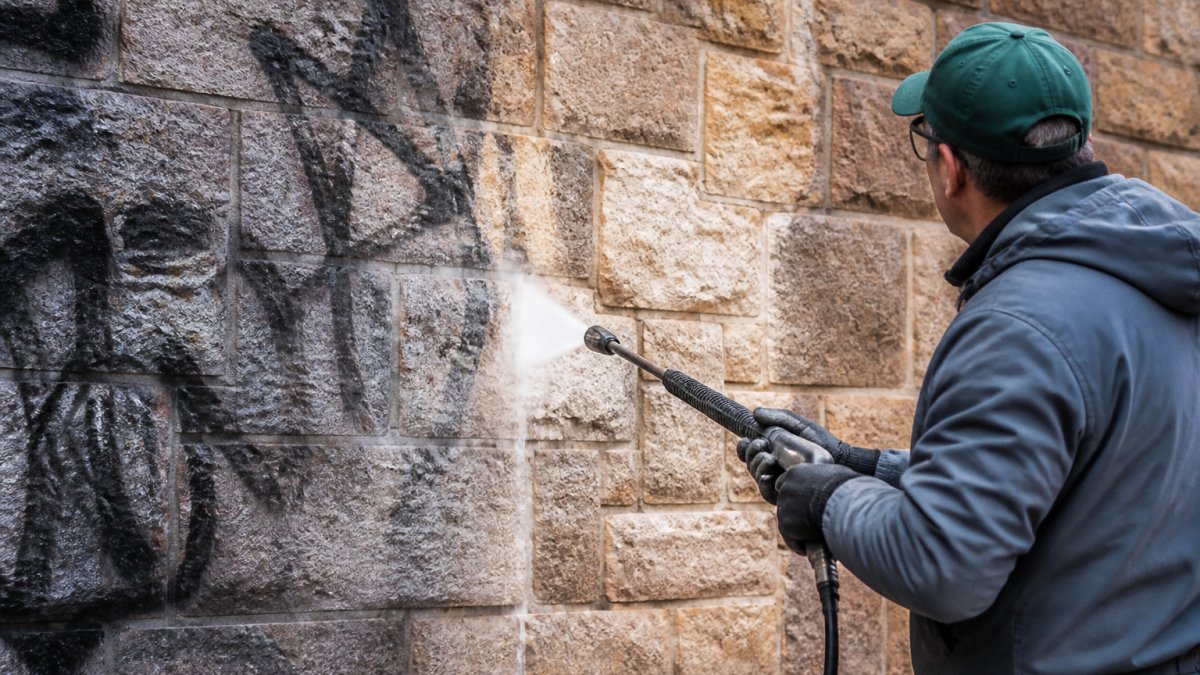
Last Updated: October 30, 2026
Quick Summary
Professional masonry graffiti removal services are worth it because crews assess, test, and strip paint from brick, concrete, and stone without destroying the surface underneath. The work starts with a patch test, not a hose, and matches the method to the masonry type.
- A technician checks masonry type, porosity, existing coating, and how deeply paint soaked in.
- Gels cling to vertical faces so the active ingredient dwells long enough to break the paint bond.
- Never use high-pressure washing as a removal method on soft historic brick.
- Abrasive blasting can remove the fired skin of the brick and open the pores.
- Ask contractors for proof of current insurance and a written scope naming the removal method.
Table of Contents
- What Professional Masonry Graffiti Removal Services Actually Do
- How Graffiti Removal Cost Per Square Foot Is Calculated
- The Best Graffiti Removal Chemicals for Brick and Stone
- Preventative Anti-Graffiti Coatings That Stop Repeat Vandalism
- Why Pressure Washing Alone Can Damage Masonry
- What Licensed and Insured Restoration Services Cover
- Book a Free Masonry Graffiti Removal Consultation
- Frequently Asked Questions
What Professional Masonry Graffiti Removal Services Actually Do
Professional masonry graffiti removal services are crews that assess, test, and strip paint and tagging from brick, concrete, and stone without destroying the surface underneath. At Midwest Maintenance LLC, we treat it as surface restoration, not washing. The work starts with a patch test, not a hose.
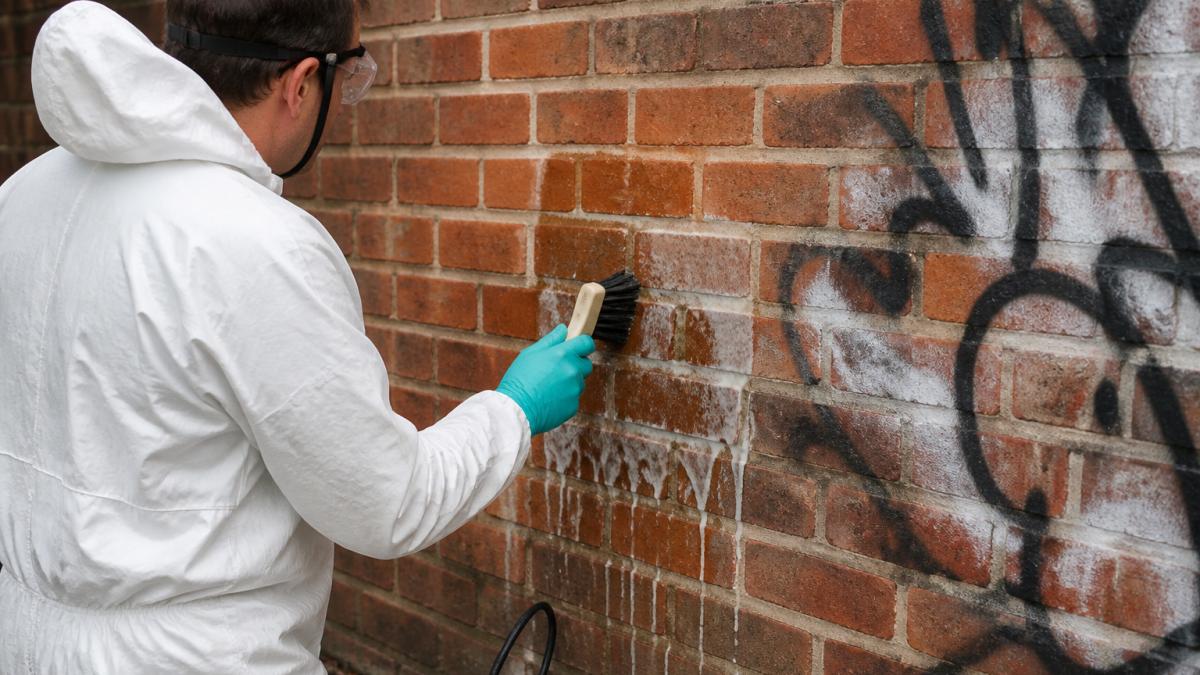
Site Assessment and Surface Testing
Assessment decides everything. A technician checks the masonry type, its porosity, the coating already on it, and how deeply the paint has soaked in. An inconspicuous test patch reveals which method lifts the paint cleanly. Skip that step and you risk etching the brick face or driving pigment deeper into porous surfaces.
Matching the Method to the Masonry
Brick, concrete, and natural stone each respond differently. Our Milwaukee exterior masonry cleaning services guide explains how exterior masonry is cleaned safely. Dense concrete can take more aggressive surface cleaning; soft historic brick cannot. The right approach may combine chemical cleaning agents, hot water extraction, or soda blasting.
How Graffiti Removal Cost Per Square Foot Is Calculated
Graffiti removal cost depends on quantity, surface type, access, and scope. Contact Midwest Maintenance LLC for current pricing or a quote. To make quotes comparable, ask for a written scope that separates removal from any anti-graffiti coating.
Document the graffiti with dated photos before cleaning begins. If the damage is covered by a property insurance claim, this documentation supports reimbursement and helps adjusters see the pre-cleaning condition.
The Best Graffiti Removal Chemicals for Brick and Stone
The best graffiti removal chemicals for brick and stone are poultice and gel formulations designed for masonry, not general-purpose solvents. Gels cling to vertical faces so the active ingredient dwells long enough to break the paint bond. Poultices draw pigment out of porous surfaces. Both let a trained applicator control dwell time, which is what protects the substrate.
For brick and stone, look for:
- Masonry-specific gels that stay put on vertical surfaces
- Poultice systems for stains pulled into porous surfaces
- Environmentally friendly solvents where runoff is a concern
- Neutralizing agents to stop the chemical reaction after removal
Manufacturers like PROSOCO’s masonry cleaning guidance publish technical data on which cleaners suit which substrates, and that documentation matters on commercial jobs. Watch out: strong solvents applied without a test patch can bleach or etch the masonry, and that damage is permanent.
The critical trade-off is between abrasive blasting and chemical poultices, especially on historic or porous brick. Abrasive blasting, whether sand, soda, or dry ice, can strip paint quickly, but it also removes the fired skin of the brick and opens the pores, leading to spalling, crumbling mortar, and trapped moisture. The decision should follow a test patch, not a default preference.
Never use high-pressure washing as a removal method on soft historic brick. It can force water into the masonry and blast away the protective face, causing permanent damage that no coating can reverse.
Here is how the main removal options compare on masonry, based on what the article describes.
| Option | Best for | Key difference |
|---|---|---|
| Masonry-specific gels | Vertical brick and stone faces | Cling in place so the active ingredient dwells |
| Poultice systems | Pigment pulled into porous surfaces | Draw pigment out of the masonry |
| Environmentally friendly solvents | Jobs where runoff is a concern | Lower runoff concern |
| Neutralizing agents | After chemical removal | Stop the chemical reaction |
| Abrasive blasting | Fast paint stripping | Removes the fired skin of the brick |
| High-pressure washing | Rinse step only | Can blast off the protective face |
Preventative Anti-Graffiti Coatings That Stop Repeat Vandalism
This is where repeat vandalism gets expensive. One tag is an incident; the same wall tagged monthly is a maintenance line item. A coating turns a chemical-stripping job into a rinse. Combine it with lighting, landscaping, or camera placement and you cut the opportunity, not just the paint.
Why Pressure Washing Alone Can Damage Masonry
High-pressure cleaning can blast the fired skin off brick and force water into porous surfaces. That is the failure most property owners discover after the fact: the paint is gone, and so is the protective face of the brick. Spalling, crumbling mortar, and trapped moisture follow.
Pressure washing has a place as a rinse step, not as the removal method. For proper coating removal, see paint removal from masonry. Surface integrity is the constraint every method has to respect.
What Licensed and Insured Restoration Services Cover
Ask any contractor you consider for proof of current insurance and a written scope that names the removal method and the substrate. Our industrial masonry restoration field guide covers restoration and contractor coverage in more depth. Vandalism cleanup on a commercial property may also be partially covered by a property insurance claim, so document the damage with dated photos before any cleaning begins.
Book a Free Masonry Graffiti Removal Consultation
A free consultation is where a graffiti problem gets a real plan instead of a guess. Midwest Maintenance LLC has handled wood and masonry restoration since 2008. We serve property managers, facility managers, and homeowners across the greater Lakes area.
Bring us the wall, the square footage, and any deadline you are working against. You can also visit our Graffiti Removal Milwaukee page to request service. We will scope the removal and give you a clear written estimate. Call today for a free consultation.
Frequently Asked Questions
Can graffiti be removed from masonry without damaging the surface?
Yes, when the method matches the masonry. Brick and stone are porous, so blasting them with high pressure or strong solvents can etch the face and drive paint deeper. Masonry graffiti removal is best started with a small test patch to confirm the cleaner and dwell time work without altering the surface.
How much does professional graffiti removal cost for commercial buildings?
Pricing depends on square footage, surface type, paint type, and access. Pricing depends on quantity, surface type, access, and scope. Midwest Maintenance LLC offers free consultations; contact us for current pricing or a quote.
Does pressure washing damage masonry during graffiti removal?
It can. High-pressure cleaning on brick or stone forces water into pores and can erode mortar joints, spall the surface, and push dissolved paint deeper into the masonry. Once water is trapped, freeze-thaw cycles widen cracks. Pressure washing at high settings can damage masonry, so the method should be matched to the material.
What are the environmental regulations for graffiti removal chemicals?
Graffiti removal chemicals fall under federal and state rules for handling, storage, and disposal, including OSHA worker protection standards and EPA guidelines on wastewater. Runoff from washing must be contained and disposed of properly rather than allowed to enter storm drains. Many crews now use environmentally friendly solvents and non-toxic solutions where they perform well. Ask any contractor how they capture and dispose of wastewater, and confirm they carry the licenses and insurance required for chemical cleaning on your property.
Graffiti on brick or stone does not fix itself, and the wrong method makes it permanent. If you are weighing professional masonry graffiti removal services against a pressure washer and a weekend, let us assess the surface first. Midwest Maintenance LLC offers free consultations, masonry-specific removal methods, and preventative coating guidance backed by restoration experience since 2008. Call today to schedule your assessment and protect the masonry you already own.


Comments are closed