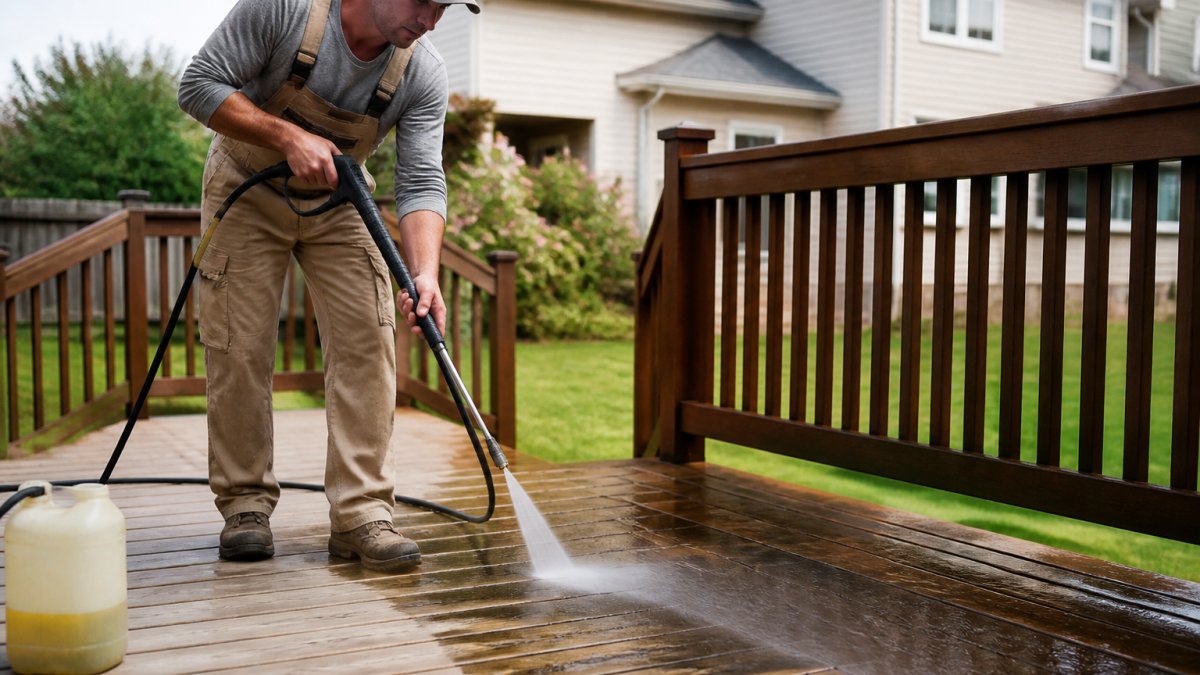
Last Updated: October 30, 2026
Quick Summary
Top-rated deck cleaning and staining pros in the Great Lakes area are crews that treat prep as the job, using low pressure or chemical cleaners, stripping, sanding, and checking moisture before coating. Compare listings like Midwest Maintenance LLC, Supreme Deck, and Great Lakes Exterior Clean, then verify prep methods, warranties, and who does the work.
- Deck cleaning is controlled removal of dirt, mildew, and failed finish without gouging wood grain.
- Midwest Maintenance LLC has handled wood restoration since 2008 and offers free consultations.
- Restoration order is inspect, repair, clean, strip, sand, brighten, dry, then coat.
- The best time to stain in a Great Lakes climate is late spring through early fall.
- Ask contractors how they clean wood and at what pressure before hiring.
Table of Contents
- What Top-Rated Deck Cleaning and Staining Pros Actually Do
- Comparing Deck Cleaning and Staining Professionals in the Great Lakes Area
- What Deck Staining Cost Really Depends On
- How to Restore an Old Wood Deck Before You Stain It
- The Best Time to Stain a Deck in a Great Lakes Climate
- Questions to Ask a Deck Staining Contractor Before You Hire
- Book a Free Deck Consultation with Midwest Maintenance LLC
- Frequently Asked Questions
What Top-Rated Deck Cleaning and Staining Pros Actually Do
Finding top-rated deck cleaning and staining contractors in the Great Lakes region starts with knowing what separates a real restoration crew from a crew with a pressure washer and a truck.
At Midwest Maintenance LLC, we have handled wood restoration since 2008, and the prep work, not the stain brand, determines the outcome.
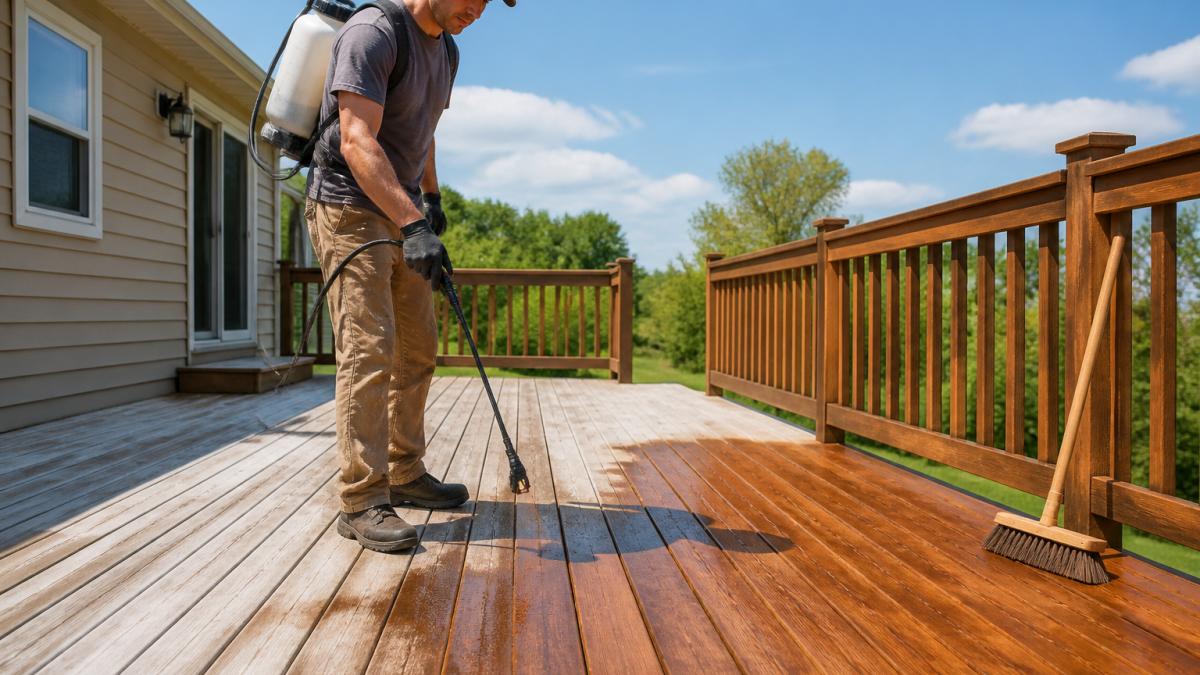
Cleaning, Stripping, and Surface Preparation
Prep is where most DIY attempts fail. Blasting a deck at full pressure furs the grain and drives water into the wood.
Stripping comes next when old finish is flaking. To compare methods before hiring, read our breakdown of professional deck cleaning vs. pressure washing, and if you are worried about damage, here is why pressure washing damages wood decks.
Staining, Sealing, and Weatherproofing
Stain application is the visible step, but the invisible one matters more. Checking moisture content before coating helps prevent trapped moisture from causing peeling.
Application should be thin and even, worked with the grain, with excess wiped rather than puddled. Two thin coats beat one heavy coat. Sealing adds UV protection and weatherproofing, slowing the gray-out and mold and mildew removal cycle that Great Lakes humidity accelerates.
Comparing Deck Cleaning and Staining Professionals in the Great Lakes Area
Comparing deck cleaning and staining professionals means looking past star ratings to what each listing actually verifies. For a local option, see this Kenosha deck cleaning service page. Directory ratings are a starting point, not a credential.
| Provider | Listed Services | Rating Shown | Pricing |
|---|---|---|---|
| Midwest Maintenance LLC | Wood restoration, deck cleaning, staining, log home care | Established 2008 | Free consultation |
| RR Brush Brothers LLC | Deck staining | 5.0 | Contact for quote |
| Lakefront Property Services LLC | Deck staining | 4.7 | Contact for quote |
| Supreme Deck | Cleaning, staining, repair, restoration | Not listed | Contact for quote |
| Great Lakes Exterior Clean | Deck cleaning, estimates | Not listed | Free estimate |
What Deck Staining Cost Really Depends On
Deck staining cost depends on square footage, wood condition, coating type, and how much prep the deck needs, not on a flat per-square-foot rate.
Deck pricing depends on the size, condition, and prep needed for each deck. For our full scope, review our deck cleaning and exterior wood care service, and request a quote for current prices.
How to Restore an Old Wood Deck Before You Stain It
Restoring an old wood deck before staining follows a fixed order: inspect, repair, clean, strip, sand, brighten, dry, then coat. Skipping a step shows up as early failure, usually within one season. The sequence matters more than the products, because each step sets up the next.
1. Inspect and Probe
Walk the deck and push a screwdriver into any board that looks discolored, cupped, or soft. Rot hides under a sound-looking surface, and wet wood masks it further. Check ledger-board flashing against the house, rail post bases, and stair stringers, where water collects first. Note popped nails and loose fasteners; a backing-out nail often signals a board that has swelled and shrunk through freeze-thaw cycles.
2. Repair and Replace
Replace rotted boards before any cleaning, because cleaning and stripping will not fix structural softness. Use decking matched to the existing species and thickness so new boards take stain the same way. Reset or replace fasteners, and fix any ledger or flashing issue now, not after the coating is on.
3. Clean
Cleaning removes dirt, mildew, and chalking from the surface. Professionals use low pressure with a fan tip, or a chemical cleaner and a soft brush, then rinse. Blasting at full pressure furs the grain and drives water into the wood, which is why prep is where most DIY attempts fail. If you want to see the difference between the two methods before hiring, read our breakdown of professional deck cleaning vs. pressure washing, and if you are worried about damage, here is why pressure washing damages wood decks.
4. Strip Old Finish
Stripping comes next when old finish is flaking or the coating is failing in sheets. A proper crew tests a small area first, applies stripper evenly, and lets it dwell according to the label. Then they neutralize the wood so the new coating bonds; skipping neutralization leaves a residue that can keep the new stain from curing.
5. Sand
Sanding smooths railings, handrails, and flat surfaces, and opens the grain so stain absorbs evenly. It also knocks down fuzz raised by cleaning. A light pass is usually enough on sound wood; heavy sanding on soft or thin boards removes material you cannot get back.
6. Brighten
If the wood looks blotchy after stripping, a wood brightener evens the tone. Brighteners are typically oxalic-acid based and restore pH after cleaning and stripping, which helps the new coating bond uniformly instead of taking unevenly across the deck.
7. Dry
Then wait. Wood needs to dry to an acceptable moisture level before stain application, and rushing that step is the most common reason a fresh coat peels. Checking moisture content with a meter before coating helps prevent trapped moisture from causing peeling. Drying time depends on species, board thickness, humidity, and how much water the cleaning added, so a calendar date is a poor substitute for a meter reading.
8. Coat
Application should be thin and even, worked with the grain, with excess wiped rather than puddled. Two thin coats beat one heavy coat. Sealing adds UV protection and weatherproofing, slowing the gray-out and mold and mildew removal cycle that regional humidity accelerates.
The order is not a suggestion. A crew that skips inspection, stripping, or the moisture check is not saving you a step; it is moving the failure forward by a season or two, and the fix costs more than the step would have.
DIY vs. Professional: When the Restoration Sequence Pays for Itself
Most of the restoration sequence is labor, not material, so the DIY-versus-professional question usually comes down to time and risk rather than product cost. A homeowner with a small, sound deck and a free weekend can reasonably handle cleaning, a light sand, and a single coat. The math changes when the deck needs stripping, board replacement, or a moisture check the homeowner cannot perform.
A practical way to decide: if the deck fails the screwdriver probe anywhere, if the old finish is flaking in sheets, or if the last coat peeled within two seasons, the prep is the job and the prep is what a restoration crew is paid for. If the deck is sound, the finish is thin but intact, and you can commit to a dry weather window, DIY is defensible. Either way, ask for an itemized quote separating cleaning, repairs, and coating so you can compare the labor you are buying against the labor you would be doing.
The Best Time to Stain a Deck in a Great Lakes Climate
The best time to stain a deck in a Great Lakes climate is late spring through early fall, when wood moisture is stable and temperatures stay moderate for several days.
Staining in direct afternoon sun can heat the boards and cause the finish to flash-dry before it soaks in. Aim for a stretch with no rain and moderate humidity.
Questions to Ask a Deck Staining Contractor Before You Hire
Ask any deck staining contractor how they prep, what they warranty, and who actually does the work. The answers separate real restoration crews from subcontracted painting outfits. Each question below includes the signal to listen for.
- How do you clean the wood, and at what pressure? A strong answer names low pressure with a fan tip or a chemical cleaner and soft brush, and explains why full pressure damages grain. A weak answer is “we power wash it” with no mention of pressure or method.
- Do you check moisture content before staining? A strong answer says yes, with a meter, and gives a target reading before coating. A weak answer is “we wait a few days” with no measurement.
- What products do you use, and why those? A strong answer names the product line and explains the trade-off between film-forming and penetrating coatings. A weak answer is “whatever is on the truck.”
- Is stripping and sanding included, or billed separately? A strong answer itemizes cleaning, repairs, and coating separately so you can compare quotes fairly. A weak answer bundles everything into one number you cannot audit.
- Who performs the work, employees or subcontractors? A strong answer is direct about who is on site and whether the same crew preps and coats. A weak answer is vague about staffing.
A contractor who hesitates on prep questions is telling you something. Vetting matters more than price, because a cheap coating over wet wood costs more to fix than a proper job costs upfront.
Why the Weather Question Matters More Here Than Anywhere
The freeze-thaw cycle here punishes a coating applied outside its cure window. Ask what they do when the forecast shifts mid-project, and whether they will stop rather than coat damp wood to stay on schedule.
The Eco-Friendly Question Competitors Skip
Runoff from deck cleaning carries cleaner residue, mildew, and old finish into soil and storm drains, and many municipalities treat that runoff as a regulated discharge. Ask what the crew uses for cleaning, how they contain and capture runoff, and whether they offer low-VOC or water-based coatings. A contractor who can answer this has thought about the property beyond the deck surface.
Book a Free Deck Consultation with Midwest Maintenance LLC
The hardest part of deck restoration is not choosing a stain. It is finding a crew that treats prep as the job rather than an obstacle.
Midwest Maintenance LLC has handled wood and masonry restoration since 2008, with dedicated expertise in log homes and wood care.
Get started with Midwest Maintenance LLC and protect your deck before the next freeze.
Frequently Asked Questions
How much does it cost to get a deck cleaned and stained?
Deck staining cost depends on square footage, deck condition, whether stripping or repairs are needed, and the stain type chosen. A deck that needs wood stripping and mold and mildew removal will cost more than a simple clean-and-seal job. Pricing depends on your deck’s size and condition, so request a free consultation for a quote.
How late is too late to stain a deck?
Stain needs temperatures above roughly 50 degrees Fahrenheit and dry wood to cure properly. In the Great Lakes area, staining after early October risks cold nights and rain that prevent proper adhesion. If rain arrives within a few hours of application, the stain may not absorb correctly. The best time to stain a deck is usually late spring through early fall, when wood is dry and several rain-free days are forecast.
How do I choose a reliable deck cleaning and staining professional?
Ask about their surface preparation process, what products they use, insurance and licensing, and whether they offer a warranty on stain durability. Request references from decks similar to yours and confirm they service your town, not just the nearest city. A contractor who explains wood stripping, wood treatment, and UV protection clearly is usually more reliable than one who only quotes a price over the phone.
How often should a wood deck be cleaned and stained?
Most wood decks need cleaning once a year and re-staining every two to three years, though foot traffic, sun exposure, and Great Lakes winters can shorten that window. A deck maintenance schedule with annual cleaning and inspection catches mold and mildew removal needs early. If water no longer beads on the surface or the stain looks chalky, it is time to refinish.


Comments are closed