Last Updated: October 25, 2026
Quick Summary
Professional deck cleaning pressure washing combines assessment, targeted treatment, and careful execution tailored to your deck material, while basic pressure washing uses high-velocity water that can damage wood fiber and finishes. The key difference is that professional deck cleaning is a service that may use pressure washing as one tool, whereas pressure washing alone is just a method that risks structural damage if applied incorrectly.
- Soft washing uses low-pressure water with specialized cleaning solutions and is gentler on wood, composite, and sealed decks than high-pressure methods.
- High-pressure washing with a 0-degree or turbo nozzle on wood decks causes fiber damage, splintering, and water infiltration that appears months later.
- Professional deck cleaning typically costs $250-$600 for a typical deck, while pressure washing companies charge $150-$400, but the professional method protects your finish and extends deck life.
- Composite deck manufacturers specify low-pressure cleaning and warn against high pressure, which can scar surfaces, lift edges, and void warranties.
- Allow at least 48 hours of dry weather after cleaning before regular use, and 48-72 hours before staining or sealing.
Table of Contents
- Professional Deck Cleaning vs. Pressure Washing: Key Differences
- How to Clean a Wood Deck: Methods and Outcomes
- Pressure Washing Deck Cost and Value Comparison
- Best Way to Clean a Weathered Wood Deck
- Wood Deck Cleaning Products and Professional Solutions
- Professional Cleaning vs. DIY: When to Call a Professional
- Schedule Your Professional Deck Cleaning Consultation
- Frequently Asked Questions
Professional Deck Cleaning vs. Pressure Washing: Key Differences
When your wood deck shows dark streaks, slick algae, or stubborn mold, you face a choice most homeowners don’t fully understand.
Pressure washing is a METHOD; professional deck cleaning is a SERVICE that may or may not use it. This guide breaks down what separates them, when each makes sense, and how to avoid mistakes that leave decks worse than they started.
What Professional Deck Cleaning Involves
Professional deck cleaning combines assessment, targeted treatment, and careful execution tailored to your deck material.
Mold and mildew hide beneath the surface, algae sits on top, and weathering is the wood itself breaking down.
Professional deck cleaning pressure washing typically involves inspection, pre-treatment, dwell time, gentle agitation or soft washing, and thorough rinsing, restoring appearance while preserving structural integrity and finish.
How Pressure Washing Works
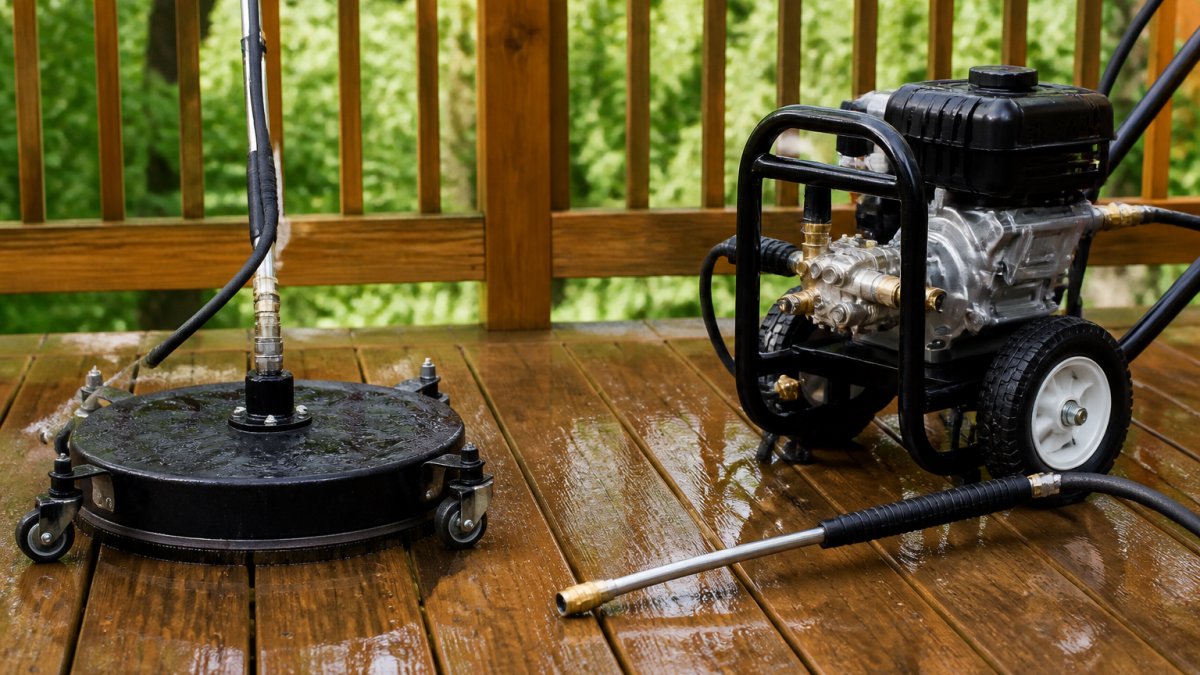
Pressure washing uses high-velocity water to blast away surface dirt and debris at thousands of pounds per square inch (PSI).
The appeal is obvious: it’s fast and visible. But that force can remove wood fiber, damage finishes, and create problems that don’t show up until months later, splintering, water penetration, and accelerated weathering.
How to Clean a Wood Deck: Methods and Outcomes
The method you choose determines how clean your deck gets, how long it stays clean, and whether you damage the wood. The useful question isn’t “pressure washing or not” but “what pressure, chemistry, and technique does this deck need?”
How Pressure, Nozzles, and Technique Affect Each Material
Pressure washing is a tool with a correct setting. The variables that matter are PSI, gallons per minute (GPM), nozzle angle, and distance from the surface.
- Pressure-treated pine. The most forgiving wood deck, but still vulnerable. A wide fan tip (25 or 40 degrees) held well back from the surface, at the lower end of a consumer machine’s range, can remove surface grime. A pinpoint tip (0 degrees) or a turbo nozzle will gouge the grain and raise fibers.
- Cedar and other softwoods. These dent and fuzz easily. Most practitioners avoid direct high pressure entirely and rely on low-pressure soft washing plus gentle agitation.
- Hardwoods such as ipe and mahogany. Dense and more pressure-tolerant, but expensive enough that the risk is not worth it. Chemical cleaning with a rinse is the safer default.
Nozzle choice matters as much as the machine setting. A 0-degree nozzle concentrates the stream into a tiny point and is the most common cause of deck damage; a 25-degree tip handles tough spots on durable wood; a 40-degree tip spreads the force and is the safest pressure option on wood.
Soft Washing and Chemical Cleaning
Soft washing uses low-pressure water combined with specialized cleaning solutions, gentler than pressure washing but still effective because the chemistry does most of the work.
Apply a cleaner formulated for your deck type, let it sit for the label’s dwell time (commonly 10-30 minutes), then rinse with low-pressure water.
Chemical cleaning is particularly effective on composite decks, which pressure can damage, and on wood that is compromised or has a finish you want to preserve.
Pressure Washing Risks on Wood Surfaces
Excessive pressure on wood creates problems that appear later. Water forces into the grain, raising fibers and opening pathways for moisture, causing splintering, cupping, and accelerated rot.
On pressure-treated wood, aggressive washing can strip protective coatings. On older or damaged decks, it can turn soft spots into structural weak points.
The damage often isn’t obvious immediately. It shows up over the next season or two as the wood weathers faster, stains reappear sooner, and the deck deteriorates ahead of schedule.
| Cleaning Method | Best For | Key Risk | Drying Time |
|---|---|---|---|
| Soft washing | Wood, composite, sealed surfaces | Longer drying | 24-48 hours |
| Pressure washing (low PSI, wide fan tip) | Heavy buildup on durable wood | Water infiltration, raised grain | 12-24 hours |
| Chemical treatment | Mold, mildew, algae | Environmental impact if not biodegradable | 24-48 hours |
| Pressure washing (high PSI, narrow tip) | Concrete, not wood | Fiber damage, splintering, finish removal | 12 hours |
Decision Guide by Deck Condition and Material
Use this sequence to choose a method rather than guessing:
- Identify the material. Composite, cedar, hardwood, or pressure-treated pine. If you are unsure, check the board ends or the original builder’s paperwork.
- Check the finish. Is there an intact stain or sealer, a failing one, or bare wood? Intact finish means clean gently; failing finish means plan to refinish.
- Probe for soft spots. Press a screwdriver handle into suspect areas. Soft or spongy wood should not be pressure washed at all.
- Identify the growth. Green film is usually algae; black streaks are often mold or mildew; gray wood is weathering, which is a surface condition rather than a growth.
- Match the method. Light growth on durable wood: low-pressure wash with a wide tip. Heavy growth or any softwood or composite: soft wash or chemical cleaning. Structural concerns: repair first, clean later.
Never use a 0-degree or turbo nozzle on a wood deck, and never hold a pressure washer close to the surface to “speed things up.” That is the single most common way decks get damaged.
If you are unsure which category your deck falls into, a professional assessment is cheaper than a repair. The method should follow the material and condition, not the other way around.
Pressure Washing Deck Cost and Value Comparison
Cost is where the professional-versus-pressure-washing comparison usually falls apart, because the two numbers aren’t measuring the same thing. Compare pressure washing options and pricing to understand what each service covers and how costs add up over time. A pressure washing quote covers blasting the surface; a professional deck cleaning quote covers assessment, the right chemistry, controlled rinse pressure, and often post-cleaning guidance. Price out the full job, not the visible hour of work.
What Each Option Typically Costs
Actual prices vary by region, deck size, condition, and access. Treat them as planning benchmarks, not quotes.
| Option | Typical Price Range (USD) | What It Usually Includes | What It Often Leaves Out |
|---|---|---|---|
| Rent a pressure washer (DIY) | $60-$120 per day | Machine, one nozzle set, fuel | Cleaner, surface prep, finish repair, disposal |
| Hire a pressure washing company | $150-$400 for a typical deck | Surface blasting, basic rinse | Material-specific assessment, finish protection, soft-wash chemistry |
| Professional deck cleaning (soft wash or chemical) | $250-$600 for a typical deck | Inspection, pre-treatment, dwell time, gentle agitation, controlled rinse | Staining or sealing (usually quoted separately) |
| Deck staining or sealing add-on | $1,000-$3,000+ depending on size and product | Surface prep, stain or sealer application | Structural repairs |
A few cost factors move these numbers more than anything else:
- Deck size and height. Second-story decks and multi-level layouts add labor and safety time.
- Material. Composite and hardwood decks usually require gentler methods and more careful chemistry than pressure-treated pine.
- Condition. Heavy mold, algae, or failing finish adds dwell time and repeat treatment.
The Five-Year Cost View
The cleaning bill is the smallest number here. The larger number is what happens to the deck afterward.
A high-pressure wash that raises fibers or strips a finish forces refinishing sooner, and refinishing runs into the thousands.
There’s also the repair line item. Pressure washing a deck with soft spots or rot can turn a cosmetic problem into a structural one, and board replacement plus labor can easily exceed the difference between a cheap pressure wash and a professional cleaning.
Compare the total five-year cost, not the invoice. A pressure wash that shortens your finish life by a season or two usually costs more than a professional cleaning that protects it.
Questions to Ask Before You Accept a Quote
- Does the price include pre-treatment and dwell time, or just surface blasting?
- What pressure range will be used, and will the operator use a fan tip rather than a pinpoint nozzle?
- Is the cleaner formulated for your deck material, and is it safe for nearby plants?
A quote that answers these questions is comparable to a professional cleaning quote; one that only covers blasting is not, even if the number looks lower.
Best Way to Clean a Weathered Wood Deck
A weathered deck, gray, discolored, or showing signs of age, requires a specific approach that differs from routine maintenance cleaning.
Assessment and Preparation Steps
Start by identifying what you’re dealing with.
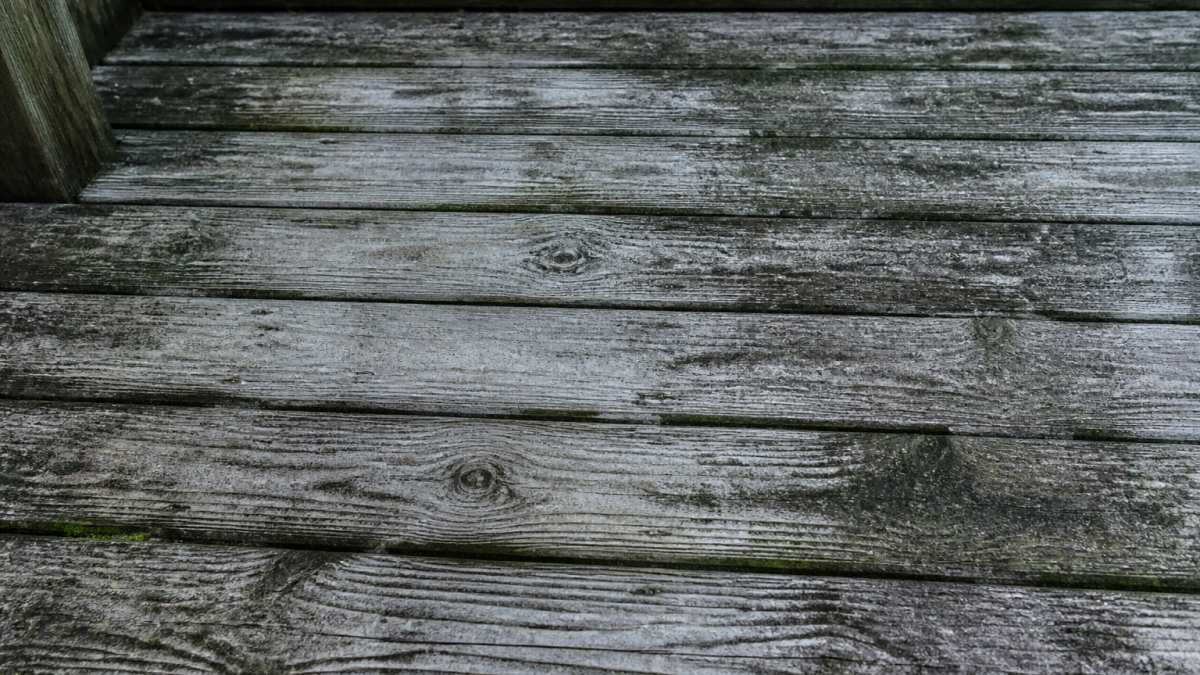
Next, remove loose debris, furniture, and planters, and sweep thoroughly to remove leaves and dirt that could trap moisture.
For weathered wood, soft washing is often the best first step: the solution penetrates the weathered layer, breaks down organic growth, and restores color without damaging the underlying wood.
Post-Cleaning Care and Drying
After cleaning, your deck needs proper drying before use or finishing. Wet wood is vulnerable to mold regrowth and won’t accept stain or sealer properly.
Allow at least 48 hours of dry weather after cleaning before walking on the deck regularly.
During drying, ensure good air circulation. If your deck is in a shaded area, consider temporarily removing shade (trimming branches, moving tarps) to speed drying.
Wood Deck Cleaning Products and Professional Solutions
The products used during cleaning matter as much as the method.
Professional-grade cleaners are formulated for specific problems, mold, algae, or weathering, rather than being general-purpose. They also tend to be safer for the environment when disposed of properly.
For homeowners considering DIY cleaning, research products specifically labeled for wood decks. Avoid bleach-based cleaners on stained or sealed wood, as they can strip color.
Professional Cleaning vs. DIY: When to Call a Professional
DIY deck cleaning works fine for light maintenance, sweeping, removing debris, occasional spot cleaning. It becomes risky when you’re dealing with heavy mold, algae, or weathering, or when you’re considering pressure washing.
If your deck is composite, has an existing finish you want to preserve, shows signs of structural issues, or you’re uncertain about the best approach, professional cleaning is the safer choice.
Schedule Your Professional Deck Cleaning Consultation
If your deck is showing age or you’re uncertain whether pressure washing is safe for your specific situation, professional deck cleaning is worth exploring. The difference between the right cleaning method and the wrong one often determines whether your deck lasts another decade or starts failing in a few years.
Midwest Maintenance LLC offers deck cleaning services with a free consultation to assess your deck’s condition and recommend the best approach, whether that’s soft washing, chemical treatment, or targeted pressure washing where it’s appropriate.
Get started with a consultation to learn which cleaning method will restore your deck safely and protect it long-term. Our team can also guide you on post-cleaning care and finishing options to extend your deck’s life. Learn more about our deck cleaning approach or contact us today for a free estimate.
Frequently Asked Questions
Can pressure washing damage a wood deck?
Yes. High-pressure water can splinter wood fibers, gouge the surface, and force water into the grain, leading to swelling, warping, and rot. Professional deck cleaning services adjust pressure and use soft-washing techniques to avoid damage while removing dirt, mold, mildew, and algae safely.
How much does professional deck cleaning cost compared to pressure washing?
Costs vary based on deck size, material, condition, and location. Pressure washing typically uses a single high-pressure method. Professional deck cleaning often includes surface restoration, chemical treatment, and material-specific care that extends deck life. Request a free estimate from a local professional to compare pricing for your specific deck.
What is the best way to clean a weathered wood deck?
Assess the deck’s condition first. For weathered wood, professional cleaning combines low-pressure washing, biodegradable detergents, and targeted chemical treatment to remove years of dirt, mold, mildew, and algae without splintering fibers. After cleaning, the deck must dry completely before staining or sealing. Professional services handle this process safely.
Can I clean my wood deck with dish soap and water?
Basic dish soap and water can remove surface dirt but won’t eliminate embedded mold, mildew, or algae. Professional wood deck cleaning products are designed to penetrate the grain, break down organic growth, and protect the wood without harsh chemicals. For stubborn weathering or biological growth, specialized cleaning solutions work effectively than household soap.
Your deck is a significant investment. Cleaning it the right way protects that investment. The wrong method, even with good intentions, can accelerate deterioration and cost you far more in repairs than you save on the initial cleaning. Professional deck cleaning balances effectiveness with preservation. That’s the difference that matters.


Comments are closed