Table of Contents
- Why Pressure Washing Wood Decks Causes Damage
- How to Identify and Assess Pressure Washer Damage
- The Best PSI for Cleaning Wood Decks
- Soft Washing vs Pressure Washing Decks
- How to Repair Pressure Washer Gouges in Wood
- Preventing Damage: Prep, Technique, and Drying Timeline
- Book a Free Deck Assessment with Midwest Maintenance
- Frequently Asked Questions
Last Updated: October 29, 2026
Why Pressure Washing Wood Decks Causes Damage
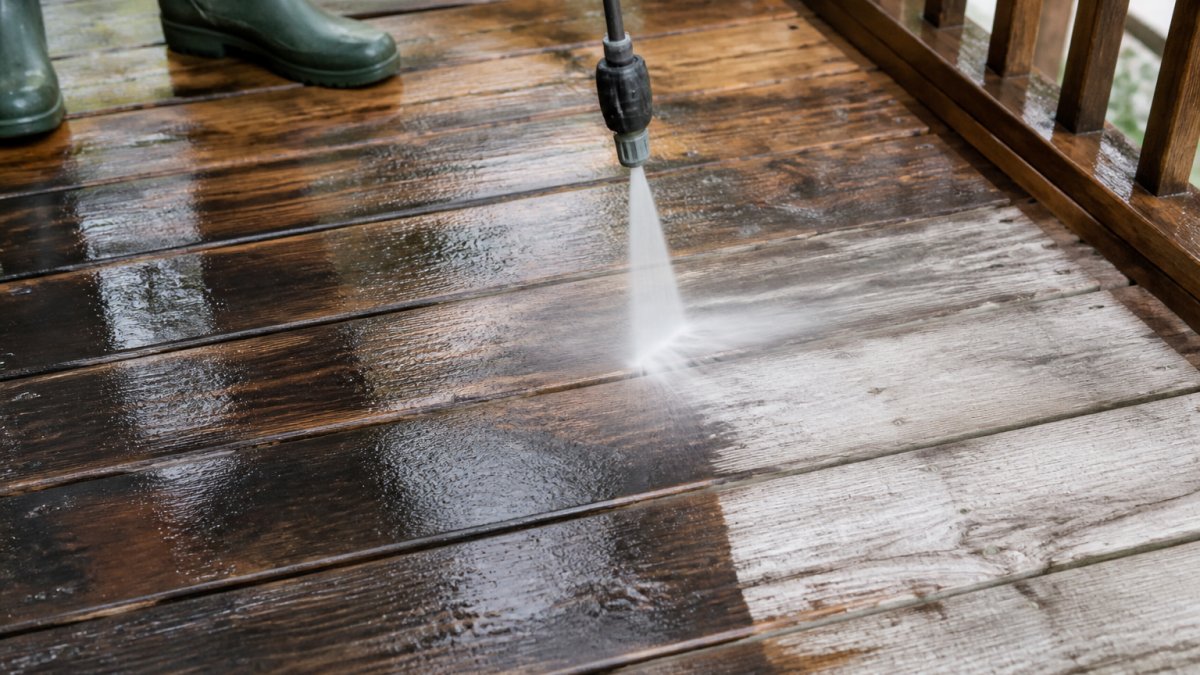
Wood decks fail under a pressure washer for one simple reason: wood is not concrete. It is a bundle of soft fibers held together by lignin, and a narrow, high-pressure spray cuts those fibers apart instead of lifting dirt off them. Decks can look fine from ten feet away yet feel like felt underfoot after a single afternoon of over-pressure. Below, we explain why pressure washing damages wood decks and how to spot it before it costs you a refinish.
How Water Pressure Attacks Wood Fibers
Wood fibers run along the grain like straws packed side by side. A pressure washer at close range forces water into those straws. The water has nowhere to go, so it bursts the cell walls and lifts the grain. What is left is a fuzzy, torn surface that no stain will bond to.
Pressure washing damages wood decks in three stages:
- Lifting – water pushes the softer earlywood grain upward.
- Tearing – fibers break and separate from the board.
- Erosion – repeated passes wear a groove into the surface.
The damage builds fast. A few seconds of a spray held still is enough to scar a board permanently.
Signs of Damage: Splintering, Gouging, and Raised Grain
Watch for these warning signs after any wash:
- Fuzzing – the surface feels fuzzy, like felt or velvet.
- Raised grain – the wood looks hairy and rough in patches.
- Gouges – visible grooves or lines cut into the board.
- Splintering – loose shards along the edges and grain lines.
- Discoloration – light, bleached streaks where the surface layer is gone.
If you spot any of these, stop washing. Damage only gets worse with another pass.
How to Identify and Assess Pressure Washer Damage
Assessment starts with your hands, not your eyes. Run a palm across the deck in several spots. A healthy wood surface feels firm and smooth. A damaged one feels soft, fuzzy, or rough. Then look closely at the grain in raking light, where the sun hits at a low angle. That is when gouges and raised grain show up clearly.
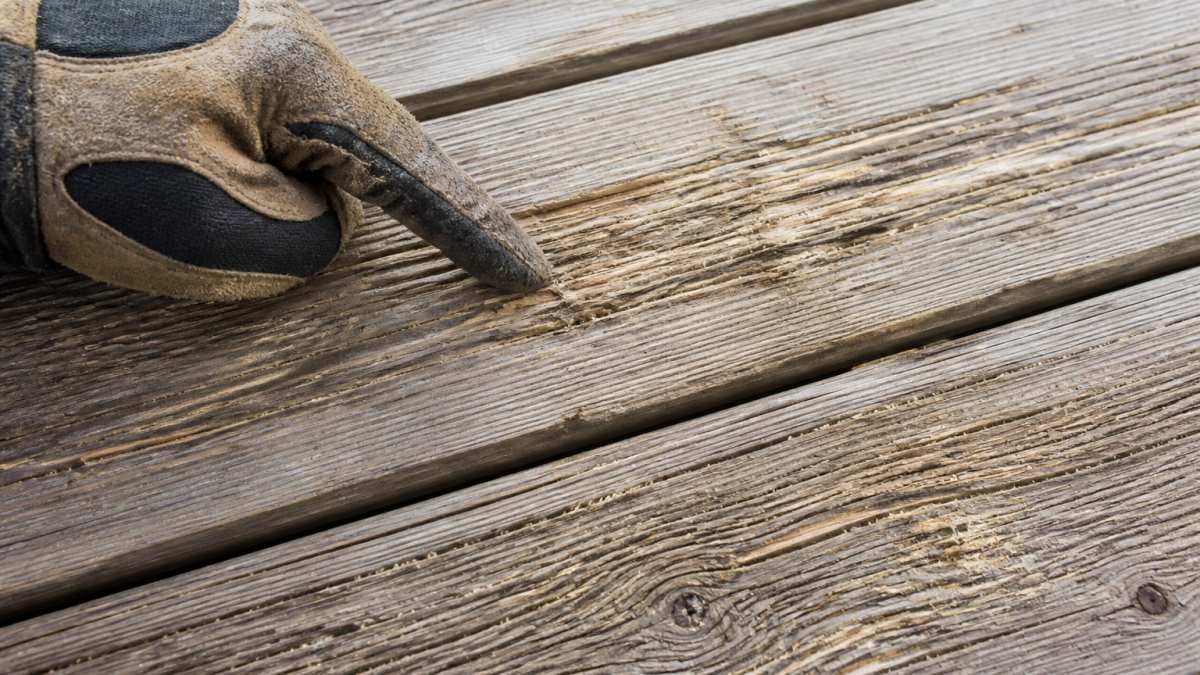
Here is how we grade damage on a deck assessment:
| Damage Level | What You See | What It Means |
|---|---|---|
| Light | Fuzzing, raised grain | Sanding fixes it |
| Moderate | Shallow gouges, splintering | Sand and spot-repair |
| Severe | Deep grooves, soft wood | Board replacement likely |
Wood species and age matter here. Cedar and pine are soft and scar easily. Older, weathered boards lose density and fail faster than new ones. A deck that has gone years without a sealer is a poor candidate for any high-pressure wash.
The Best PSI for Cleaning Wood Decks
Wood decks generally tolerate much lower pressure than the rating on most gas pressure washers, so the operator’s choice of nozzle and distance matters more than the machine’s maximum output.
But a single number is not enough. Pressure tolerance changes with wood species, age, and condition. A new cedar deck and a weathered pine deck that has not been sealed in five years should not see the same settings. Use the guide below to match pressure, nozzle angle, and working distance to the board in front of you. For the full PSI and technique details, see this smart guide to log home pressure washing cleaning.
| Wood Condition | Suggested Nozzle PSI | Nozzle Angle | Working Distance | Notes |
|---|---|---|---|---|
| New or recently sealed softwood (cedar, pine) | 500-600 PSI | 40-degree white | 18-24 inches | Highest risk of fuzzing; test a hidden board first |
| Weathered softwood, unsealed 2+ years | 600-800 PSI | 40-degree white | 12-18 inches | Soft surface fibers lift easily; keep moving |
| Hardwood (ipe, mahogany, teak) | 800-1,200 PSI | 25-degree green at max distance or 40-degree white | 12-18 inches | Denser grain tolerates more, but gouges still possible |
| Mildewed or stained surface | 500-600 PSI plus cleaner | 40-degree white | 18 inches | Let the cleaning solution do the work, not pressure |
| Soft, punky, or rotting wood | Do not pressure wash | , | , | Replace or restore before any washing |
A few rules keep pressure in the safe zone:
- Use the widest nozzle tip you have, typically a 40-degree white tip.
- Keep the nozzle at least 12 to 18 inches from the wood.
- Keep the spray moving in long, even strokes.
- Never hold the spray in one spot.
- Test a hidden area first, like a corner or the underside of a step.
Pressure at the nozzle is not the same as the PSI printed on the machine. A 3,000 PSI washer with a 40-degree tip and 18 inches of standoff delivers far less force to the wood than the label suggests. Always judge by nozzle, angle, and distance together, not the pump rating alone.
Matching Nozzle Angle and Working Distance to Wood
Nozzle angle and distance work together. A 40-degree tip at 18 inches spreads the water wide and soft. A 15-degree tip at 6 inches concentrates it into a cutting stream. That combination is a gouge waiting to happen.
Match the spray pattern to the job:
- 40-degree white tip – general deck cleaning, safest choice.
- 25-degree green tip – only for tough stains on harder woods, used at maximum distance.
- 0-degree red tip – never on wood.
Angle the spray down and along the grain, not straight into the board. Sweep in the direction of the grain so you lift dirt without tearing fibers. If you are unsure which setting fits your deck, a free assessment is cheaper than a refinish.
Soft Washing vs Pressure Washing Decks
Understanding why pressure washing damages wood decks is the first step. Soft washing is low-pressure cleaning that relies on a cleaning solution to break down dirt, mildew, and grime, then a gentle rinse to carry it away. Readers who want the safer deck cleaning exterior wood care that avoids pressure-washer damage can learn more about it. Pressure washing relies on force, and on a wood deck, force is the enemy.
How to Repair Pressure Washer Gouges in Wood
Repair depends on depth. Light fuzzing and raised grain come out with a light sanding pass along the grain. Shallow gouges need sanding plus a wood filler matched to the board color. Deep grooves or soft, punky wood mean the board should be replaced. Patching soft wood is a waste of time and money.
Here is the repair sequence we follow:
- Let the deck dry completely, usually 48 to 72 hours.
- Sand the damaged area lightly with the grain.
- Fill shallow gouges with an exterior-grade wood filler.
- Sand the filler smooth and level with the board.
- Clean the dust off and let the surface dry.
- Seal or stain the whole deck for an even finish.
Skipping the final seal leaves fresh wood exposed to rainwater and sun, and the repair fails within a season. For gouged or splintered boards, this exterior wood care service can restore and protect the wood.
Preventing Damage: Prep, Technique, and Drying Timeline
Prevention starts before the washer is turned on. Clear the deck, sweep off debris, and pre-treat mildew with a cleaning solution. Wet the surrounding plants and siding first so overspray does not harm them. Then work in small sections with the widest tip and a steady, even stroke.
But prep is not one-size-fits-all. Wood species, age, and condition determine how much pressure, if any, a deck can take. Cedar and pine are soft and scar easily. Older, weathered boards lose density and fail faster than new ones. A deck that has gone years without a sealer is a poor candidate for any high-pressure wash. Before you wash, answer three questions:
- Species: Is the deck a softwood like cedar or pine, or a denser hardwood like ipe or teak?
- Age and treatment: When was it built, and when was it last sealed or stained?
- Condition: Are there soft spots, existing gouges, or boards that flex underfoot?
If the deck fails any of these checks, skip the pressure washer and use a soft-wash or brush method instead.
Drying, Sanding, and Refinishing Timeline
The drying timeline matters as much as the wash itself:
- 0 to 24 hours – surface water evaporates.
- 24 to 48 hours – deeper moisture works its way out.
- 48 to 72 hours – wood is ready for sanding and staining.
Staining too early traps moisture under the finish and causes peeling. Wait until the wood is dry to the touch and uniformly colored. A moisture meter reading below about 15% is a common benchmark before sealing, though manufacturer instructions on the stain can should always take precedence.
If the wash raised the grain, sand lightly along the grain before sealing. Skipping this step leaves a rough surface that stain will not bond to evenly. After sanding, vacuum or blow off the dust and let the surface dry again before applying finish.
A simple test: sprinkle a few drops of water on the deck. If they bead up, the wood is still too wet or too sealed to accept stain. If they soak in evenly, the surface is ready.
Watch out: the most common mistake is rushing the rinse and holding the nozzle too close on a stubborn stain. That one habit causes most of the gouges we repair. Slow down, keep the tip moving, and let the cleaning solution do the work.
Book a Free Deck Assessment with Midwest Maintenance
Your deck does not need to be a casualty of a pressure washer. A proper assessment tells you what condition the wood is in, what cleaning method is safe, and whether any boards need repair before washing.
Midwest Maintenance LLC has handled wood and masonry restoration since 2008. We offer free consultations, and our team specializes in log home and wood care.
Ready to protect your deck? Book a free deck assessment with our team.
Frequently Asked Questions
What happens if you pressure wash a wood deck too hard?
Excess pressure forces water between the wood fibers and tears them apart. The surface splinters, develops raised grain and fuzzing, and in severe cases the nozzle gouges grooves into the boards. Once the protective finish is stripped and the grain is opened, the deck absorbs moisture faster and needs refinishing sooner. Damage is often not obvious until the wood dries, which is why a small test area matters before you commit to the whole deck.
Is it better to soft wash or pressure wash a wood deck?
Soft washing is usually the safer choice for wood. It relies on low pressure, around 500 PSI or less, plus a cleaning solution to lift dirt, mildew, and grime, then a gentle rinse. Pressure washing wood works only when you keep the PSI low, use a wide-angle nozzle tip, and hold the wand at a safe distance. For weathered or older boards, soft washing reduces the risk of splintering and gouging while still removing buildup.
How do you fix a wood deck damaged by a pressure washer?
Light damage such as raised grain or fuzzing can be sanded smooth once the wood is fully dry, then cleaned and sealed. Deeper gouges need a wood filler matched to the board, sanded flush and refinished. If boards are splintered through or structurally soft, replacement is the reliable fix. After repair, let the deck dry completely before staining or sealing so the new finish bonds properly.
Does pressure washing remove the protective finish from wood?
Yes. High pressure strips stain, sealant, and the top layer of wood fibers along with the dirt. That leaves the deck exposed to rainwater, UV, and mildew, which shortens the life of the finish. If you pressure wash, plan to re-stain or seal once the wood dries, typically after a few dry days. A low-pressure soft wash with a cleaning solution is gentler on existing coatings.
A deck that is cleaned the right way lasts longer and stains better. If you are tired of guessing at pressure settings and ending up with fuzzed, gouged boards, let our team take a look. Midwest Maintenance LLC brings dedicated wood care expertise, free consultations, and a process built to preserve your deck rather than wear it down. Get started with Midwest Maintenance LLC and keep your deck looking its best for years to come.


Comments are closed