Last Updated: October 24, 2026
Quick Summary
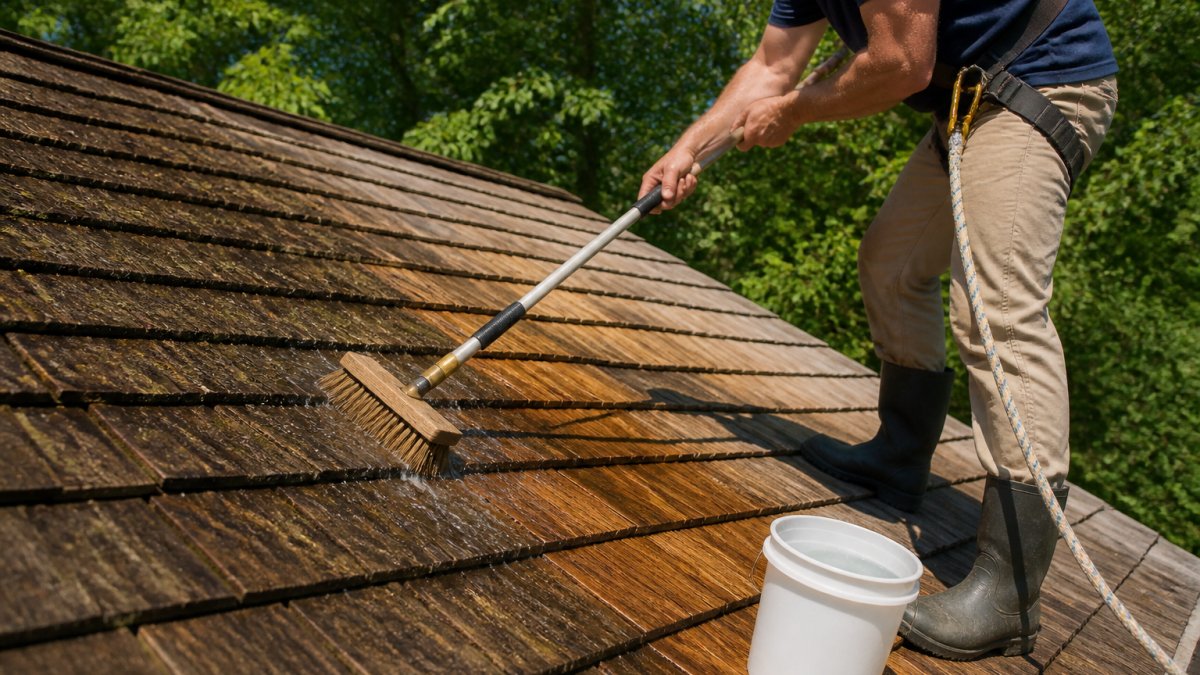
The best way to clean cedar roofing is to clear debris first, then apply a wood-safe oxygen bleach cleaner, scrub gently with a soft-bristled brush, and rinse with low pressure from a garden hose. Never pressure wash cedar shakes, because high pressure raises the grain and strips the soft wood surface.
- Inspect the roof for cracked shakes, loose fasteners, and soft spots before any water or cleaner touches it.
- A garden hose delivers roughly 40-60 psi at the tip, which is the pressure ceiling for cedar.
- Let oxygen bleach dwell 10-15 minutes and mist areas that start to dry before rinsing.
- Remove moss by hand with a soft brush or plastic scraper on a dry day, then treat with wood-safe cleaner.
- Clear leaves and pine needles from valleys and gutters each fall to prevent moisture and regrowth.
Table of Contents
- Signs Your Cedar Roof Needs Cleaning
- Inspect and Repair Before You Clean Cedar Roofing
- The Best Cleaning Solution for Cedar Shakes
- How to Remove Moss From a Cedar Roof
- Step-by-Step: The Cedar-Safe Cleaning Method
- Pressure Washing a Cedar Roof: What’s Safe and What Isn’t
- Cedar Roof Maintenance and Prevention
- Frequently Asked Questions
Signs Your Cedar Roof Needs Cleaning
Cedar roofing is a natural wood roof that needs more careful handling than asphalt shingles. Most cedar roofs show clear warning signs before real damage sets in, and catching them early keeps the wood sound.
Watch for these signals:
- Dark streaks or black stains running down the shakes
- Green or black moss patches, especially on north-facing slopes
- Algae film that makes the roof look dirty even after rain
- Piles of leaves, twigs, and pine needles trapped between shakes
- Curling, splitting, or soft spots on the shake surface
- Fungus or organic growth near the ridge and valleys
Black streaks usually mean algae. Green growth means moss. If you spot dark stains and want them handled properly, our Exterior Wood Care Cedar Roof Cleaning explains what professional treatment involves.
Ignoring moss for a season or two lets roots work into the shake surface. Once roots lift the grain, no amount of cleaning restores it, and you’re looking at replacement instead of maintenance.
Inspect and Repair Before You Clean Cedar Roofing
Inspect the roof before any water or cleaner touches it. Cleaning a damaged roof makes the damage worse.
Your inspection should cover:
- Cracked or split shakes
- Loose or missing fasteners
- Soft, spongy spots that give under pressure
- Rusted flashing around chimneys and vents
- Clogged gutters that back water up under the shakes
Fix small repairs first. Re-nail loose shakes, replace split ones, and clear the gutters. A roofing professional should handle anything that requires walking the roof or replacing sections.
This step also tells you which cleaner to use. A roof with heavy fungus needs a different approach than one with light algae staining.
The Best Cleaning Solution for Cedar Shakes
The best cleaning solution for cedar shakes depends on what is growing on the roof and how far the wood has weathered. For most cedar roofs, a wood-safe oxygen bleach cleaner is the default.
| Roof Condition | Best Cleaner | Typical Dilution Starting Point | Dwell Time | Watch-Out |
|---|---|---|---|---|
| Light algae, dirt film | Oxygen bleach (sodium percarbonate) | Follow label; many concentrates mix around 1 part cleaner to 4-8 parts water | 10-15 minutes, keep surface wet | Don’t let it dry on the shakes |
| Heavy moss | Oxygen bleach plus manual removal first | Same as above after physical removal | 10-15 minutes | Moss roots stay in the grain; cleaner alone won’t lift them |
| Fungus or mildew | Wood-safe cleaner with a fungicide component | Per label | Per label | Rinse runoff away from plants and gutters |
| Weathered gray wood | Cleaner plus oxalic-acid brightener | Brightener per label after cleaning | Apply after rinse, while wood is damp | Brightener is a separate step, not a substitute for cleaning |
Always dilute per the label. A concentrate applied too strong strips the natural oils cedar needs and can leave the surface fuzzy. Test a small hidden area, a shaded slope or the back of a dormer, and let it dry fully before committing to the whole roof.
Bleach-Based Cleaners and What They Do to Cedar
Bleach-based cleaners, meaning sodium hypochlorite or SH, clean fast and kill organic growth on contact. On cedar, they also strip the wood’s natural color and break down the lignin that holds the grain together.
If you use a bleach-based product at all, keep the dilution weak, keep the surface wet so it doesn’t dry into the grain, rinse thoroughly, and follow with a brightener.
Oxygen Bleach and Wood-Safe Alternatives
Oxygen bleach is the safer choice for cedar roofing. Sodium percarbonate releases oxygen bubbles that lift dirt and organic growth without attacking wood fibers. Wood-safe cleaners often include citric acid or oxalic acid, which help brighten the surface and remove mineral stains left by irrigation or hard water.
Look for these on the label:
- Sodium percarbonate as the active ingredient
- No sodium hypochlorite
- pH-neutral or wood-safe formula
- Biodegradable and plant-safe where possible
Rinse runoff away from plants and storm drains. Even wood-safe cleaners can stress grass and shrubs if they pool, so pre-wet beds and lawns with plain water before you start and rinse them again after.
Mix only what you’ll use in one session. Oxygen bleach loses potency once it’s mixed, and a batch left in the sprayer overnight won’t clean as well the next day.
How to Remove Moss From a Cedar Roof
Remove moss from a cedar roof by hand first, then treat the area with a wood-safe cleaner. Never scrape hard or use a pressure washer on moss, because both tear the soft shake surface. For a deeper look at moss specifically, our cedar roof moss guide covers the full treatment.
Follow this order:
- Wait for a dry day so moss is brittle and lifts easily.
- Use a soft-bristled brush or plastic scraper to lift moss off the shakes.
- Work from the ridge down, so loosened moss doesn’t land on cleaned areas.
- Bag the debris; don’t wash it into gutters.
- Apply a wood-safe cleaner to the affected area.
- Let it dwell per the label, then rinse with low pressure.
Moss returns wherever shade and moisture stay. Trimming tree branches back from the roof and clearing debris from valleys slows the regrowth.
Moss hides in the shaded valleys and behind chimneys, not just on open slopes. Check those spots first, because they’re where it starts and where it comes back.
Step-by-Step: The Cedar-Safe Cleaning Method
Here is the method we use on cedar roofs. It protects the wood while removing dirt, moss, and organic growth. If you’d rather have it done for you, you can contact us with our team.
What you’ll need:
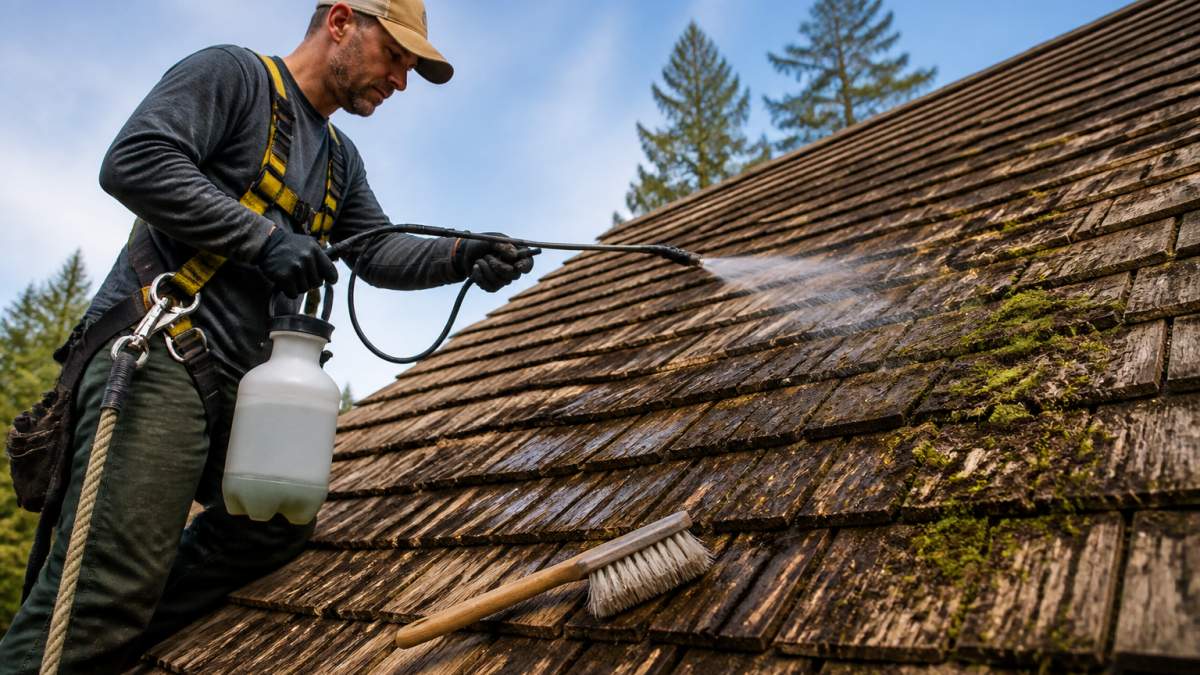
- Soft-bristled brush (a car-wash or deck brush, not a wire brush)
- Pump sprayer with a fan tip, or a garden sprayer
- Wood-safe cleaner (oxygen bleach based)
- Garden hose with a low-pressure nozzle
- Safety harness and non-slip shoes if you go on the roof
- Tarps to protect plants below
Safety Limits Before You Start
Set your limits before you climb. A garden hose with a standard nozzle delivers roughly 40-60 psi at the tip, that is the ceiling for cedar.
Work in sections you can finish in one pass, roughly a 10-foot by 10-foot area at a time, so cleaner doesn’t dry before you rinse it. Keep the sprayer tip 12-18 inches from the shakes and keep it moving.
Clearing Leaves, Twigs, and Pine Needles
Clear debris before you apply any liquid. Leaves, twigs, and pine needles trap moisture against the shakes and block cleaner from reaching the wood. Use a leaf blower on low, or a soft brush, working from the top down. Pay attention to valleys, gutters, and the gaps between shakes.
Bag everything you remove. Debris left on the ground or in gutters just washes back onto the roof at the next rain.
Applying Cleaner, Scrubbing, and Rinsing
Apply the diluted cleaner with a garden sprayer, starting at the bottom and working up so you don’t streak clean sections.
Rinse with a garden hose at low pressure, again working top to bottom. Keep the nozzle moving so water doesn’t pool in one spot. Let the roof dry fully, a full day in dry weather, before you judge the result.
Don’t clean a cedar roof in direct afternoon sun or in freezing temperatures. Fast drying causes streaks, and freezing water can split saturated shakes.
Pressure Washing a Cedar Roof: What’s Safe and What Isn’t
Pressure washing a cedar roof is not safe at typical pressure levels. High pressure drives water into the wood, raises the grain, and strips the soft surface between shakes. It’s the fastest way to turn a cleaning job into a restoration job.
Here’s the line:
- Safe: low pressure from a garden hose, soft washing with a sprayer, soft-bristled brushing
- Not safe: power washing, high-pressure nozzles, hard scraping, wire brushes
If a contractor offers to pressure wash your cedar roof, ask what pressure they use and whether they’ll follow with a brightener. If you’re worried about past pressure washing damage, our Exterior Wood Care Cedar Roof Cleaning can assess the roof and repair what’s been affected.
Power washing cedar shakes can void manufacturer guidance and lead to cracked, splintered shakes within a season. The damage often doesn’t show until the wood dries and splits.
Cedar Roof Maintenance and Prevention
Prevention is cheaper than cleaning. A few habits keep moss, algae, and debris from taking hold between cleanings.
- Clear leaves and pine needles from valleys and gutters each fall.
- Trim tree branches back so the roof gets sunlight and airflow.
- Reapply a wood-safe cleaner at the first sign of green or black growth.
- Check the roof after storms for new debris.
- Schedule a professional inspection every year or two.
If your cedar roof needs more than a cleaning, our Exterior Wood Care Cedar Roof Cleaning covers repairs, brightening, and longer-term protection. Restoration makes sense when the wood is still sound but weathered or stained.
The best way to clean cedar roofing is gentle and consistent: soft brushing, wood-safe cleaners, low pressure, and regular debris removal. Harsh methods cost more in repairs than they save in cleaning.
Frequently Asked Questions
Can you pressure wash a cedar roof?
You can use a pressure washer on cedar roofing, but only at low pressure, typically under 500 PSI, with a wide fan tip held well away from the shake surface. High pressure forces water under the shakes, splinters the wood grain, and strips the weathered top layer that protects the roof. Most cedar roof cleaning is better done with a soft-bristled brush, a garden sprayer, and a gentle rinse. If you are unsure about pressure settings, hire a professional who works with wood roofs regularly.
What is the best cleaning solution for cedar shakes?
The best cleaning solution for cedar shakes depends on what is growing on the roof. For moss and algae, an oxygen bleach or wood-safe cleaner mixed to the label dilution is the gentlest option. Sodium hypochlorite (bleach) works faster on fungus and organic growth but can dry out the wood and damage nearby plants if runoff is not managed. Citric and oxalic acid products brighten the wood after cleaning. Always test a small area first and rinse plants below the roofline before you start.
How often should a cedar roof be cleaned?
Most cedar roofs need cleaning every two to three years, though shade, tree cover, and moisture levels can push that to once a year. Check the roof each spring for moss, black algae streaks, and debris buildup in the valleys. Clearing leaves, twigs, and pine needles twice a year prevents most of the moisture problems that feed moss and fungus. A regular cedar roof maintenance routine costs far less than replacing shakes that have rotted from trapped moisture.
Can you clean a cedar roof yourself, or should you hire a professional?
You can clean a cedar roof yourself if it is a single-story, low-pitch roof and the growth is light. For steep pitches, multi-story homes, or heavy moss and fungus, hire a professional. Roof safety matters more than saving money: falls are a leading cause of home injury, and cedar shakes are slippery when wet. A professional also knows how to inspect for soft spots and repair damage before cleaning, which protects the roof and your investment.
Cedar roofing rewards patience. The homeowners who clean gently and often spend far less over the life of the roof than those who power wash once and pay for repairs later. If you’d rather leave it to a team that works on wood roofs every week, Midwest Maintenance LLC offers free consultations, wood-safe cleaning, and restoration backed by our focus on preserving both older and newer structures. Get started with Midwest Maintenance LLC and keep your cedar roof sound for years to come.


Comments are closed