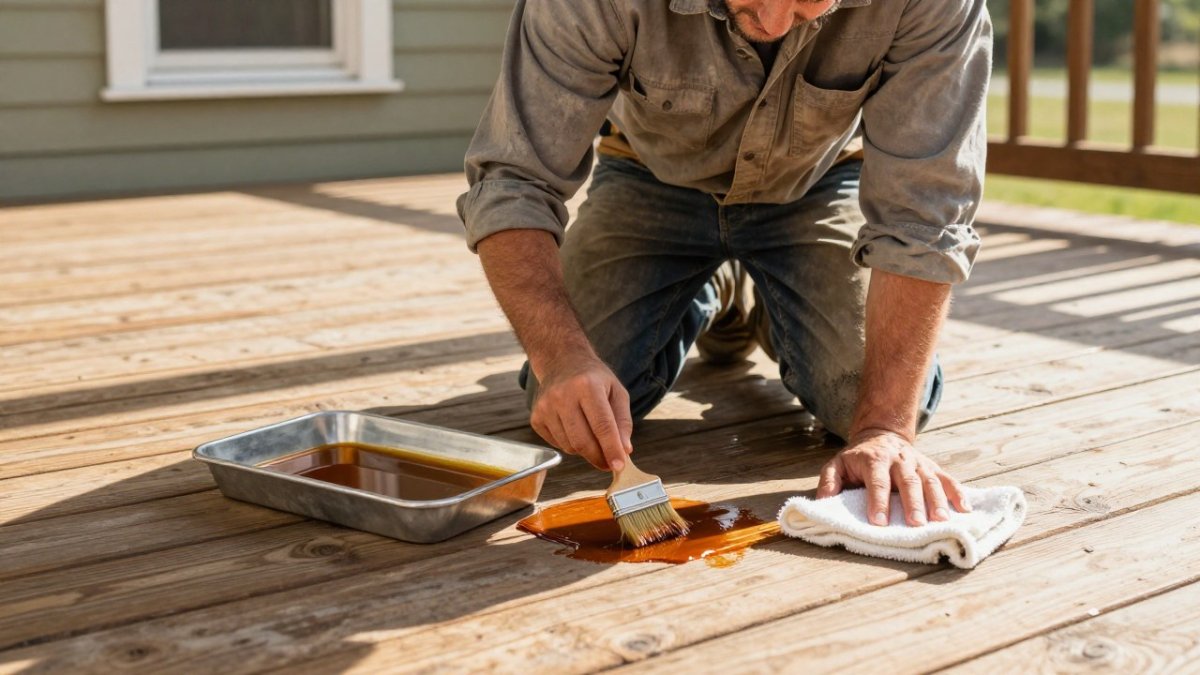
Last Updated: November 14, 2026
Quick Summary
To hire a professional deck staining contractor, verify the license and insurance first, then request local references from the past year and a written scope listing square footage, prep method, repair allowances, product, coats, and cure timeline. Compare bids on the same line items, not the bottom number, and review the contract and workmanship warranty before signing.
- Stain applied over a dirty, damp, or previously sealed surface will peel, so prep is the biggest difference between lasting and failing jobs.
- Be suspicious of any bid that doesn’t include a written scope, since a quote built without seeing the deck is a guess.
- Read three-star reviews first, because they’re usually the most honest about crew behavior, cleanup, and finish durability.
- Ask whether the crew is employed by the company or subcontracted, and whether the same team handles prep and application.
- A warranty that excludes normal weathering can be written so broadly that it covers almost nothing, so ask the contractor to define it.
Table of Contents
- Why Hiring a Professional Deck Staining Contractor Beats DIY
- What Deck Staining Preparation Actually Involves
- How Much Does It Cost to Hire a Professional Deck Staining Contractor?
- How to Read Hire Professional Deck Staining Contractor Reviews
- Deck Staining Contractor Questions to Ask Before You Sign
- Contract Terms, Warranties, and Project Protections
- Choosing Stain and Sealer by Wood Type and Exposure
- Request Your Free Deck Staining Consultation
- Frequently Asked Questions
Why Hiring a Professional Deck Staining Contractor Beats DIY
A deck is one of the few home investments that gets punished by neglect. Wood takes on moisture, sun breaks down the surface fibers, and what starts as a dull gray board turns into a soft board within a few seasons.
At Midwest Maintenance LLC, we handle wood and masonry restoration, and failed DIY stain jobs usually trace back to the same cause: skipped prep.
The Real Cost of a Failed DIY Stain Job
Stain applied over a dirty, damp, or previously sealed surface will peel. Not eventually. When that happens, the fix isn’t another coat. It’s stripping, sanding, and starting over, which typically costs more than hiring correctly the first time.
What Deck Staining Preparation Actually Involves
Surface preparation is the single biggest difference between a stain that lasts and one that fails. A professional deck staining contractor spends most of the project here, not on the brush.
The work follows a sequence. Clean the wood to remove dirt, pollen, and mill glaze. Treat any mildew with a proper cleaner. Sand or scrape away failing finish.
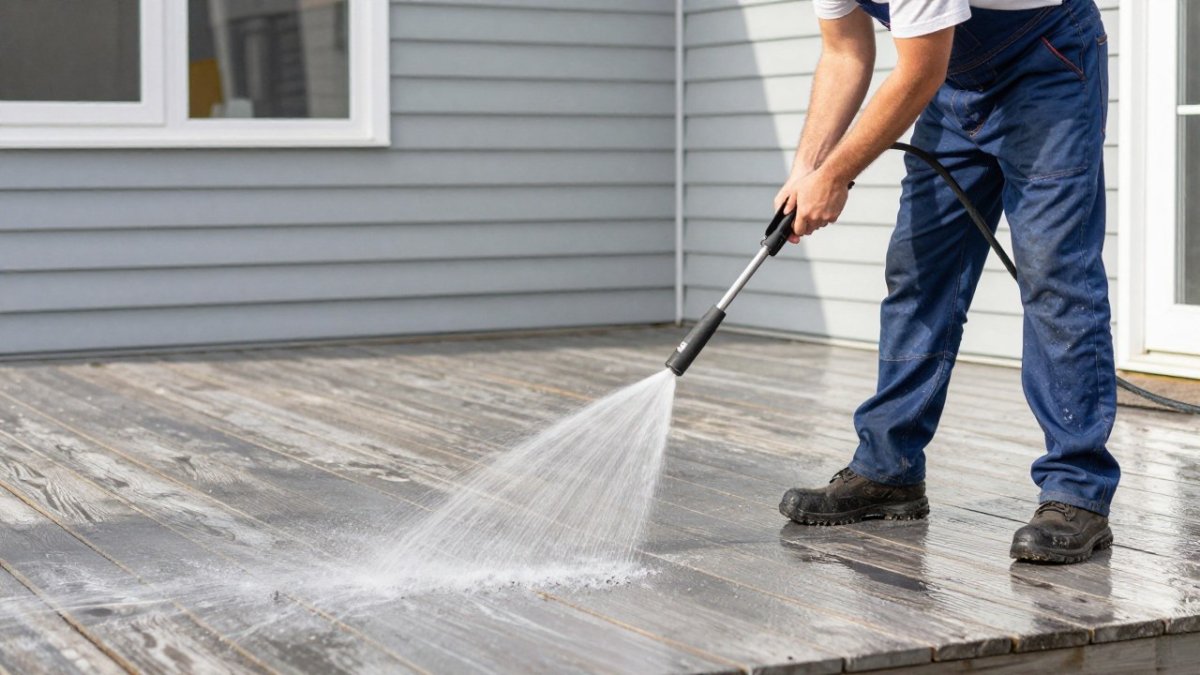
Cleaning, Sanding, and Wood Repair Before Stain Goes On
Here’s what most guides miss: pressure washing a deck yourself is one of the fastest ways to damage it. If you want to understand the mechanics, read our explanation of why pressure washing damages wood decks, and for a deeper comparison of methods, see professional deck cleaning vs. pressure washing.
Wood repair matters just as much. Soft spots, popped nails, and cracked boards need attention before finishing. Stain is a protective coating, not a structural fix.
How Much Does It Cost to Hire a Professional Deck Staining Contractor?
Pricing for deck staining depends on deck size, wood condition, the number of coats, and how much prep and repair the surface needs. A simple, well-maintained deck costs far less to finish than one that needs stripping, sanding, and board replacement first.
We don’t publish flat rates, because a quote built without seeing the deck is a guess. For a realistic benchmark on a typical deck, our guide to the cost to stain a 500 square foot deck breaks down what drives the number up or down.
The Cost Drivers That Move the Number
Several variables typically account for differences between bids:
- Deck size. Square footage sets the baseline for labor and product. A 200-square-foot deck and a 600-square-foot deck are different projects, not different prices for the same project.
- Condition and prep. A deck that has been maintained and only needs a light clean and scuff sand sits at the low end. A deck with peeling solid stain, mildew, or mill glaze needs stripping, chemical cleaning, and possibly a full sand, which can add substantial labor hours before any finish goes down.
- Repairs. Soft boards, popped nails, cracked railings, and stair treads are billed as allowances or time-and-materials. A deck with several board replacements is no longer a staining job; it is a repair-and-stain job.
- Product and number of coats. A transparent or semi-transparent stain is typically one to two coats. A solid stain or a full sealer system may require additional coats and longer dry time between them.
- Access and site conditions. Second-story decks, tight side yards, and railings with many balusters slow application and raise labor. Weather delays that push the project into a second mobilization can also appear on the invoice.
What a Sample Itemized Estimate Looks Like
A bid worth comparing line by line typically separates the work into items such as:
- Surface cleaning and mildew treatment: $X
- Stripping or sanding of existing finish: $X
- Board and railing repair allowance: $X
- Stain product (brand, type, finish, number of coats): $X
- Labor for application: $X
- Cleanup and debris removal: $X
- Total, with payment schedule and start date
When you collect two or three bids, compare them on the same line items rather than on the bottom number. A lower total that omits stripping, repair allowance, or a second coat is not a lower price; it is a smaller scope.
Watch out: a bid that lists “stain deck” as a single line with one price gives you nothing to compare and nothing to hold the contractor to if the finish fails.
What a Detailed Written Quote Should Include
A quote worth signing itemizes the work. Look for:
- Square footage and number of coats
- Cleaning and prep method
- Repair allowances for boards and railings
- Product brand, type, and finish
- Drying and cure timeline
- Payment schedule and start date
If a bid is one line and a number, ask for the breakdown. A contractor who can’t produce one is guessing.
Several variables typically account for differences between bids.
| Cost driver | What moves the number |
|---|---|
| Deck size | Square footage sets the baseline for labor and product |
| Condition and prep | Peeling stain, mildew, or mill glaze adds stripping and sanding |
| Repairs | Soft boards, popped nails, cracked railings billed as allowances |
| Product and coats | Transparent or semi-transparent: one to two coats |
| Product and coats | Solid stain or sealer system may need additional coats |
| Access and site conditions | Second-story decks and many balusters slow application |
| Weather delays | Delays pushing into a second mobilization can appear on invoice |
How to Read Hire Professional Deck Staining Contractor Reviews
Reviews tell you more about process than personality. Anyone can collect five-star ratings for a fast, cheap job.
Read the three-star reviews first. They’re usually the most honest. Look for mentions of crew behavior, cleanup, and whether the finish held up after a winter.
Our guide to finding top-rated deck cleaning and staining pros covers where to look and what signals to trust. The short version: verified reviews, a real service area, and references you can actually call.
Deck Staining Contractor Questions to Ask Before You Sign
Ask these before any contract is signed. The answers help separate established contractors from less experienced operators.
A Step-by-Step Vetting Sequence
Work through these steps in order. Each one filters out contractors before you spend time on the next.
- Verify the license and insurance first. Ask for the license number and a certificate of insurance showing general liability and workers’ compensation. Then verify them independently with the appropriate licensing board and the insurer listed on the certificate.
- Confirm the service area and crew. Ask whether the crew doing the work is employed by the company or subcontracted, and whether the same team handles prep and application.
- Request local references from the past year. Ask for two or three addresses or phone numbers, not a list of names. Call them and ask specifically how the finish held up through a winter and whether the crew cleaned up.
- Get a written scope before any verbal price. The scope should list square footage, prep method, repair allowances, product brand and type, number of coats, and cure timeline. Compare bids on the same line items.
- Review the contract and warranty before signing. Confirm payment schedule, change-order process, weather-delay terms, cleanup, and the workmanship warranty. Ask what voids the warranty and get the answer in writing.
Questions That Reveal Process, Not Personality
- Are you licensed and insured, and can I see the certificate and license number?
- How do you prep the surface, and will you strip an old finish?
- What product line do you use, and why that one for my wood?
- What’s the expected service life of this finish in our climate?
- Will you provide local references from the past year?
- What happens if it rains during the project window?
- Who is on the crew, and is the same team doing prep and application?
- What does your workmanship warranty cover, and what voids it?
A contractor who answers these without hesitation is worth a second conversation. One who deflects on insurance or references is not.
Watch out: ask for written warranty terms before you sign, and verify what they actually cover.
Contract Terms, Warranties, and Project Protections
Get the agreement in writing, and make sure it covers scope, timeline, payment, and warranty. A workmanship warranty should state what’s covered, for how long, and what voids it.
Watch out: a warranty that excludes “normal weathering” can be written so broadly that it covers almost nothing. Ask the contractor to define what normal weathering means before you sign.
Protect your property too. Confirm the contract states who is responsible for plant and siding protection, and that cleanup and debris removal are included.
Choosing Stain and Sealer by Wood Type and Exposure
The right finish depends on the wood, the sun, and the look you want. A transparent stain shows the grain but offers the least UV protection. A semi-transparent stain adds color and moderate protection.
Cedar, pine, and composite each behave differently. Full-sun decks fade faster and need more UV protection than shaded porches or fences. A professional deck staining contractor matches the product to the exposure, not to whatever is on sale. Sealing adds water resistance, but only over properly prepped wood.
Request Your Free Deck Staining Consultation
Get a written scope, a clear timeline, and a product recommendation built around your deck, not a template. Visit our deck cleaning and exterior wood care page to request yours.
Your deck is going to face another winter either way. The question is whether it faces that winter protected or exposed. Midwest Maintenance LLC brings dedicated log home and wood care expertise, free consultations, and comprehensive restoration for both wood and masonry, so you get a finish that’s built to hold.
Frequently Asked Questions
How much does it cost to stain a 20×20 deck?
Pricing depends on deck size, wood condition, stain type, and how much prep work is needed. A 20×20 deck is roughly 400 square feet, and quotes vary widely based on whether the deck needs sanding, board replacement, or just cleaning. Contact Midwest Maintenance LLC for a free consultation and a quote based on your actual deck.
What should I ask a deck staining contractor before hiring?
Ask for proof of insurance, how long they have worked with your wood type, what prep steps are included, which stain brands they use, and what happens if it rains during the project. Request a written quote with a clear project scope. Also ask whether they handle wood repair and how they protect your siding, landscaping, and furniture. A deck staining contractor who answers these plainly and puts them in writing is usually the safer hire.
Should a deck be cleaned or sanded before staining?
Most decks need cleaning before staining, and many need sanding too. Pressure washing removes dirt, mildew, and old flaking finish, but it can raise wood grain and damage soft boards if done too aggressively. Sanding smooths the surface and opens wood pores so stain absorbs evenly. The right combination depends on wood type, age, and existing coating. Deck staining preparation is the step that decides how long the finish lasts, so confirm exactly what your contractor includes.
How do I know if a deck staining contractor is reputable?
Check customer reviews for patterns, not just star ratings. Look for comments about prep work, punctuality, cleanup, and whether the finish held up after a season or two. Ask for references on decks similar to yours and call them. Verify the business is licensed and insured, confirm how long it has operated, and get everything in a written contract with a warranty. A contractor who resists any of these steps is telling you something.


Comments are closed